When you buy a beautiful Australian opal, picking the right ring setting is an important decision. The setting you choose affects how much light enters the stone and how well the gemstone is protected during daily wear.
Because opals are softer than diamonds or sapphires, they need a setting that keeps them safe from bumps and scratches. The two most popular choices are bezel settings and prong settings. This guide will help you understand the differences so you can make the best choice for your custom jewelry.
Opals rank between 5.5 and 6.5 on the Mohs hardness scale. This means they are similar in hardness to glass. If you wear an opal ring every day, it can easily bump into doors, desks, or walls. A good setting acts like a shield. It also holds the stone securely so it does not fall out.
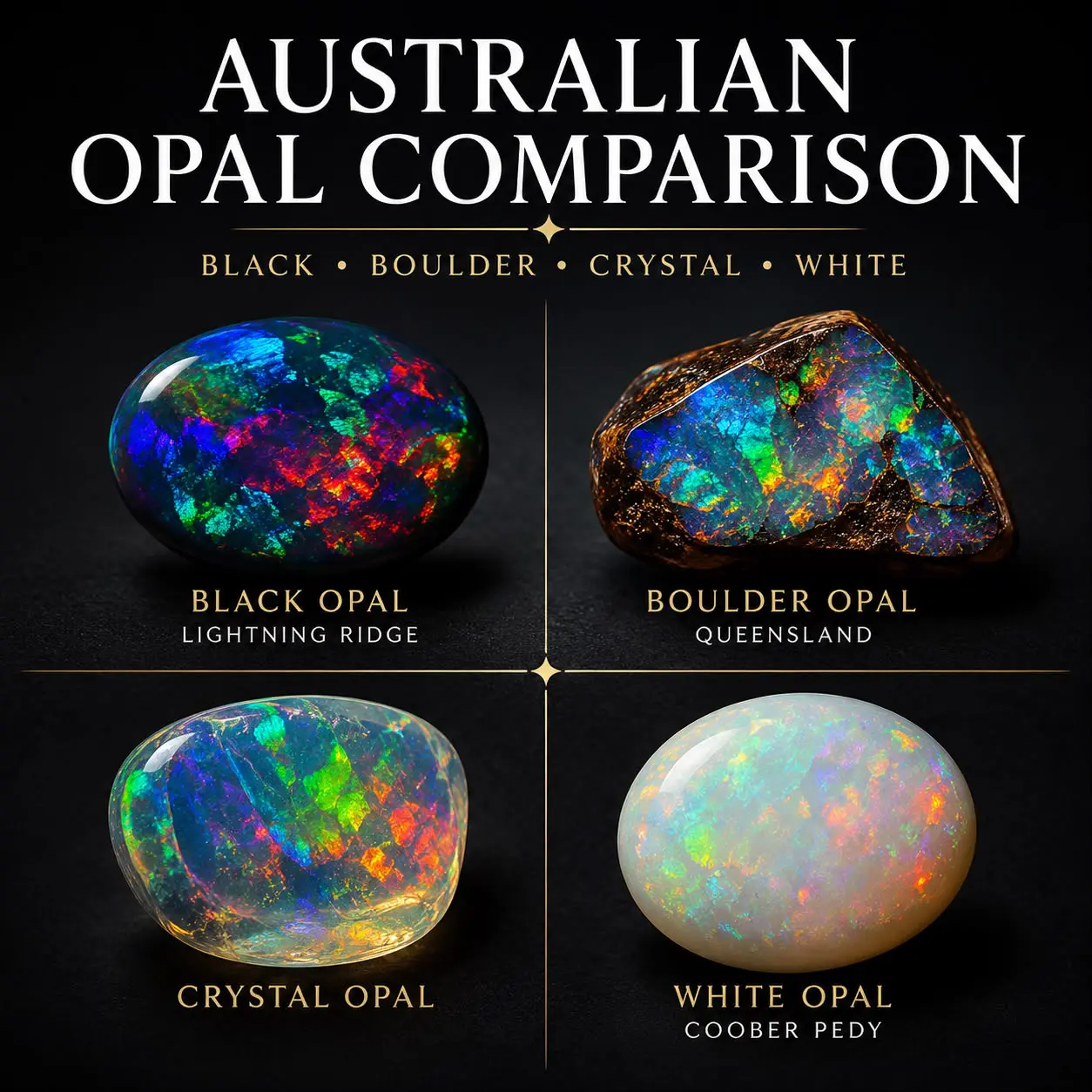
Australia produces most of the world’s precious opals, with their geological origins helping explain how these remarkable gemstones form. When choosing an opal ring, a protective setting and proper opal care can help preserve its beauty for years to come.
Bezel Settings The Ultimate Protection
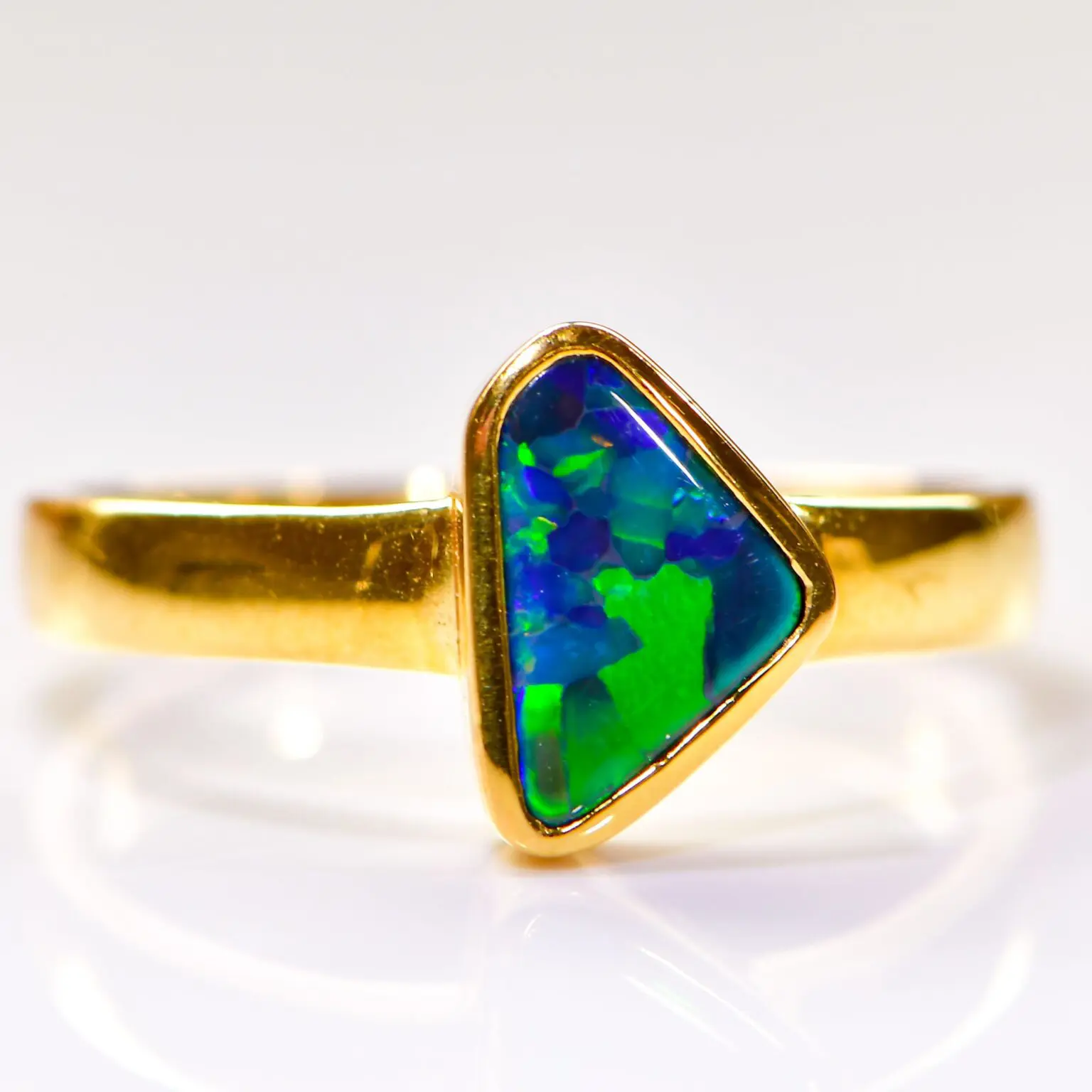
A black opal set in a simple gold bezel setting ring
Pros of a Bezel Setting:
Maximum Protection: The metal rim protects the fragile edges of the opal from chipping.
Secure Fit: The stone is completely locked in, making it very hard for it to fall out.
Smooth Surface: There are no claws to catch on your clothes or hair.
Cons of a Bezel Setting:
Less Light: Because the sides are covered by metal, slightly less light enters the stone. This can make darker opals look a bit less bright.
Hides the Edge: You will not be able to see the side profile of your gemstone.
If you are setting a crystal opal, a bezel with a closed back can also help enhance the colors. You can read more about this in our guide on how to set crystal opals.
Prong Settings Maximizing Light and Color
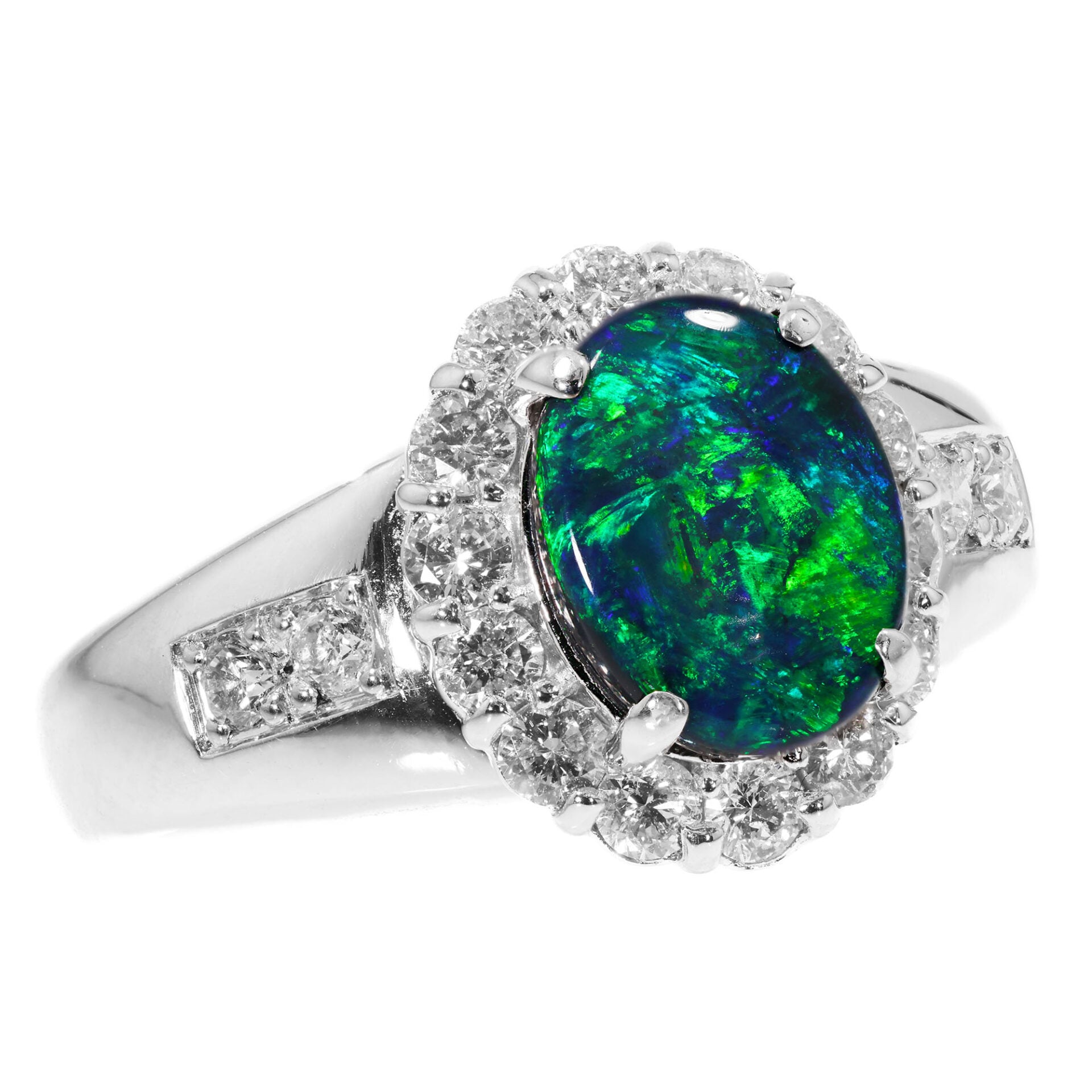
A black opal set in a claw style platinum ring with diamonds
Pros of a Prong Setting:
More Light: The open sides let maximum light hit the opal. This helps the colors flash brightly.
Shows the Whole Stone: You can see almost the entire gemstone, including the sides.
Easier to Clean: The open design makes it simple to wash away dirt and oils.
Cons of a Prong Setting:
Exposed Edges: The sides of the opal are left open, meaning they can easily chip if you hit your hand against a hard surface.
Snagging: The metal claws can sometimes catch on sweaters or loose threads.
Prong settings are great for rings you only wear on special occasions. If you want to wear your ring every day, a bezel setting is usually the safer choice.
Halo Settings The Best of Both Worlds
A dark opal set in a claw style platinum ring with diamonds
If you want the protection of a bezel but the sparkle of a prong, you might like a halo setting. A halo features a border of smaller gemstones, usually diamonds, surrounding the main opal.
The diamonds in the halo sit slightly higher than the edge of the opal. If you bump your hand, the hard diamonds take the hit instead of the softer opal. This gives you excellent protection while adding extra brilliance to your jewelry.
The color of the metal you choose will change how your opal looks.
Yellow Gold: Warms up the stone and makes red or orange fire stand out.
White Gold, Platinum or Silver: Creates a cool background that makes blue and green colors pop.
Rose Gold: Adds a unique, soft contrast that pairs well with white opals.
When our jewelers polish stones, they often test different metal colors to see which one makes the play of color look best. For more details on how stones are prepared, read our opal polishing guide.
Final Thoughts on Setting Your Gemstone
Your choice of setting depends on how often you plan to wear the ring and the type of opal you have. If you want a durable ring for daily wear, a bezel setting is the clear winner. If you are designing a statement piece for special events and want maximum brightness, a prong setting is a fantastic choice.
Always make sure your jeweler has experience working with opals, as the setting process requires a gentle touch.