Opal Galaxy Blog | Australian Opal Guides, Buying Tips & Collector Stories
Opal Polishing 101: Tips, Techniques, and Common Mistakes
Opal polishing is the process of grinding, shaping, and finishing rough opal into a smooth domed cabochon to bring out its play of color, using a sequence of diamond wheels and polishing pads from coarse to fine grit. The process starts with shaping the stone on a 180 grit diamond wheel, then moves through 600, 1200, 3000, and 14000 grit wheels, finishing on a felt or leather polishing pad with cerium oxide or tin oxide for a high mirror polish. Water is used throughout to keep the stone cool and prevent heat fractures, which can crack or craze the opal permanently. Below is a full guide to opal polishing, covering the equipment, grit sequence, technique, and common mistakes to avoid when cutting and finishing Australian opal.
Looking for a Rough Opal to Cut? Make sure to check out our current Rough Opal Parcels Available.
Understanding Australian Opals
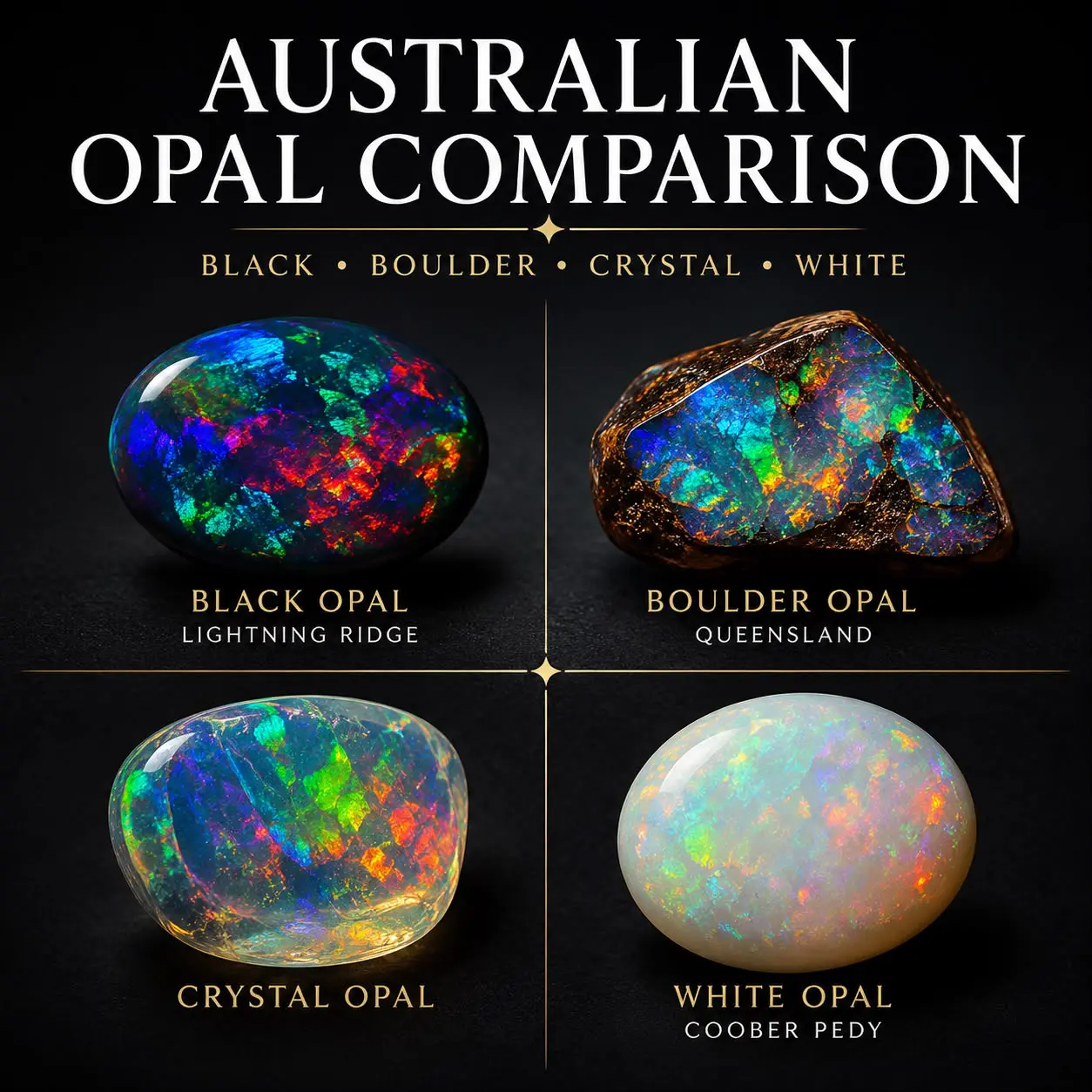
Australia is renowned for its opal varieties, each with unique characteristics:
Black Opal: Found primarily in Lightning Ridge, New South Wales, black opals are prized for their dark body tone and vibrant play-of-color.
Boulder Opal: Mined in Queensland, boulder opals are characterized by their ironstone matrix, which adds durability and unique patterns to the gemstone.
Understanding these differences is crucial, as they influence the cutting and opal polishing techniques employed.
If you are just starting out, we always recommend to start with the lowest grade of opal possible. We are asked almost on a daily basis how our opals look so good after polishing. The answer is experience. You cannot expect to polish an amazing opal overnight. It takes years, even decades of experience to cut and polish an opal to perfection like the opals that we sell. Opal cutting is also one of personal growth, and much of a journey. You will make many mistakes, but the important thing is to learn from them.
Our opal cutter is the most experienced in the World with over 60 years of experience. You may be able to learn some things just by watching some videos of him at work.
Cutting a Black Opal
Cutting a Jewelers Set
Cutting a Black Opal
Flash Stone Cutting
Essential Tools and Equipment
Before beginning the cutting process, assemble the necessary tools:
Trim Saw: For slicing rough opal into manageable pieces.
Diamond Grinding Wheels: Used for shaping and smoothing the opal. Common grit sizes include:
- 80-220 Grit: Coarse grinding to shape the stone
- 280-600 Grit: Medium grinding for refining the shape.
- 1200-3000 Grit: Fine grinding for pre-polishing.
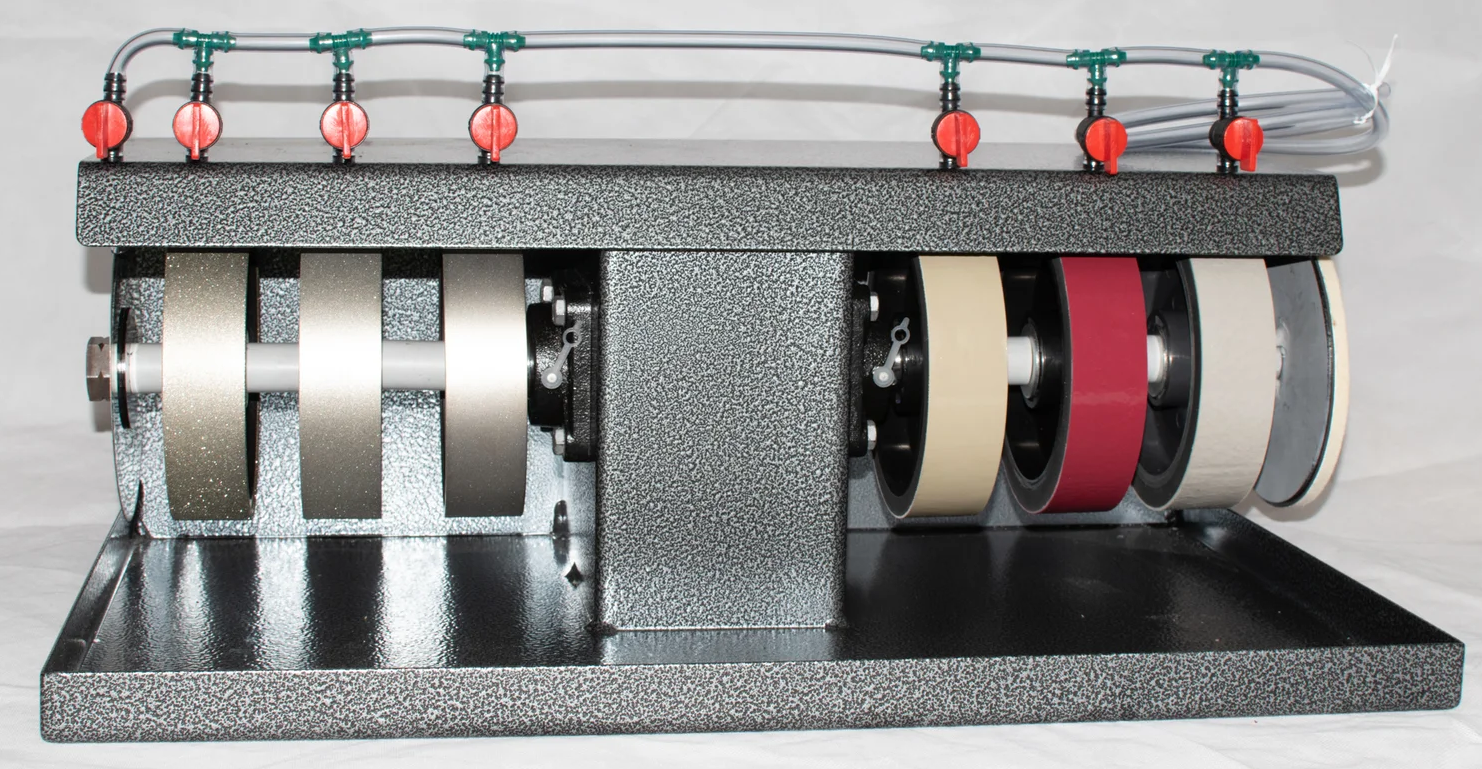
A Lapidary Gemstone Polishing Machine
- Dop Sticks and Wax: For securely holding smaller opals during cutting and polishing.
- Polishing Compounds: Such as cerium oxide or diamond paste, applied with leather or felt pads for the final polish.
- Dremel Tool: A versatile rotary tool useful for detailed work and carving.
Assessing and Preparing the Rough Opal
Begin by examining the rough opal to determine the best approach:
- Identify the Color Bar: Look for the most vibrant and continuous play of color.
- Check for Inclusions: Assess for cracks, sand spots, or other imperfections that may affect the final product.
- Plan the Cut: Decide on the orientation and shape that will maximize the opal’s beauty and size.
- Do Not Rush into it: We often leave some opals for days, even weeks to decide the best route to take when cutting. You can’t uncut an opal; so whatever you decide needs to be the best decision. Some opals orientate a tricky route to look their absolute best, and it’s not always straight forward. It is better to take your time thinking about it than to rush into it and not get the best result possible.
Before and After Cutting Black Opals
Cutting and Shaping
Using the Trim Saw
Carefully slice the rough opal to remove excess material and isolate the desired section containing the color bar.
Grinding with Diamond Wheels
Progress through the following grit sizes:
- 80-220 Grit: Shape the opal, removing significant imperfections.
- 280-600 Grit: Refine the shape and smooth the surface.
- 1200-3000 Grit: Pre-polish the opal, preparing it for the final polish.
Always use water to cool the stone and prevent overheating. Good preparation in the earlier stages of cutting an opal will result in a very short time needed for final polishing. There is a misconception with a lot of cutters that they need to focus mostly on the final polish rather than the preparation stages leading up to it.
Dopping the Opal
Dopping involves attaching the opal to a stick for better control during polishing
- Select Appropriate Dop Sticks: Use wooden dowels or skewers, ensuring they are of consistent length and thickness.
- Apply Dop Wax: Heat the wax, usually with a candle, and apply it to the dop stick, then press the opal onto the wax, ensuring it is securely attached.
- Allow to Set: Let the wax cool and harden before proceeding.
Polishing the Opal
The final polish brings out the opal’s brilliance:
- Use Polishing Compounds: Apply cerium oxide or diamond paste to a leather or felt pad. Different people prefer different compounds; and it really depends what type of opal or job your doing as to which you will use also.
- Polish Gently: Work in a circular motion, applying light pressure to avoid damaging the stone. Polishing opals rely on a good sense of feeling.
- Inspect Regularly: Check the opal frequently to monitor progress and prevent over polishing.
Utilizing a Dremel Tool
A Dremel tool is useful for detailed work and carving:
- Select Appropriate Bits: Use diamond-coated bits suitable for opal.
- Work Slowly: Operate at low speeds to maintain control and prevent heat buildup.
- Cool Frequently: Dip the opal in water regularly to keep it cool.
This method is especially beneficial for intricate designs and small scale projects.
Differences in Cutting Boulder vs. Lightning Ridge Opals
Boulder Opals
- Ironstone Matrix: Boulder opals are attached to an ironstone backing, which adds durability but requires careful polishing to avoid damaging the opal layer.
- Cutting Approach: Often cut in freeform shapes to follow the natural contours of the opal within the matrix.
- Prepare to get Dirty: Due to the nature of boulder opals, prepare to get covered in ground brown ironstone and sandstone. It is not a clean gemstone to cut.
Lightning Ridge Opals
- Black Opals: Known for their dark body tone, which enhances the play-of-color. There are two types of opals from this region; seam opals and nobby opals. As an opal cutter it is important to know the difference, as each of these types of opals should be approached differently when cutting.
- Cutting Approach: Typically cut into standard shapes like ovals or teardrops, focusing on maximizing the color bar.
Understanding these differences ensures appropriate techniques are applied for each opal type.
Safety Considerations
Always prioritize safety:
- Wear Protective Gear: Use safety glasses and a dust mask to protect against debris and inhalation of fine particles.
- Maintain Equipment: Regularly check and maintain tools to ensure they are in good working condition.
- Work in a Well-Ventilated Area: Ensure adequate airflow to disperse dust and fumes.
Common Mistakes One of the most common mistakes people make when polishing opals is using too much pressure or speed, which can easily crack or chip the stone due to its relatively low hardness and internal water content. Another frequent error is skipping grits; jumping from a coarse diamond wheel directly to a polish without adequately smoothing out the surface leads to a dull, uneven finish full of microscopic scratches. Many beginners also neglect to keep the opal and the polishing tool consistently wet, which results in friction induced heat that can cause crazing or even breakage. Using the wrong polishing compound, like metal based polishes or harsh abrasives, can damage the opal’s surface permanently. Lastly, some attempt to polish doublets or triplets (composite stones) as if they’re solid opals, unknowingly damaging the glue layer or plastic cap. Proper technique, patience, and knowing what type of opal you’re working with are essential to avoid costly mistakes. By following these steps and understanding the unique properties of different Australian opals, you can effectively cut and polish these gemstones to reveal their natural beauty.
Frequently Asked Questions about Opal Cutting and Polishing (FAQ)
Can You Repolish an Opal?
Yes, opals can absolutely be repolished, in fact, polishing is one of the final and most crucial steps in bringing out an opal’s true beauty. Whether it’s a rough stone or a dull old gem, polishing restores brilliance and enhances the play-of-color.
There are two scenarios:
- Professional polishing (done with diamond wheels and cerium oxide on felt or leather pads)
- Light home polishing (for maintenance or mild restoration)
If your opal is scratched, matte, or dull, polishing can often bring it back to life, as long as there’s enough material left to work with. Be cautious with thin or doublet opals, as over-polishing can remove layers.
How do I polish an opal?
Polishing opals involves shaping the stone with progressively finer abrasives and finishing with a polishing compound like cerium oxide on a felt or leather wheel. Keeping the stone cool and wet is essential to prevent damage.
Can I polish opals at home?
Yes, with the right tools such as a Dremel, dop sticks, polishing compounds, and safety gear, you can polish opals at home. Beginners often start with inexpensive rough opal to practice.
What tools are needed to polish opals?
- A rotary tool (like a Dremel) or lapidary machine
- Diamond grinding wheels or sanding attachments
- Felt or leather polishing pads
- Polishing compounds (e.g., cerium oxide)
- Dop sticks and wax
- Water for cooling
- Safety equipment (glasses, mask)
How to Make Opals Sparkle Again
If your opal has lost its luster or looks dull/cloudy, here’s how to revive it:
For Light Maintenance:
- Use a soft damp microfiber cloth to remove dirt and oils.
- Gently buff with a clean, dry cloth; this alone can bring back some shine.
- If that doesn’t work, apply a bit of cerium oxide polish or diamond paste using a felt pad or soft leather and rub in circular motions by hand.
For Professional-Level Sparkle:
- Use a 600-1200 grit diamond wheel to pre-polish, then move to 3000 grit or a felt pad with cerium oxide for the final shine.
- Always use water as coolant to avoid heat cracks.
- Avoid aggressive pressure as opal is fragile and can chip.
Note: Never tumble polish precious opals. The vibration and pressure are too harsh for their structure.
What Is the Best Polishing Compound for Opal?
The top recommended compounds for opal are:
- Cerium Oxide: The industry gold standard. Produces a high gloss, glassy finish. Best applied on a leather or felt pad with water.
- Tin Oxide: Sometimes used, but slightly less effective than cerium oxide for opals.
- Diamond Paste (8000–50,000 grit): Used for very fine polishing, especially for crystal opals or perfectionists. Also often used to polish the backs of opals.
Tip: Use minimal compound; too much creates drag and reduces effectiveness. Let the friction and finesse do the work.
How often should I polish my opal jewelry?
Polishing should be done sparingly to avoid unnecessary wear. Generally, polishing once every few years or as needed to maintain the shine is sufficient. Always use gentle methods to polish an opal ring safely.
How Do I Fix My Cloudy Opal?
A cloudy or milky opal can result from:
- Surface residue (dirt, oils, soaps)
- Micro-scratches or abrasion
- Absorption of moisture (especially with hydrophane opals like Ethiopian opals)
How to Fix:
Clean the surface:
- Use warm water and mild dish soap.
- Gently scrub with a very soft toothbrush.
Buff with a microfiber cloth:
- Often this alone removes the “fog” from oils and fingerprints.
Polish:
- For stubborn cloudiness, polish lightly with cerium oxide and felt or leather pad.
- Avoid heat or chemicals as opals are sensitive.
If your opal has turned permanently milky, it could be a hydration issue or internal damage, especially with low quality or treated stones.
How to Revive a Dull Opal
Dull opals can often be restored with the right polishing process.
Clean the stone with water and mild soap.
Inspect for scratches; if the surface is intact, a light polish will work.
Hand Polish:
- Use cerium oxide and a soft felt or leather cloth.
- Buff gently in circles for a few minutes
Machine Polish:
- Use a felt polishing wheel and cerium oxide.
- Keep the stone wet and cool at all times.
Can I Polish Opal with Toothpaste?
Technically, yes, but with caution and only for very light polishing or cleaning.
Here’s the reality:
- Toothpaste is mildly abrasive, so it can remove surface grime and a tiny layer of material.
- Use only non gel, plain white toothpaste (no whitening agents or baking soda).
- Use a soft cloth, apply a small amount of toothpaste, and rub gently in a circular motion.
- Rinse thoroughly and dry.
Don’t use toothpaste on high value opals, doublets, or boulder opals; it’s too unpredictable and not precise enough for fine polishing.
Can I use commercial jewelry cleaners on opals?
No, many commercial cleaners contain harsh chemicals that can damage opals. Stick to mild soap and water for cleaning.
How should I store opals to maintain their polish?
Store opals in a soft, padded jewelry box away from direct sunlight and heat sources. If possible, store them separately from other jewelry pieces to prevent scratches.
What are common mistakes to avoid when polishing opals?
- Using excessive pressure or speed, leading to overheating
- Skipping grit stages, resulting in scratches
- Neglecting to keep the stone wet during polishing
- Not inspecting the stone under good lighting between stages
Is tumble polishing suitable for opals?
Tumble Polishing is generally not recommended for opals, especially precious opals, as it can lead to uneven surfaces and loss of material. Hand polishing allows for better control and results.
Are ultrasonic cleaners suitable for cleaning opal jewelry?
Ultrasonic cleaners may be a good way to clean built up sweat and dirt in crevices of a ring or its small diamonds. Using an ultrasonic cleaner with a set opal however may (although highly unlikely) de-stabilise the opal and cause it to crack. Remember that opals are natural stones; made up of potch and sometimes sand. The ultrasonic may de-stabilise any materials within the opal. It probably won’t happen, however we don’t recommend using this method just in case. Use at your own risk!
Looking for Rough Opal to Cut? Make sure to check out our current Rough Opal Parcels Available.