Opal Galaxy Blog | Australian Opal Guides, Buying Tips & Collector Stories
Why Australian Opal Is the Best in the World
Opals are found on every continent and sold by thousands of dealers worldwide, yet when gem experts, collectors, and luxury jewelry houses want the finest opal on Earth, they turn to one source: Australia. It’s not marketing, it’s geology, chemistry, and over a century of proven results. Australia produces more than 90% of the world’s precious opal, the kind with that vivid, shifting rainbow of color the gem is famous for. What makes it so exceptional starts underground, about 100 million years ago.
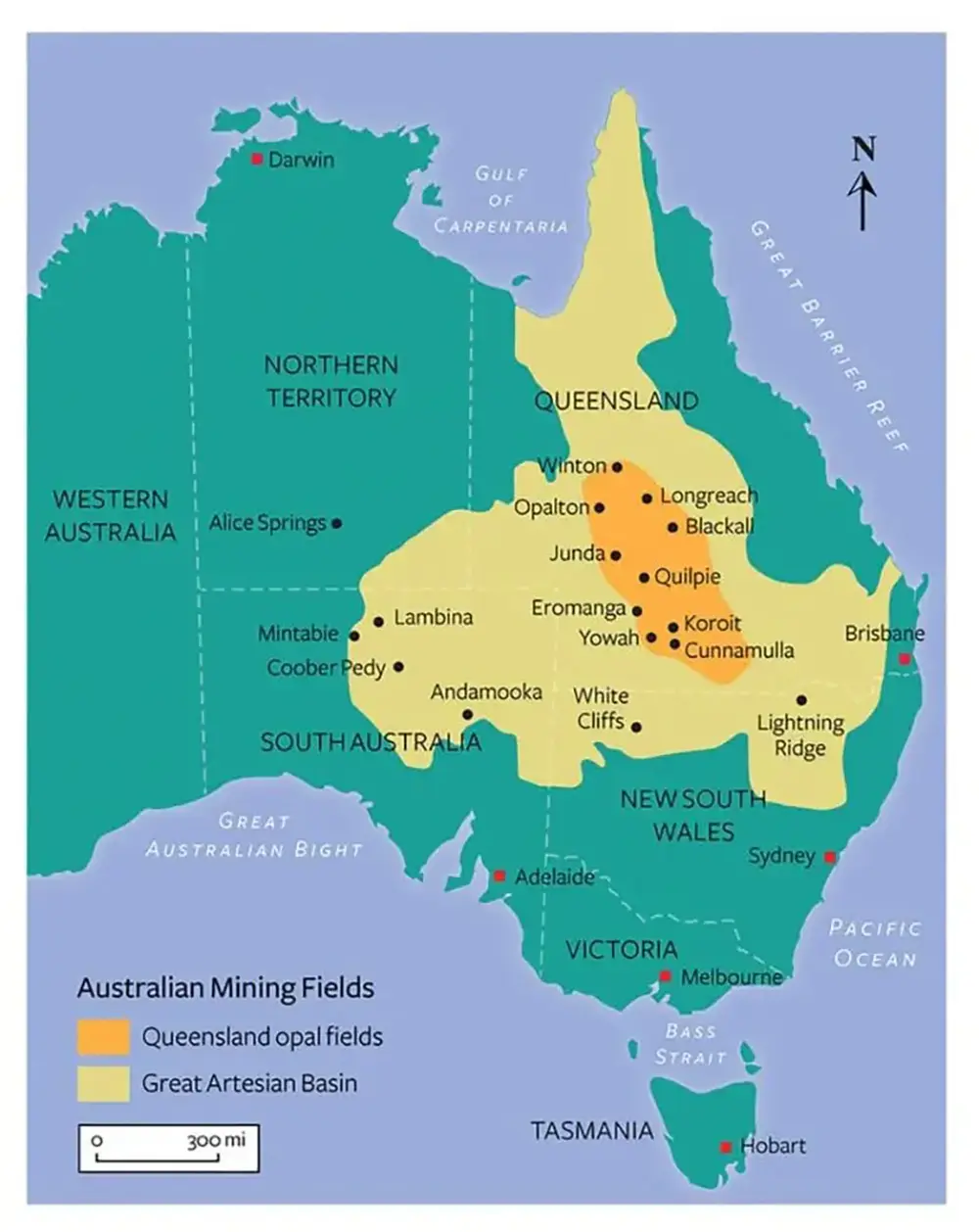
Table of Contents
- What Makes Australian Opal Different From All Other Opals?
- What Types of Opal Does Australia Produce?
- How Does Opal From Other Countries Compare to Australian Opal?
- Quick Comparison: Australian Opal vs World Opals
- Why Australian Opal Holds Its Value
- Is Australian Opal Worth the Higher Price?
- Frequently Asked Questions
What Makes Australian Opal Different From All Other Opals?
Australian opal formed slowly over tens of millions of years inside ancient rocks within the Great Artesian Basin, one of the largest underground water systems on Earth. As water carrying dissolved silica seeped through cracks and gaps in sandstone and claystone, it left behind tiny silica spheres that stacked together in neat, even layers. Over millions of years, these deposits hardened into opal.
This slow process matters because it produces silica spheres that are very uniform in size and packed tightly together. When light hits these evenly arranged spheres, it breaks apart into the bright colors that make precious opal so special. The more uniform the spheres, the more vivid the color.
Australian opal also does not absorb water. Its surface is sealed. It will not soak up oils, chemicals, or sweat. This gives it a level of stability that opal from most other countries simply cannot match, and that makes a real difference for anyone buying opal to wear as jewelry.
The GIA (Gemological Institute of America) recognizes this when grading opal, noting that the most valued opals show strong, consistent color with minimal flaws. Australian opal delivers this more reliably than any other source.
What Types of Opal Does Australia Produce?
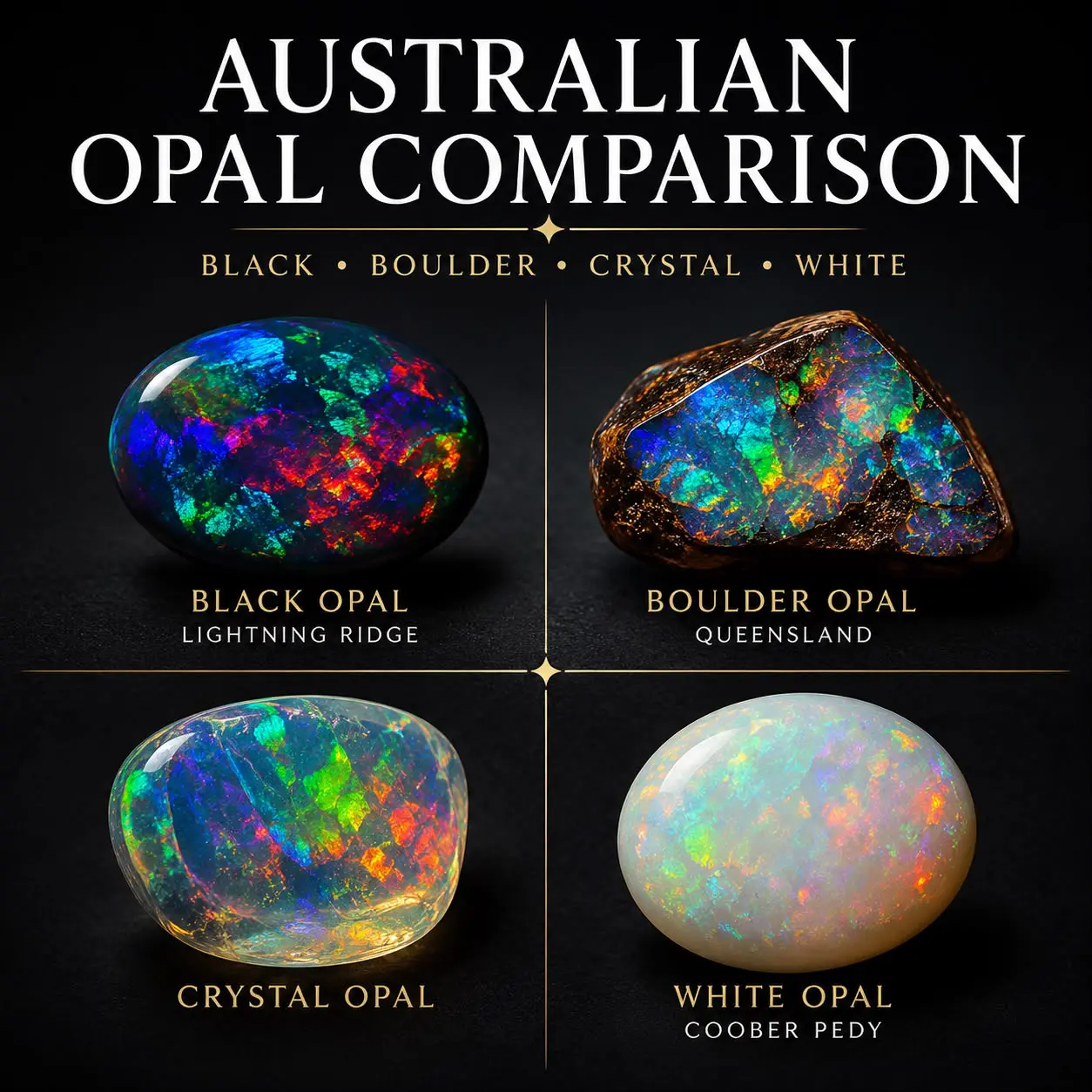
Black Opal
From Lightning Ridge, NSW

Boulder Opal
From Queensland

Crystal Opal
From Coober Pedy and Lightning Ridge

White Opal
From Coober Pedy and Andamooka
Australia does not just produce the most opal. It produces the widest range of opal types, each from a different mining region with its own character. You can learn more about each region in our guide to the opal fields of Australia.
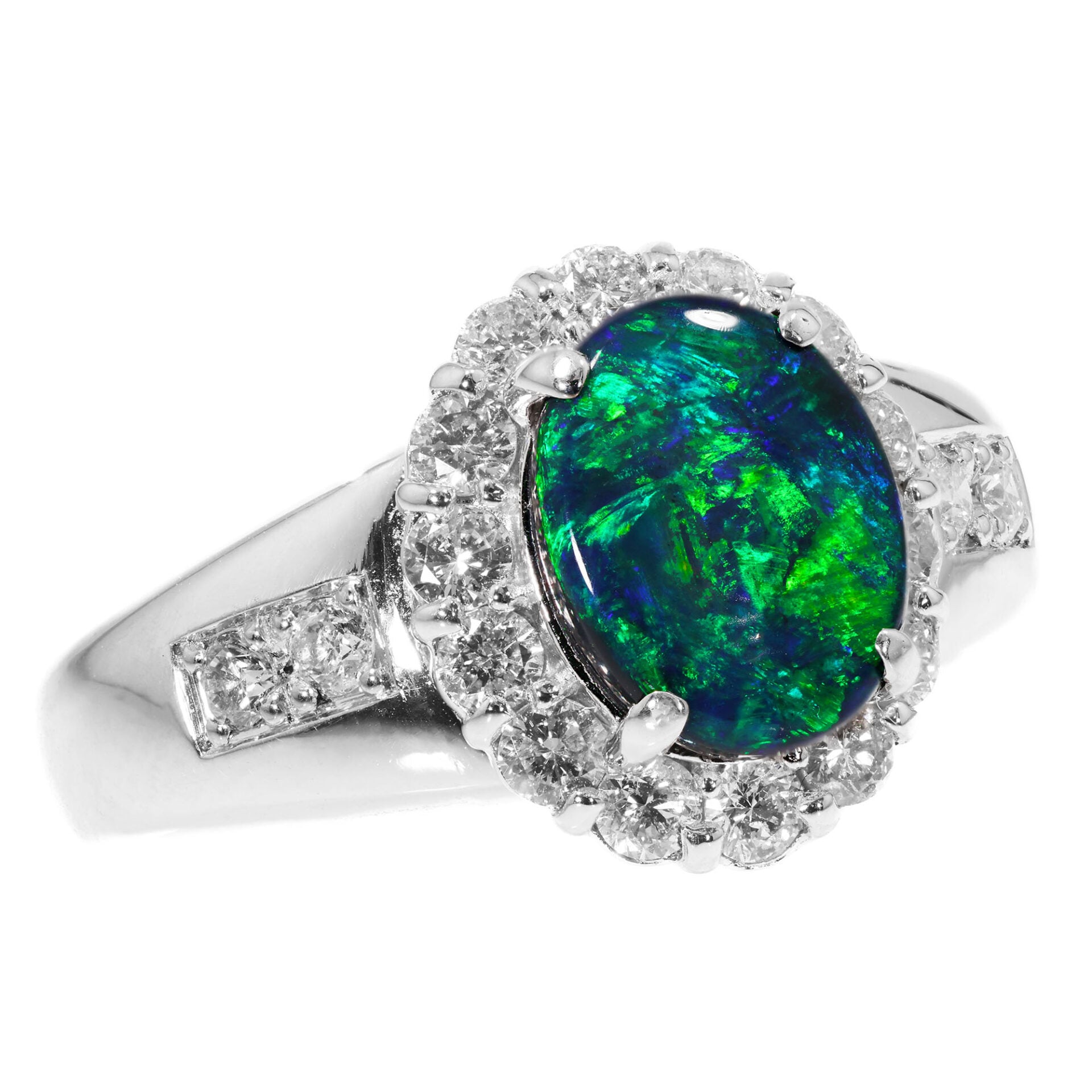
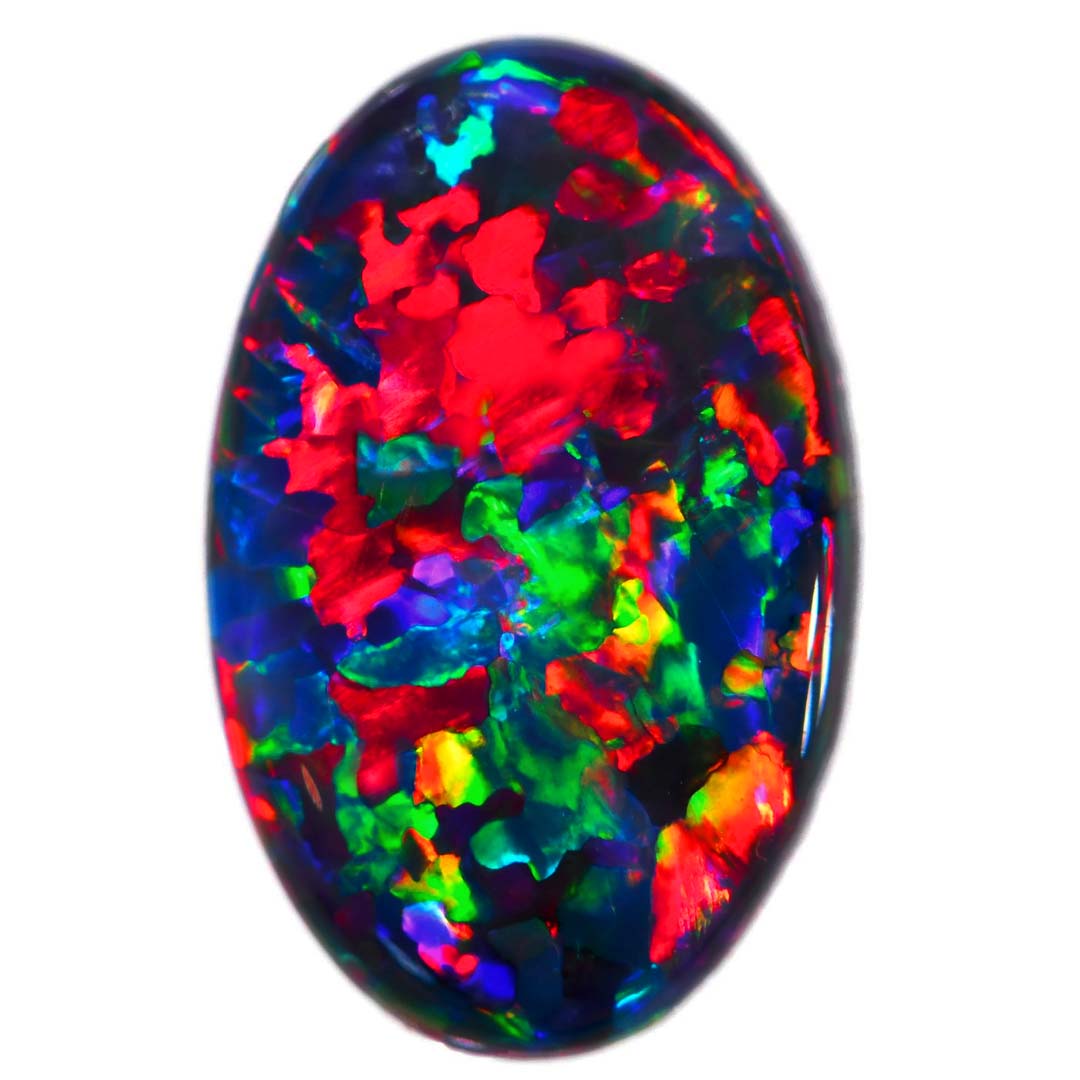
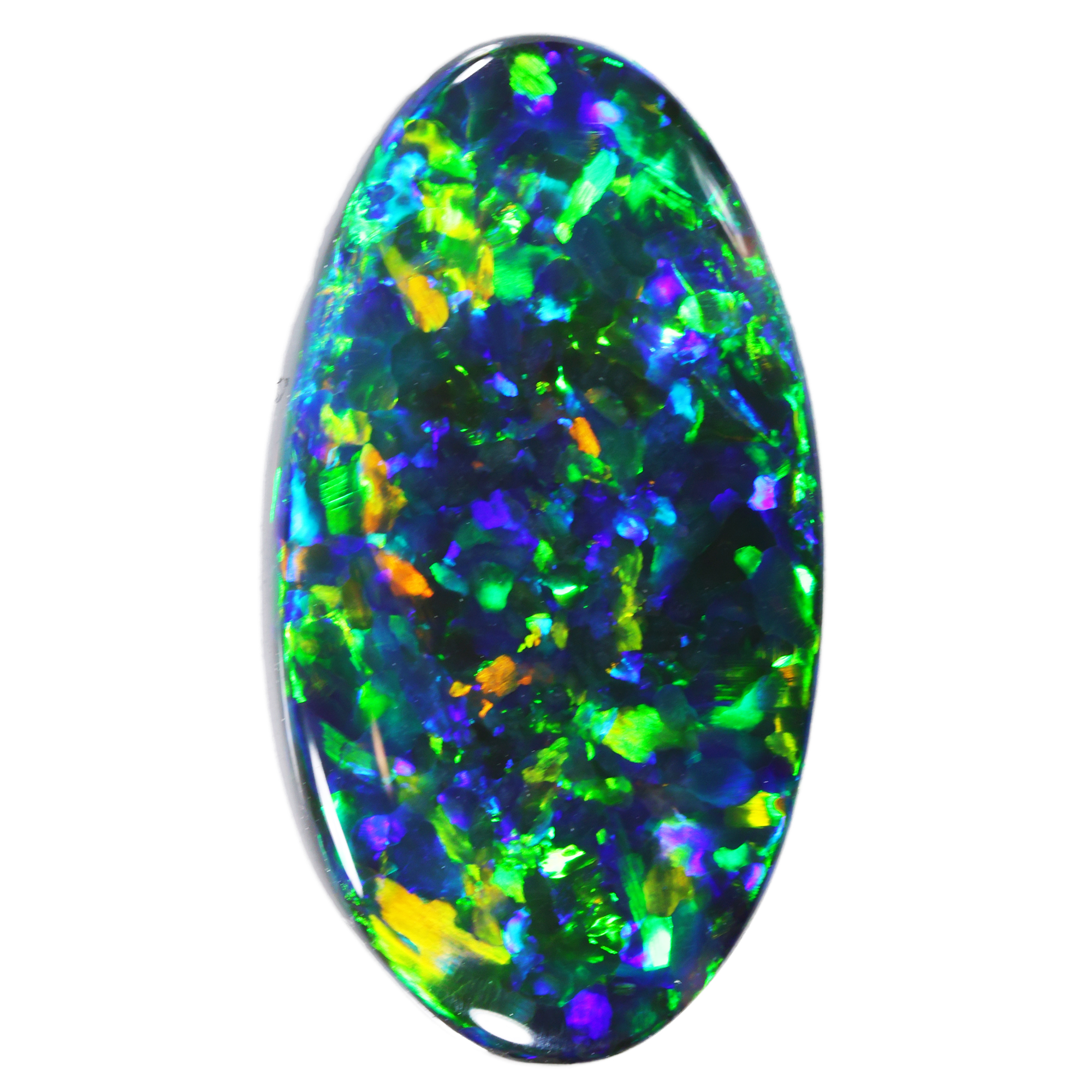
Black opal from Lightning Ridge, NSW. The rarest and most valuable opal on Earth. A dark body tone that makes the colors appear incredibly vivid. Top specimens with red fire and harlequin patterns regularly sell for thousands of dollars per carat. Browse our black opal collection to see this quality for yourself.
Boulder opal from Queensland. Precious opal formed inside natural ironstone, creating completely unique, organic patterns that no two stones share. The ironstone backing is part of the natural gem, not added artificially. Explore our boulder opal range.
Crystal opal from Coober Pedy and Lightning Ridge. Clear or see through opal with intense color visible from every angle. Light passes through the stone, creating a glowing, almost three dimensional color display. See our crystal opal selection.
White opal from Coober Pedy and Andamooka. The most widely available Australian opal, with a light body tone and soft pastel color. A great starting point for new collectors.
Opalized fossils. Found only in Australia. Ancient shells, bones, and even dinosaur remains completely replaced by precious opal over millions of years. These are natural treasures that exist nowhere else on the planet.
This variety, all from one country, is unmatched. Most other opal producing countries only yield one or two types.
How Does Opal From Other Countries Compare to Australian Opal?

Opal is mined around the world. Each source produces material with its own look, and some of it is genuinely beautiful. But every source outside of Australia carries trade offs in durability, stability, or variety that buyers should understand before spending their money.
Ethiopian Opal
Ethiopia became a major opal source after large deposits were found in the Wollo Province in 2008. Ethiopian Welo opal can show impressive color, often in large, vivid flashes, and it costs considerably less than Australian opal.
However, most Ethiopian opal is what is called hydrophane. This means it absorbs water and other fluids through tiny pores in the stone. When it gets wet, the stone goes transparent and the colors disappear. While this usually reverses as the stone dries out, repeated contact with water, sweat, lotions, or cleaning products can cause permanent color loss or clouding inside the stone. There are many reports from jewelers and buyers of Ethiopian opals turning a dull, flat brown after just months of wearing them against skin.
Ethiopian opal also has a smoke treatment problem. Dealers commonly darken the body tone of light colored Ethiopian opal using controlled smoke, making it look like an expensive Australian black opal. This treatment is not always disclosed, and nobody knows for certain how long it lasts.
Ethiopian opal is a beautiful stone at an accessible price. But it carries real risks around long term stability that Australian opal simply does not have.
Mexican Fire Opal
Mexico produces the world’s most famous fire opal, a clear to see through stone with vivid orange, red, or yellow body color, mined mainly in the states of Querétaro and Jalisco. Mexican fire opal forms in volcanic rock.
The key thing to know is that most Mexican fire opals do not show color play. It is valued purely for its warm body color, that sunset glow. The rare Mexican specimens that do show color play sell for higher prices, but they remain softer and more fragile than Australian material because of their volcanic origin.
Mexican fire opal and Australian precious opal are entirely separate gemstone categories. They look different, they behave differently, and they serve different purposes in jewelry.
Brazilian Opal
Brazil produces crystal opal from the Pedro II region in Piauí, and some of it is genuinely good quality. It is stable, low in water content, and can show decent color. Brazilian opal is formed in sedimentary rock, which gives it better structural strength than volcanic varieties.
However, Brazilian production is small, the range of types is limited to mostly crystal opal, and the stones rarely reach the color intensity or pattern quality of top Australian material. Brazil is a respected minor source, but it does not compete with Australia in either volume or quality.
Peruvian Opal
Peru produces a distinctive blue and green common opal from the Andes Mountains. It is beautiful in its own way, smooth and calming in color. But it is a common opal, meaning it does not display color play at all. It is valued purely for its body color and sits in a completely separate category from Australian precious opal.
American Opal (Nevada, Idaho, Oregon)
The Virgin Valley in Nevada produces black opal that can look as good as Australian specimens. However, Virgin Valley opal is famously unstable. Many stones crack or fall apart after being removed from the ground, making them very difficult to use in jewelry. Most end up sold as display specimens rather than wearable gemstones.
Spencer, Idaho produces thin opal material most commonly made into doublets. Oregon produces a range of common and fire opal. Neither source produces material at a scale or quality that compares to Australian fields.
Honduras, Indonesia, and Other Sources
Honduras produces small quantities of matrix and boulder opal from the Erandique region. Indonesia has some opal deposits, though Ethiopian opal is frequently resold as Indonesian in local markets. Neither country produces material that competes with Australian opal in quality, volume, or name recognition.
Slovakia and the Czech Republic were the world’s main opal source for over 2,000 years. The Romans valued European opal above almost every other gemstone. But these deposits ran out in the late 1800s, right around the time Australian opal entered the global market and quickly became the new standard.
Quick Comparison: Australian Opal vs World Opals
|
Australia |
Ethiopia |
Mexico |
Brazil |
Peru |
USA |
|
|---|---|---|---|---|---|---|
|
Formation |
Sedimentary |
Volcanic |
Volcanic |
Sedimentary |
Sedimentary |
Volcanic |
|
Color play |
Yes, full spectrum |
Yes, but can fade |
Rarely |
Yes, limited range | No | Yes, but unstable |
|
Absorbs water |
No | Yes (hydrophane) | Slightly | No |
No |
Varies |
|
Stability |
Very high | Low to moderate | Moderate | Good |
Good |
Low |
|
Opal types produced |
Black, boulder, crystal, white, fossil |
Crystal, white, smoked | Fire opal | Crystal | Common opal |
Black, common |
|
Global supply share |
Over 90% |
Small but growing | Small | Very small |
Very small |
Tiny |
|
Holds value over time |
Yes, proven | Not yet proven | Limited |
Limited |
Limited |
No |
Why Australian Opal Holds Its Value

Australian opal is a limited resource. The major mining fields, Lightning Ridge, Coober Pedy, the Queensland boulder fields, have been producing for over a century, and experienced miners consistently say that finding top quality material is getting harder. There are no new mega discoveries on the horizon. Supply is shrinking while demand is growing.
Global luxury brands have taken notice. In recent years, Dior, Chaumet, and Tiffany & Co. have all featured Australian opal in major collections. The opal jewelry market is projected to grow from roughly $3.5 billion to over $5 billion by 2032. Social media and shows like Outback Opal Hunters have driven a new wave of collector interest worldwide.
Australian opal, particularly solid black opal and fine boulder opal, holds and increases in value over time in a way that Ethiopian, Mexican, and other origin opals currently do not. This is driven by scarcity, proven quality, and a century of market trust.
In 1994, opal was officially declared Australia’s National Gemstone, recognizing its cultural, economic, and geological importance to the country.
Is Australian Opal Worth the Higher Price?
Yes. But not because it is expensive for the sake of being expensive. Australian opal costs more because it is a completely different gemstone experience.
It is structurally stable. It will not absorb water, chemicals, or body oils. The colors you see on the day you buy it are the colors you will see in ten years. It has not been smoke treated, dyed, or chemically altered. Every stone is natural, formed over millions of years, and completely one of a kind.
When you buy Australian opal, you are buying certainty. When you buy opal from other origins, particularly Ethiopian opal, you are accepting a level of risk that the stone may change over time.
For a gemstone you plan to set in jewelry, wear regularly, or pass down to your children, that certainty matters.
Frequently Asked Questions
What country has the best opal in the world?
Australia. It produces over 90% of the world’s precious opal, including the rarest type, black opal from Lightning Ridge, and is the only country that produces the full range of opal varieties: black, boulder, crystal, white, and opalized fossils.
Why is Australian opal more expensive than Ethiopian opal?
Australian opal does not absorb water, is structurally stable, and is completely untreated. Ethiopian opal absorbs water through its pores, can lose color over time, and is frequently smoke treated to darken its appearance. Australian opal’s higher price reflects its better durability, proven longevity, and limited supply.
Is Ethiopian opal real opal?
Yes. Ethiopian opal is a genuine natural opal. However, it has a different internal structure, is formed in volcanic rock rather than sedimentary rock, and absorbs fluids through its surface. This makes it less stable and more likely to change in appearance than Australian opal.
Can Ethiopian opal lose its color permanently?
Yes. Temporary color loss from water usually reverses as the stone dries. But repeated absorption of oils, sweat, lotions, or chemicals can cause permanent internal clouding or color loss. This is a widely reported issue confirmed by jewelers and buyers around the world.
Is Mexican fire opal the same as Australian opal?
No. Mexican fire opal is valued for its warm body color (orange, red, yellow) and is usually transparent. Most Mexican fire opals do not display color play, the shifting rainbow flashes that define precious opal. Australian opal is valued specifically for its color play, making them entirely separate gemstone categories.
Does Brazilian opal compare to Australian opal?
Brazilian crystal opal can be decent quality, stable, with reasonable color. However, production is small, variety is limited, and the best Brazilian material rarely matches the color intensity, pattern quality, or body tone range of top Australian opal.
Why does Australian opal not absorb water?
Because it forms in sedimentary rock over 100 million years through a very slow, stable process. This creates tightly packed silica spheres with almost no internal gaps. Volcanic opals from Ethiopia and Mexico form much faster in porous volcanic rock, resulting in a more open structure that soaks up fluids like a sponge.
Is opal a good investment?
Quality Australian opal, particularly solid black opal with strong color and desirable patterns, has consistently held and increased in value over decades. It is a limited natural resource with growing global demand. Ethiopian and Mexican opal have not yet shown the same track record for holding value over time.
How can I tell if my opal is Australian?
The most reliable way is to buy from a seller who provides clear origin disclosure and certificates of authenticity. Beyond that, Australian opal does not absorb water. You can place a drop of water on the surface and if it beads up and sits on top, the opal is likely sealed Australian material. If the water soaks in and the stone starts to go transparent, it is almost certainly hydrophane Ethiopian opal. A reputable seller will always tell you exactly where your stone was mined.
Where does Opal Galaxy source its opals?
All our opals come directly from Australian opal fields, including Lightning Ridge (NSW), Queensland boulder opal fields, and South Australian mining regions. We are a registered Australian opal seller and a member of both the Opal Association and the International Gem Society.
Can I wear Australian opal every day?
Opal sits at 5.5 to 6.5 on the Mohs hardness scale, which makes it softer than sapphire or diamond. It works well for pendants, earrings, and brooches worn daily. For rings, a protective bezel setting is recommended, and wearing it for special occasions rather than every single day is ideal to reduce the chance of knocks. With reasonable care, Australian opal jewelry lasts a lifetime.
At Opal Galaxy, every opal we sell is natural, untreated, and sourced from Australian opal fields. We are proud members of the Opal Association and the International Gem Society, with over 13 years of experience in the global opal trade.
Ready to see the difference for yourself? Start with our black opals from Lightning Ridge, explore Queensland boulder opals, or browse crystal opals to find the perfect stone.