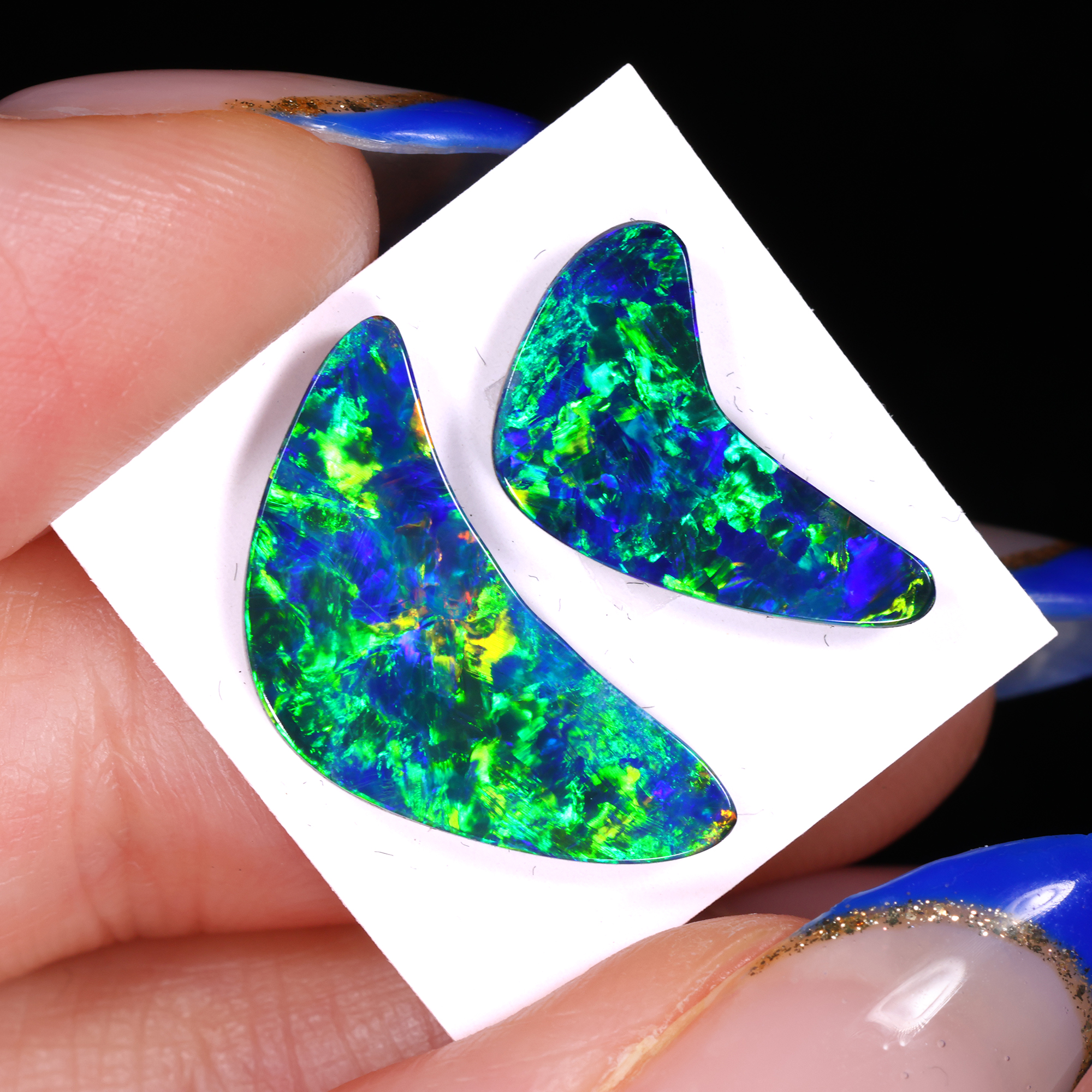
Opal Doublet Pair

Filters

Opal Doublet Pair

An opal doublet pair consists of two carefully matched doublet stones that work together beautifully for earrings, cufflinks, and coordinated jewelry designs. Creating a matched opal doublet pair requires skilled cutters to select stones with similar size, shape, color play, and pattern characteristics that complement each other like siblings rather than identical twins. Each opal doublet features genuine precious opal bonded to dark backing, and pairing them adds the extra challenge of finding two stones where the visible opal layers display harmonious rainbow flashes. Opal doublet pairs for earrings are especially popular because doublets allow craftspeople to use thin opal material efficiently while creating stunning matched sets that showcase authentic Australian opal colors dancing across both stones.

Finding a matched opal doublet pair starts with selecting opal slices from similar material, often cut from the same rough piece or the same mining location to ensure comparable color characteristics. The hand cut process involves shaping both cabochons to matching dimensions while preserving the best color display in each stone. Colorful opal doublet pair stones might show predominantly blue green flashes, fiery red orange patterns, or multicolor displays, with the goal being two stones that feel cohesive when worn together. Assembled gemstone pairs like doublets offer practical advantages over solid opal pairs because the thin opal layers can be more easily matched and the backing helps standardize the appearance. Australian opal doublet pairs work perfectly for opal stud earrings, drop earrings, and other jewelry where symmetry matters but exact duplication would look artificial. The genuine opal layers in each doublet display unique natural patterns formed millions of years ago, making every matched pair special and one of a kind.

Opal Doublet Pair FAQs

What makes a good matched opal doublet pair?

A good matched opal doublet pair shows similar size, shape, and complementary color patterns that work together without looking artificially identical. The two stones should have comparable dimensions so they sit evenly in earring settings or coordinated designs. Their color play should harmonize, meaning they might share dominant colors like blue and green or display similar pattern styles like pinfire or broad flash. Perfect matching is not expected because the opal in each doublet formed naturally with unique characteristics. The best pairs feel like siblings that complement each other rather than twins, with slight variations that add authenticity and interest. Cutters look for doublets where the visible opal layers have similar brightness and the overall appearance creates a balanced pair when viewed together.

Opal doublet pairs are easier to match because the thin opal slices can be cut from the same piece of rough material or from similar seams in the same opal field. When cutters slice thin layers of precious opal, they can select pieces that show comparable color characteristics and cut them to uniform thickness. The dark backing underneath each doublet helps standardize the appearance by providing consistent contrast that enhances the colors equally in both stones. Solid opals require much thicker material and the color can vary significantly through the depth of the stone, making it harder to achieve matching face up appearance. Doublets also allow cutters to control the final size and shape more precisely during construction. Crystal opal and white opal work especially well for creating matched pairs because these types often form in horizontal seams where cutters can extract similar material.

Yes, opal doublet pairs work wonderfully in earrings and are one of the most popular uses for matched doublet sets. Earrings face less daily wear than rings or bracelets, making them ideal for showcasing doublets where the exposed opal surface needs protection from hard knocks. Matched opal doublet pair cabochons fit perfectly into stud earring settings, drop earring designs, and dangle styles. The symmetry of having two coordinated stones creates balanced visual appeal when worn. Many people choose doublet pairs for earrings because they offer the beauty of genuine Australian opal with matched appearance. When wearing opal doublet earrings, avoid getting them wet during swimming or showering because moisture can affect the adhesive bond between layers. Clean them gently with a soft dry cloth rather than submerging in water.

Creating matched opal doublet pairs begins with selecting suitable opal material that can yield similar stones. Cutters often work with crystal opal or white opal sliced from the same rough piece or from comparable seams in the mining field. They cut thin layers of precious opal, then carefully shape and grind each piece to matching dimensions while watching how the colors develop during the cutting process. Each opal slice gets bonded to backing material, usually black potch or ironstone, using strong adhesive. After assembly, the cutter grinds and polishes both doublets together, constantly comparing them to ensure the shapes, sizes, and color displays complement each other. Hand cut opal doublet pairs require experienced eyes because the cutter must judge not only the technical measurements but also the aesthetic harmony between the two finished stones.

Opal doublet pairs work best in earrings where you need two coordinating stones that create symmetrical appeal. Stud earrings showcase doublet pairs beautifully because the matched stones sit directly on the earlobes creating balanced color display. Drop earrings and dangle designs also suit doublet pairs perfectly, especially when the movement makes the rainbow colors flash and dance. Cufflinks represent another excellent use for matched doublet pairs because they require two stones of similar appearance. Some jewelry designers create coordinating pendant and earring sets using stones from the same doublet pair material. Opal jewelry featuring doublet pairs offers genuine Australian opal beauty in practical matched sets. The pairs work in both casual everyday wear and special occasion pieces depending on the setting and design style chosen.

Opal doublet pairs typically show similar but not identical colors because each piece of opal formed with unique natural characteristics. A well matched pair might both display predominantly blue and green flashes, or both show warm red and orange fire, creating color harmony between the stones. The actual patterns and exact color distribution will differ between the two doublets since no two opals are exactly alike. This natural variation makes the pairs more interesting and authentic looking compared to synthetic materials that can be manufactured identically. Some pairs show mirror image effects if the opal slices came from a naturally split piece, while others complement each other through shared dominant colors and similar brightness levels. The goal in matching is creating two stones that look beautiful together rather than forcing them to appear artificially identical.

Where does the opal in doublet pairs come from?

The precious opal used in Australian doublet pairs comes from the same famous mining locations that produce solid opals, including Lightning Ridge, Coober Pedy, Andamooka, Mintabie, and Queensland boulder fields. Cutters seek thin seams and layers of opal rough showing vibrant color play suitable for slicing into doublet material. Crystal opal and white opal from Coober Pedy works especially well for creating matched pairs because this material often forms in consistent horizontal seams. White opal and light crystal opal provide translucent layers that come alive when bonded to dark backing. Queensland produces opal in ironstone formations where thin precious opal veins can be carefully extracted. The matching process works best when both stones in the pair originate from the same rough piece or from similar material in the same field, ensuring the opal formed under comparable conditions and displays related color characteristics.