Trax NYC Opal: How One Jeweler Made Opals Go Viral
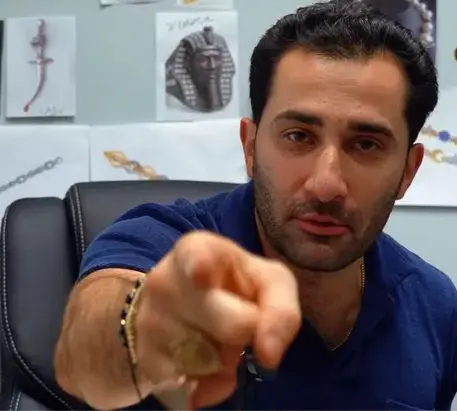
Trax NYC opal content is reaching millions of people, and it is doing something the opal industry has struggled to pull off for decades. Maksud “Trax” Agadjani, the founder of TraxNYC, has spent the past year flooding social media with opal videos that consistently go viral. A TikTok of a 24 karat gold eagle claw gripping a spherical opal pulled in over 112,000 likes. A video featuring a $250,000 opal drew nearly 90,000. His limited edition Black Sphere Opal Claws, featuring natural opals ranging from 20 to 30 carats set by hand in gold claw settings, have become some of the most talked about pieces in his catalog.
TraxNYC has over 3.4 million followers on Facebook alone, with a combined audience across TikTok, Instagram, and YouTube that reaches well into the millions. When Agadjani holds up an opal to camera and tells his audience what makes it special, more people see that stone in a single afternoon than most opal dealers reach in a year.
In this article
The Uncut Gems Connection
Agadjani’s relationship with opal goes back further than his current social media run. In 2019 he was cast in the crime thriller Uncut Gems, directed by Josh and Benny Safdie and starring Adam Sandler. He played Yussi, an employee at the fictional jewelry store run by Sandler’s character Howard Ratner. Much of the film was shot inside TraxNYC’s real offices at 64 West 47th Street in New York’s Diamond District, and many of the people who appeared on screen were genuine jewelers from the building.
The center of the film is a single gemstone: a large Ethiopian opal still embedded in its host rock, smuggled from the Welo mines of Ethiopia to New York. Sandler’s character stakes everything on its value. NBA star Kevin Garnett, playing himself, becomes so drawn to the stone that he believes it brings him luck on the basketball court.
The film introduced opal to mainstream audiences in a way nothing had before it. According to the Gemological Institute of America, the opal in the movie was a representation of Ethiopian opal in matrix, though the film called it black opal. The prop was assembled from multiple real opal pieces arranged to appear as a single massive specimen, since a genuine uncut stone of that size was far beyond the production budget.
For Agadjani, the experience left a mark. In interviews since, including a widely viewed appearance on Valuetainment with Patrick Bet David, he has spoken about how the film drew directly from the real culture of the Diamond District. He has continued building opal into a core part of his jewelry line, an unusual move for a jeweler built on diamond chains and custom gold work.
Why Trax NYC Opal Content Works
The opal pieces Agadjani produces are not traditional opal jewelry. They are bold, sculptural, and built to stop someone mid scroll. The Black Sphere Opal Claws feature round opal spheres gripped by detailed gold talons, designed as statement pendants. A grizzly bear pendant on his site features a diamond covered bear head holding an opal in its jaws. His Uncut Gems opal and diamond ring remains one of his signature catalog pieces.

What makes the approach effective is that Agadjani is not selling opal the way the traditional gemstone industry sells it. He is not talking about geological formation or mineral classification. He holds up a stone, points at the color, and says look at this. For an audience that has never seen an opal up close, that is more persuasive than any written guide.
The result is a growing audience, many of them younger, many of them men, who are seeing opal for the first time and asking the right questions. Where does it come from? What makes one opal worth more than another? Why do some opals cost $50 and others cost $250,000? These are exactly the right questions, and the answers matter.

What New Opal Buyers Should Know

The opals in TraxNYC’s collection, and the opal at the center of Uncut Gems, are Ethiopian opals. Ethiopian opal was first discovered in 1994 in the Welo province and has since become the main alternative to Australian opal on the global market. It can be visually impressive, with vivid play of color and wide availability at price points typically ranging from $5 to $300 per carat.
But there are real differences that first time buyers need to understand.
Ethiopian opal is hydrophane. The stone is porous and absorbs water, which can temporarily or permanently change its appearance. A bright, fiery Ethiopian opal can lose its color when exposed to moisture and may not recover.
This makes it far less stable for everyday wear compared to Australian opal, which does not absorb water and will not change over time.
The durability difference comes down to formation. Australian opals formed slowly over millions of years within the sandstones of the Great Artesian Basin. Ethiopian opals formed far more rapidly through volcanic activity. The result is a structural difference at the molecular level. Australian opal is denser, more stable, and better suited to jewelry worn daily.
There is also the question of treatment. A growing number of Ethiopian opals on the market have been smoke treated or sugar acid treated to darken their body tone and imitate the appearance of black opal from Lightning Ridge, which is the rarest and most valuable opal in the world. Natural black opal comes only from Lightning Ridge in New South Wales, Australia.
It commands prices from $500 to over $50,000 per carat for top quality stones, compared to $5 to $300 for Ethiopian material. The visual difference between a treated Ethiopian stone and a genuine Australian black opal can be nearly invisible in photos or short video clips, but the value gap is enormous. Our full comparison of Australian black opal vs smoked Ethiopian opal breaks this down in detail.
None of this means Ethiopian opal has no place in the market. It does. It offers color and beauty at a price point that makes opal accessible to people who might never otherwise encounter the gemstone. What TraxNYC is doing with Ethiopian opal in bold, sculptural settings is bringing long overdue attention to a stone the traditional industry has undermarketed for years. That benefits everyone in the opal world.
But for buyers who want a stone that will hold its value, hold its color, and last a lifetime, the path leads to Australia. Our opal price guide and opal buying guide explain exactly what to look for.
A Rising Tide
The opal industry has not traditionally been good at marketing itself. Compared to diamonds, which have had decades of coordinated global campaigns behind them, opal has depended on its own beauty and the knowledge of specialist dealers to find its audience.
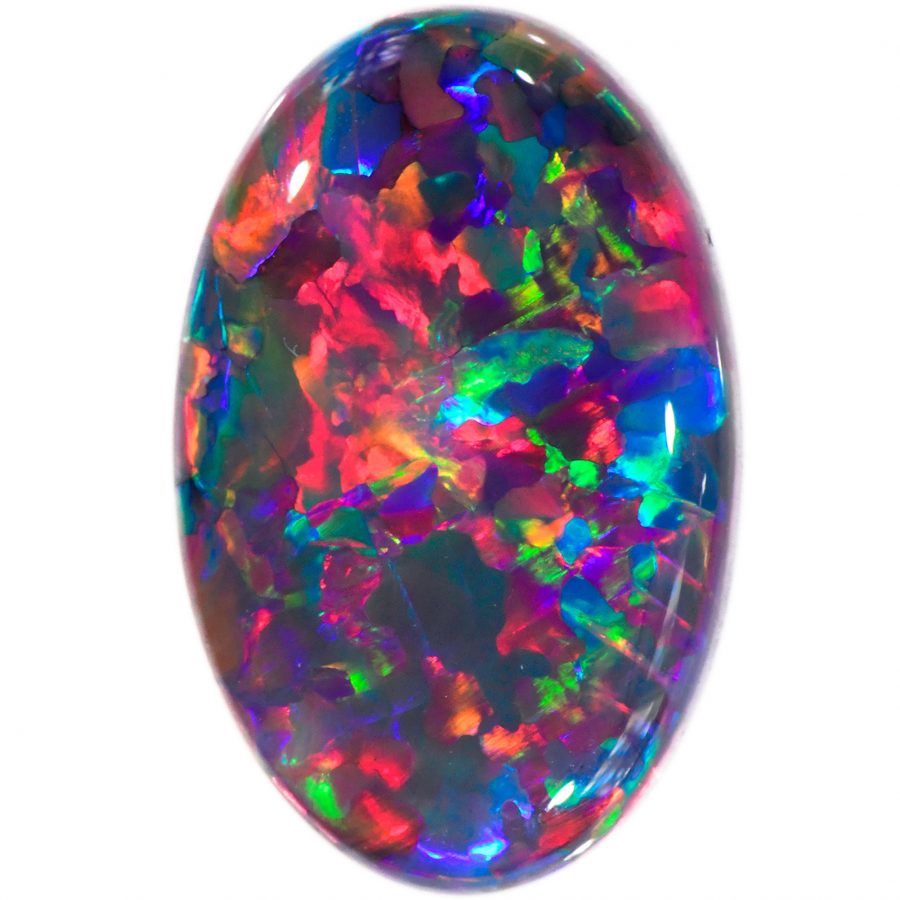
What the Trax NYC opal phenomenon proves is that opal does not need a traditional marketing campaign. It needs to be seen. When millions of people watch a stone flash red, green, and blue inside a gold claw on their phone screen, the gemstone does the work. The questions that follow, where can I get one and what should I look for, are where education becomes essential.
For those exploring opal for the first time, understanding the difference between Ethiopian and Australian opal is the most important starting point. Knowing whether a stone is natural or treated, solid or composite, hydrophane or stable, determines not only what you pay but what you actually receive.
“Anything that brings more attention to opal is positive for the entire industry,” said Michael Shepherd of Opal Galaxy. “Trax NYC is reaching people who have never held an opal in their hands, and that is genuinely exciting. Our role is to make sure that when those buyers start looking deeper, they can find accurate information about what separates a good opal from a great one, and where the best stones in the world actually come from.”
Australia produces approximately 85% of the world’s opal. Lightning Ridge remains the only commercial source of natural black opal on the planet. For every person who discovers opal through a viral Trax NYC opal video and decides they want the real thing, the path ends where it always has: the Australian outback.
If you are ready to explore natural Australian opals, browse our collection at Opal Galaxy.
Explore
Australian Opals
Handpicked stones from trusted sources. Natural beauty, ethically sourced and crafted with care.

Related Guides