Rainbow Opals – Nature’s Ultimate Play of Color
Among the most captivating treasures found in nature, few can rival the hypnotism of the rainbow opal. Known for their spectacular display of multiple colors shimmering across the stone’s surface, rainbow opals are a living kaleidoscope that turn light into a dance of fire and vibrancy. These opals are more than just beautiful gemstones; they are a geological masterpiece, created through a unique interplay of silica, water, and time.
In the gemstone world, opals already stand out for their play of color, but rainbow opals take it to the next level, exhibiting the full spectrum of colors in one stone. Reds, oranges, greens, blues, violets, and even flashes of gold can swirl together, creating a visual effect unlike any other gemstone on Earth.
Whether set in jewellery, collected as investment pieces, or admired as natural art, rainbow opals are treasured by miners, gem dealers, and collectors alike.
What is a Rainbow Opal?
A rainbow opal is a type of precious opal that displays all or most colors of the visible spectrum within the same stone. While other opals may focus on dominant shades such as fiery reds or electric blues, rainbow opals contain a diverse spread of hues that shift and change with movement.
The most prized rainbow opals are those that:
- Exhibit bright, highly saturated colors visible from multiple angles.
- Contain full spectrum play of color rather than just two or three tones.
- Ideally have a clean, dark body tone (in the case of black rainbow opals) that enhances contrast.
This combination of beauty and rarity makes them highly sought after in both the fine jewellery market and the world of serious gemstone investment.
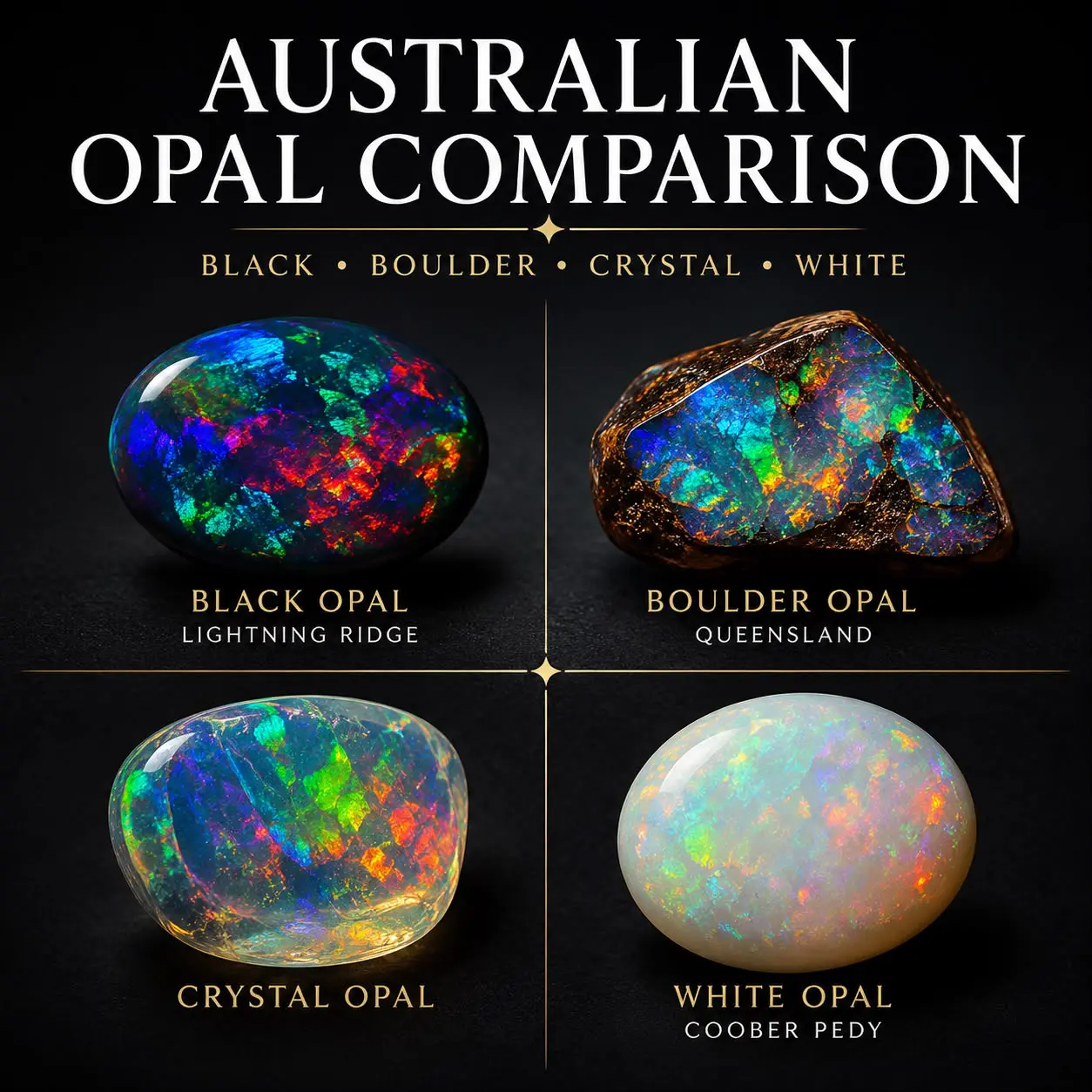
Rainbows can form in any type of opal, including but not limited to boulder opals, black opals, dark opals, crystal opals and white opals.
Where Are Rainbow Opals Found?
While opals are mined in several countries around the world; including Ethiopia, Mexico, and the USA, the finest rainbow opals come from Australia, particularly Lightning Ridge, famous for its exceptional black opals.
Other notable sources include:
- Coober Pedy, South Australia – producing lighter bodied rainbow opals with pastel yet vivid play of color.
- Mintabie and Andamooka – known for striking crystal and matrix opals with rainbow flashes.
- Ethiopia’s Welo fields – producing hydrophane opals that can also exhibit rainbow color play, though often less stable than Australian varieties.
Australian rainbow opals are especially valuable due to their stability, brightness, and intensity of color.
How Rainbow Color Opals Form Compared to Other Opal Colors
All opals are made from microscopic silica spheres deposited in cracks, cavities, and voids within rocks over millions of years. The way these silica spheres are arranged determines whether an opal has color, and if so, what kind of color it displays.
- Rainbow opals form when the silica spheres are extremely uniform in size and are arranged in a near perfect grid like pattern. This regular arrangement diffracts light into all wavelengths of the visible spectrum, producing multiple colors in one stone.
- Single color opals occur when the silica spheres vary slightly in size or the arrangement favours certain wavelengths. For example, larger spheres may produce reds and oranges, while smaller ones lean toward blues and violets.
- The intensity of color is also influenced by body tone (black body tone provides the most contrast) and the thickness of color bars within the stone.
In other words, rainbow opals aren’t just lucky, they are the result of an incredibly rare geological perfection in structure.
The Famous Virgin Rainbow Opal
One of the most remarkable rainbow opals ever discovered is known as the Virgin Rainbow Opal. Found in Coober Pedy, Australia, this extraordinary gemstone boasts full-spectrum color play.
Gem dealers and museums have described it as a once-in-a-lifetime discovery, both for its pattern rarity and the intensity of its rainbow colors.
This opal has been displayed in exhibitions, featured in opal literature, and continues to inspire awe as one of Australia’s greatest gemstone finds. It is on display at the South Australian Museum.
Patterns in Rainbow Opals
The beauty of a rainbow opal is not just in the colors it displays, but also in the patterns those colors form. Some of the most valuable rainbow opals show rare patterns such as:
- Harlequin – Large, distinct patches of color arranged like a checkerboard.
- Floral – Swirling color reminiscent of petals or blossoms.
- Pinfire – Tiny, pinpoint flashes scattered across the stone.
Pattern rarity plays a huge role in determining the value of a rainbow opal, especially when combined with brightness and strong spectral coverage.
Rainbow Opals in Jewellery
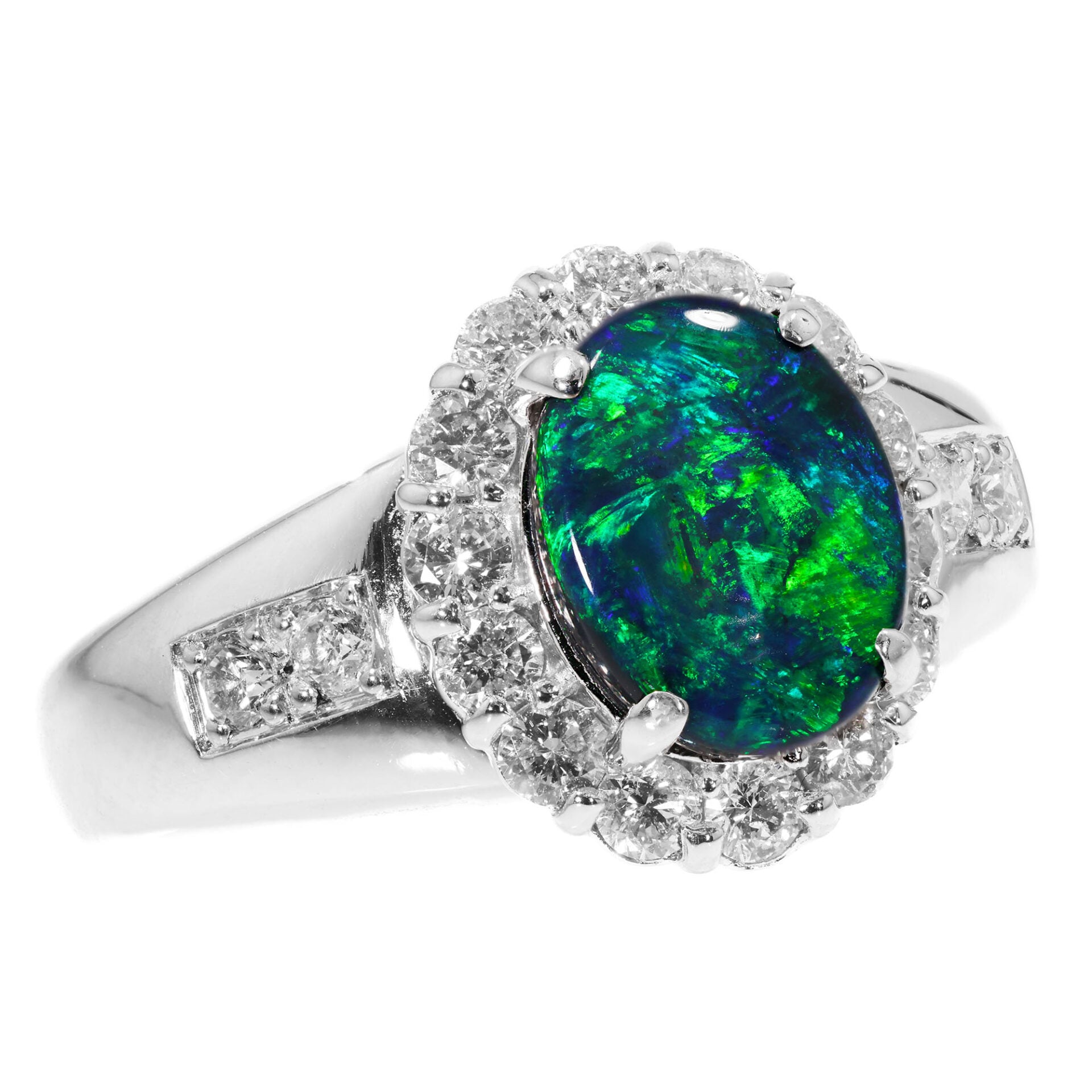
Because of their intense color play, rainbow opals are a favorite for high end jewellery designers. However, they require careful handling due to their relative softness compared to other gemstones.
Popular settings include:
- Opal rings – Often bezel set to protect the stone’s edges.
- Pendant necklaces – Allowing light to move across the surface freely.
- Earrings – Showcasing matching rainbow pairs for symmetry.
Many jewellers prefer to leave high grade rainbow opals in loose form so collectors can admire them in their natural state without risking damage from wear.
Why Collectors Love Rainbow Opals
To gem collectors, rainbow opals tick all the boxes: rarity, beauty, uniqueness, and investment potential. No two are exactly alike, and the very best stones can appreciate significantly in value over time.
Collectors often look for:
- Strong brightness from all viewing angles.
- Wide color coverage without dull or dead patches and no inclusions.
- A rare pattern that enhances the beauty of the colors.
Given that top grade rainbow opals are becoming harder to find in the mines, they are often snapped up quickly at auctions and private sales.
The Magic of Rainbow Opals
Rainbow opals are more than just gemstones, they are miniature galaxies of color formed by nature over millions of years. They embody light, movement, and the wonder of geological perfection. From the legendary Virgin Rainbow Opal to small but dazzling stones set in fine jewellery, these gems continue to inspire awe and desire across the world.
For those lucky enough to own one, a rainbow opal is not just a stone, it’s a piece of the Earth’s artistry, holding the spectrum within its depths.