Opal Galaxy Blog | Australian Opal Guides, Buying Tips & Collector Stories
The Beauty of Chinese Writing Pattern Black Opals
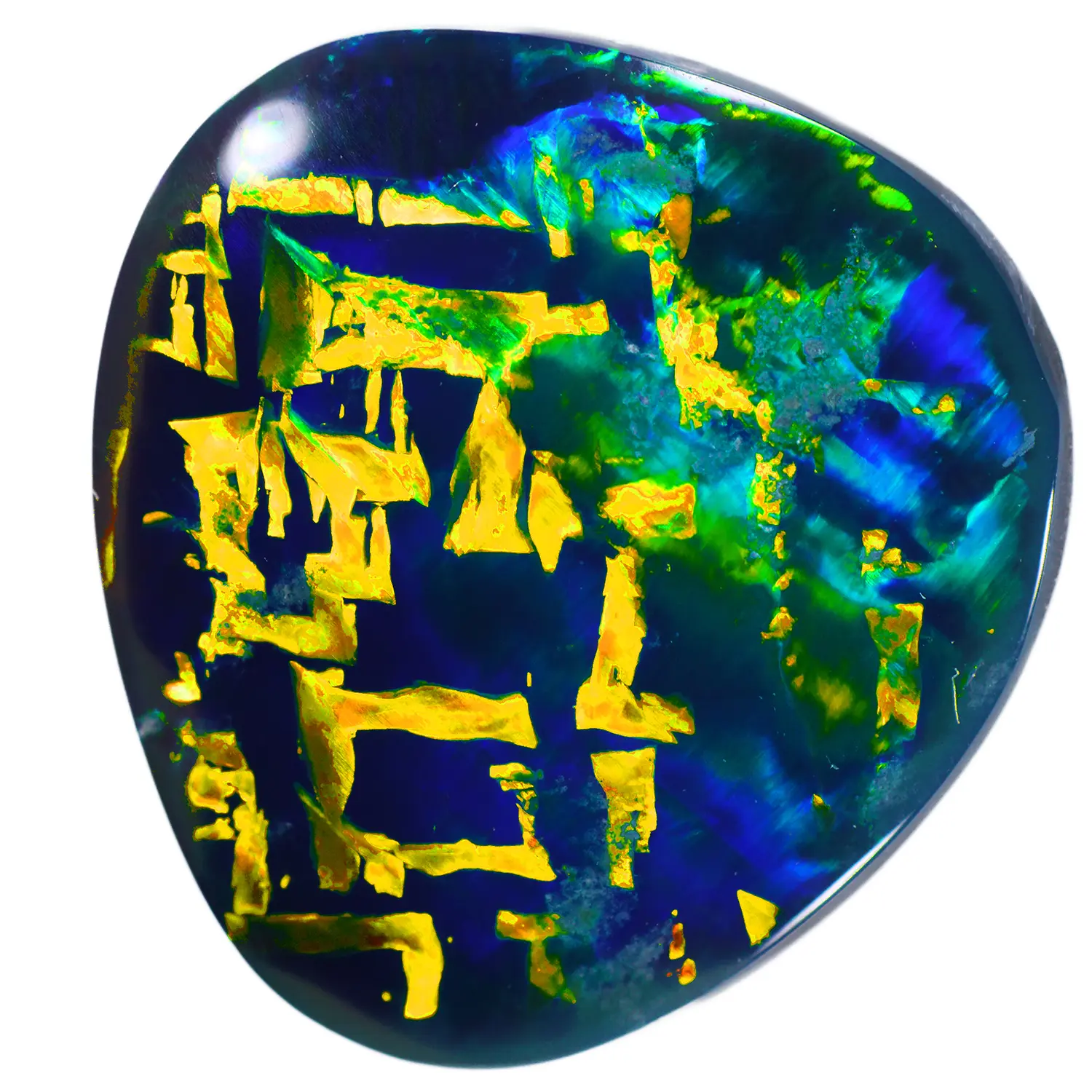
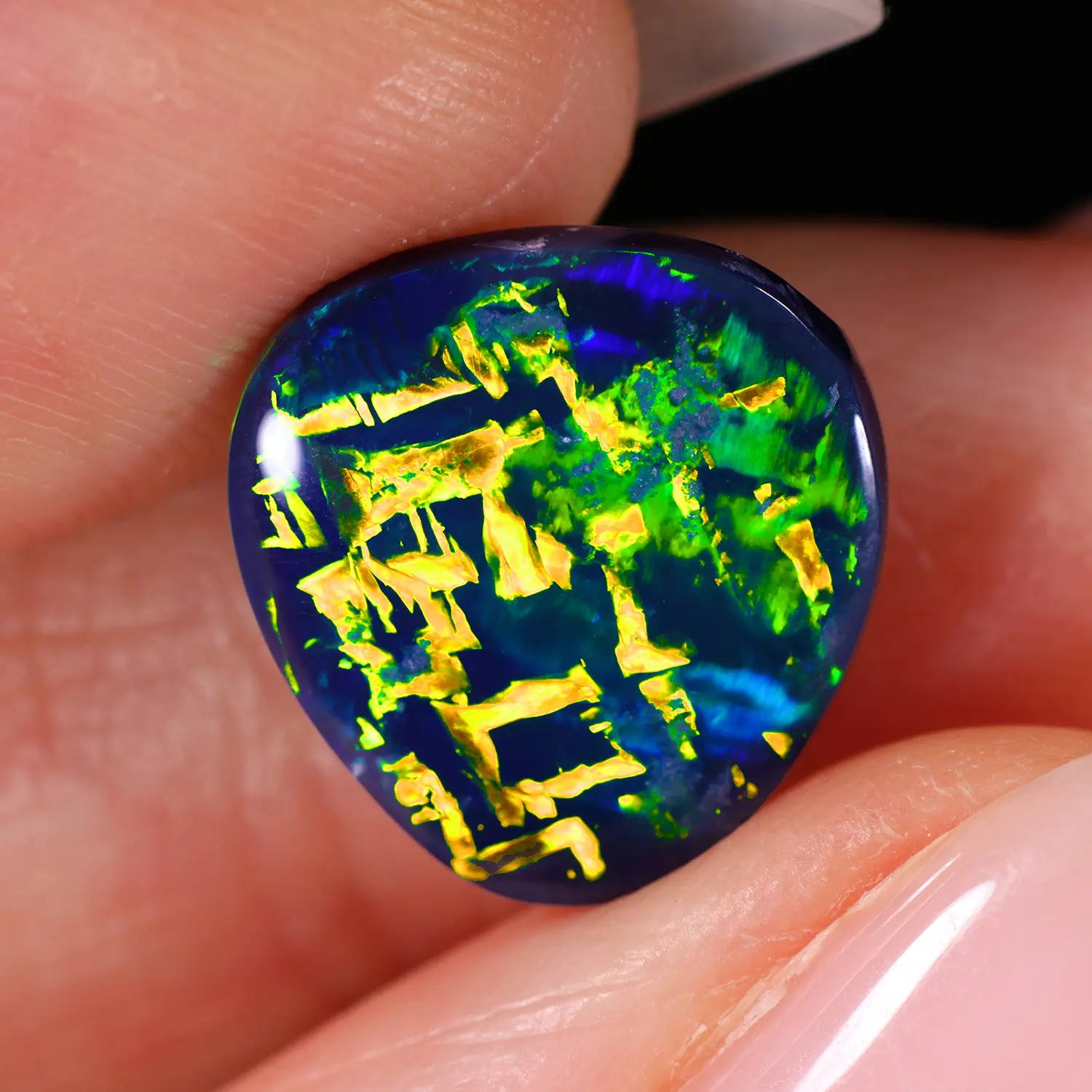
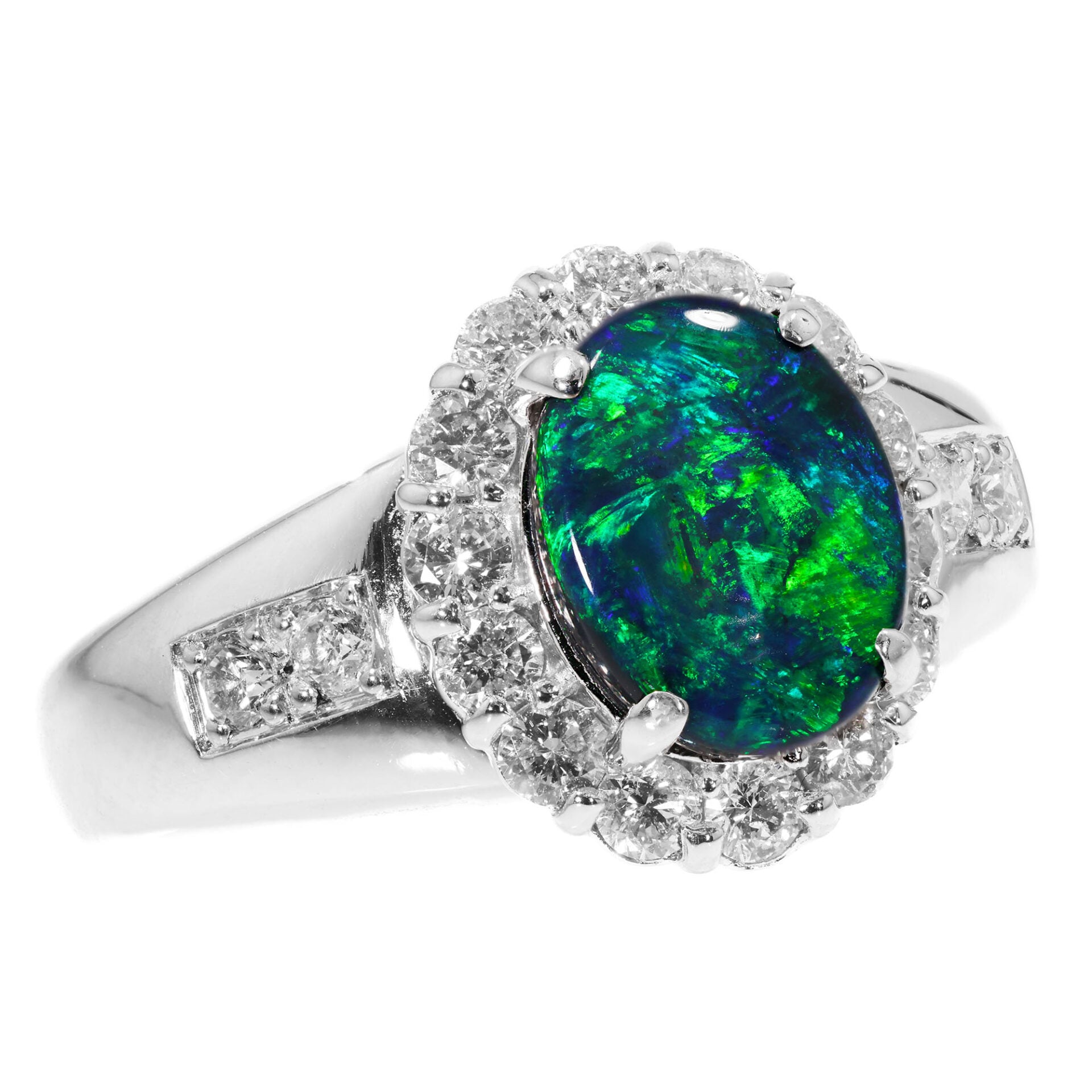
Chinese writing pattern black opal is a type of black opal from Lightning Ridge where the play of color forms thin angular lines and shapes that resemble Chinese or Japanese script across the face of the stone. The pattern is one of the most sought after in black opal because it is rarely produced by nature and stands out clearly against the dark body tone, with bright reds, greens, and blues tracing the script like calligraphy. Stones with strong red on black Chinese writing pattern sit at the top end of the market and are highly collectible alongside harlequin and ribbon pattern opals. Below is a full guide to Chinese writing pattern black opal, covering how it forms, why it is valued, and what to look for when buying one.
In the world of precious opals, no two stones are ever alike, but every so often, a pattern emerges so distinct, so mesmerizing, that it demands its own chapter in the opal collector’s bible. One of these spectacular rarities is the Chinese Writing Pattern Black Opal. A gem that appears as if nature itself dipped a brush in color and composed poetry across a stone canvas.
Highly sought after by serious collectors and lapidary artists alike, Chinese Writing Pattern Black Opals are among the most enigmatic and rare pattern types in the Australian opal kingdom. These stones feature angular, abstract, and often jagged streaks that resemble Mandarin or Chinese calligraphy, hence their evocative name. But don’t be fooled, they have nothing to do with China. These opals are 100% Australian made by the land itself, and their patterns are a geological mystery millions of years in the making.
So what exactly is a Chinese Writing Pattern Black Opal, and why do collectors chase them with such fervor?
What Is a Chinese Writing Pattern in Opals?
The term “Chinese Writing Pattern” refers to a specific visual texture seen in some black opals where the play of color appears in jagged, linear strokes, almost like scribbled calligraphy. It’s not a uniform pattern but a chaotic, artistic explosion of neon flashes that intersect like a coded language.
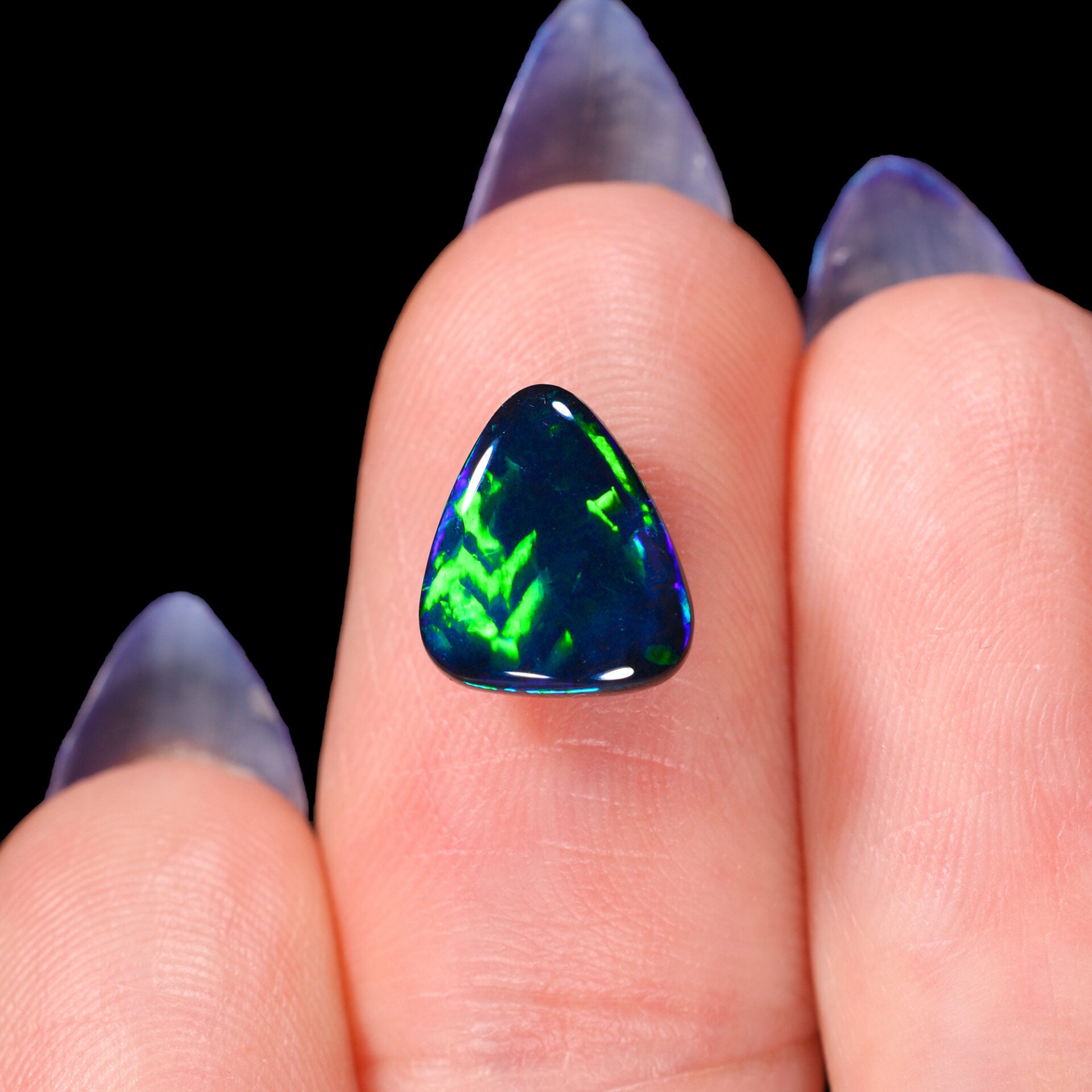
In most cases, the background body tone of these opals is black, placing them within the true black opal category. That rich dark background acts like a night sky, intensifying the vibrant reds, greens, oranges, and blues that form the characters of this visual script.
Not every opal cutter will come across one of these in a lifetime. The pattern is exceedingly rare; as rare as flagstone and harlequin if you are looking for a good quality one.
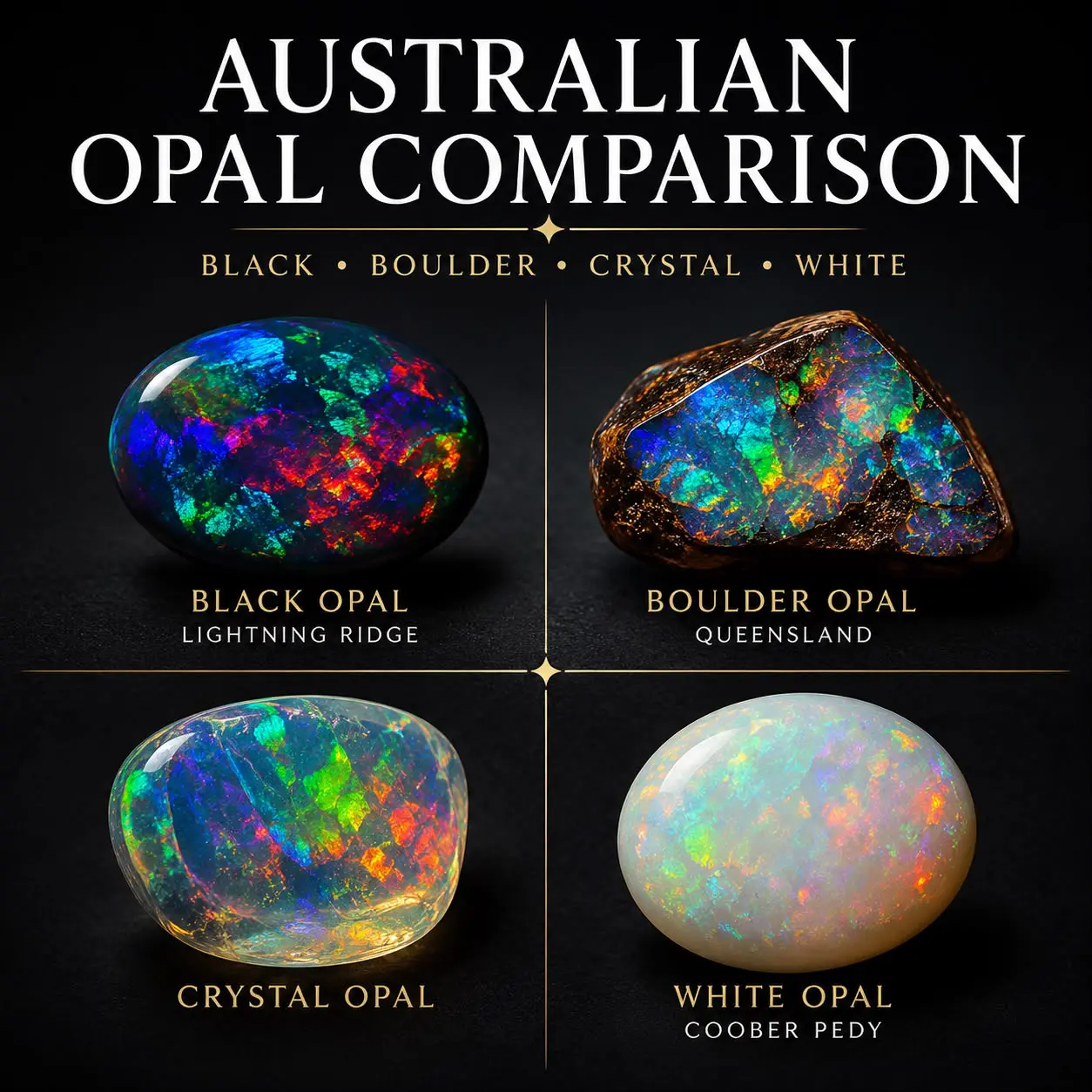
The pattern can also occur in dark and crystal opals however. We are yet to see any Chinese writing pattern boulder opals, but that does not mean that none have ever been discovered, or await discovery. They often form under very specific geological conditions that remain poorly understood.

Where Do They Come From?
Nearly all true Chinese Writing Pattern Opals are found in Lightning Ridge, New South Wales, Australia; the undisputed home of the world’s finest black opals. The region is famous for producing incredibly dark base tone opals with vivid color play, and its geological peculiarities seem to be the perfect cradle for unique pattern development.
Within Lightning Ridge, there are particular fields like Grawin, Glengarry, Coocoran and 3 Mile where unusual patterns occasionally turn up, and it is here that cutters and miners may strike upon a gem with this elusive “handwritten” style.
It’s important to note that the term “Chinese Writing Pattern” is purely descriptive. The opal has no Chinese origin. The naming comes from the artistic similarity between the angular color flashes and ancient Chinese characters.

Why Are They So Rare?
There are hundreds of opal patterns including broad flash, pinfire, rolling flash, straw, floral, chaff, flagstone, and the ever elusive harlequin. But Chinese writing stands apart for its sheer randomness and poetic appearance.
To create a Chinese Writing Pattern, nature needs to combine just the right sediment pressure, silica flow, and structural disruption, all while preserving the opal’s integrity. It’s not just about color direction or brightness. It’s about contrast, precision, and the illusion of written script, all of which depend on minute breaks and interference structures during opal formation.
And unlike predictable patterns like broad flash or straw, Chinese Writing cannot be planned for, reproduced, or intentionally cut for. You either find it or you don’t. Most cutters will only ever work on one or two stones with this pattern in their career.
What Colors Are Typical?
The pattern may be named for its structure, but the color palette is equally critical. The most prized Chinese Writing Pattern Black Opals show bright, high-contrast lines in:
- Emerald green
- Neon orange
- Bright cobalt blue
The brightest examples often show multi color combinations, with red and green strokes dancing across a jet black base tone. These are the top tier collector stones. Lower quality stones may display only green or blue strokes, or may lack the distinct angularity that defines the pattern. Red is the rarest color in opals, and is also rarest in Chinese Writing.
It’s the contrast; the hard edge of color against the black that makes these stones jump to life.
Value and Collectability
In terms of rarity and desirability, high quality Chinese Writing Pattern Black Opals are on par with Harlequin opals. While Harlequin is more globally recognized, high end Chinese Writing Pattern is arguably less frequently found.
Valuation depends on several factors:
- Brightness and intensity of color
- Body tone (darker is better)
- Completeness and consistency of the pattern
- Overall size and shape of the gem
- Presence of multi color flashes
- Existence of actual script (like Japanese Kanji characters or Chinese script that reads something)
A top grade Chinese Writing Pattern Opal with vibrant reds and greens on a black body tone could fetch tens of thousands of dollars; especially if it’s in a wearable shape like oval or round.
These stones are rarely available on the open market. Most are traded behind closed doors among elite collectors, or scooped up immediately when they surface.
How to Spot a True Chinese Writing Pattern Opal
If you’re in the market or just opal curious, here’s how to spot the real deal:
- Look for angularity: The pattern should resemble jagged or script like strokes, not soft curves.
- Color contrast: The brighter and more vivid the flashes, the better.
- Dark body tone: Black is optimal for the play of color to stand out.
- Random, asymmetrical flow: It should not look like a uniform or planned pattern.
- Natural origin: Be cautious of synthetics or treated Ethiopian opals mimicking the look. True Chinese Writing opals are naturally occurring, untreated, and almost always from Lightning Ridge.
A Great Pattern to Invest in
Chinese Writing Pattern Black Opals with distinct, legible, and abundant patterning are considered top-tier investment-grade gemstones for several compelling reasons. Firstly, the extreme rarity of this pattern, especially when it appears clearly and repeatedly across the face of the stone, places it in a class above more common opal varieties.
Collectors and investors are not just purchasing color; they are acquiring a geological phenomenon that cannot be replicated or predicted. The more defined and numerous the characters, the greater the visual intrigue and market value. These stones often appreciate significantly over time, as the combination of scarcity, beauty, and strong collector demand makes them highly sought after in the global gemstone market.
Unlike mass produced or treated opals, a well formed Chinese Writing Pattern is both an artwork and a natural relic, offering long term value, aesthetic prestige, and historical significance that continues to grow as Lightning Ridge yields fewer stones each year.
A Collector’s Dream
Chinese Writing Pattern Black Opals aren’t just gemstones, they’re natural works of abstract expressionist art. Each stone is unique, mysterious, and full of character. For collectors, owning one is like owning a cosmic script written by time and pressure over millions of years.
These aren’t for the casual buyer. These are for the connoisseur, the person who sees not just color, but narrative in stone.
In the ever-evolving world of opal collecting, Chinese Writing Pattern Black Opals are the cryptic treasures that elevate a collection from impressive to legendary. Whether you see ancient text, alien code, or a celestial dance of light, these opals defy ordinary classification. They are among the rarest and most poetic patterns in existence; raw, powerful, and impossible to imitate.
If you’re lucky enough to find one, hold onto it. Because like a masterpiece of calligraphy, no two will ever say the same thing twice.