Opal Galaxy Blog | Australian Opal Guides, Buying Tips & Collector Stories
Wood Fossil Opal: The Complete Guide to Nature’s Ancient Treasure
Wood fossil opal is fossilised wood where the original organic material has been replaced by precious opal over millions of years, preserving the wood’s grain, shape, and structure while displaying full play of color across reds, greens, blues, and golds. These stones form when silica rich groundwater seeps into buried wood and slowly replaces each cell with opal, mainly in the Queensland boulder opal fields and parts of Lightning Ridge. Wood fossil opal is highly collectible because it combines two rarities in a single stone: a complete wood fossil and precious opal, making each piece both a gemstone and a natural history specimen. Below is a full guide to wood fossil opal, covering how it forms, where it is mined, and what makes it valued by collectors and investors.
Discovering the Beauty of Wood Fossil Opal
Wood fossil opal represents one of the most fascinating phenomena in the gemstone world. These remarkable specimens combine ancient fossilized wood with precious opal, creating pieces that tell stories millions of years old. The wood and vegetation formed inside precious opal can look strikingly beautiful, and every single piece remains completely unique.
Collectors particularly prize wood fossil opal for both geological significance and aesthetic appeal. Unlike typical opals valued purely for color play, fossilized wood opal offers something more. Each stone preserves the actual structure of ancient trees, including grain patterns, growth rings, and cellular detail, all transformed into shimmering opal.
At Opal Galaxy, we source exceptional wood opal specimens from Queensland’s legendary boulder opal fields. Our collection showcases the incredible variety found in these prehistoric treasures, from subtle earth tones highlighting wood structure to vibrant rainbow colors dancing across fossilized vegetation.
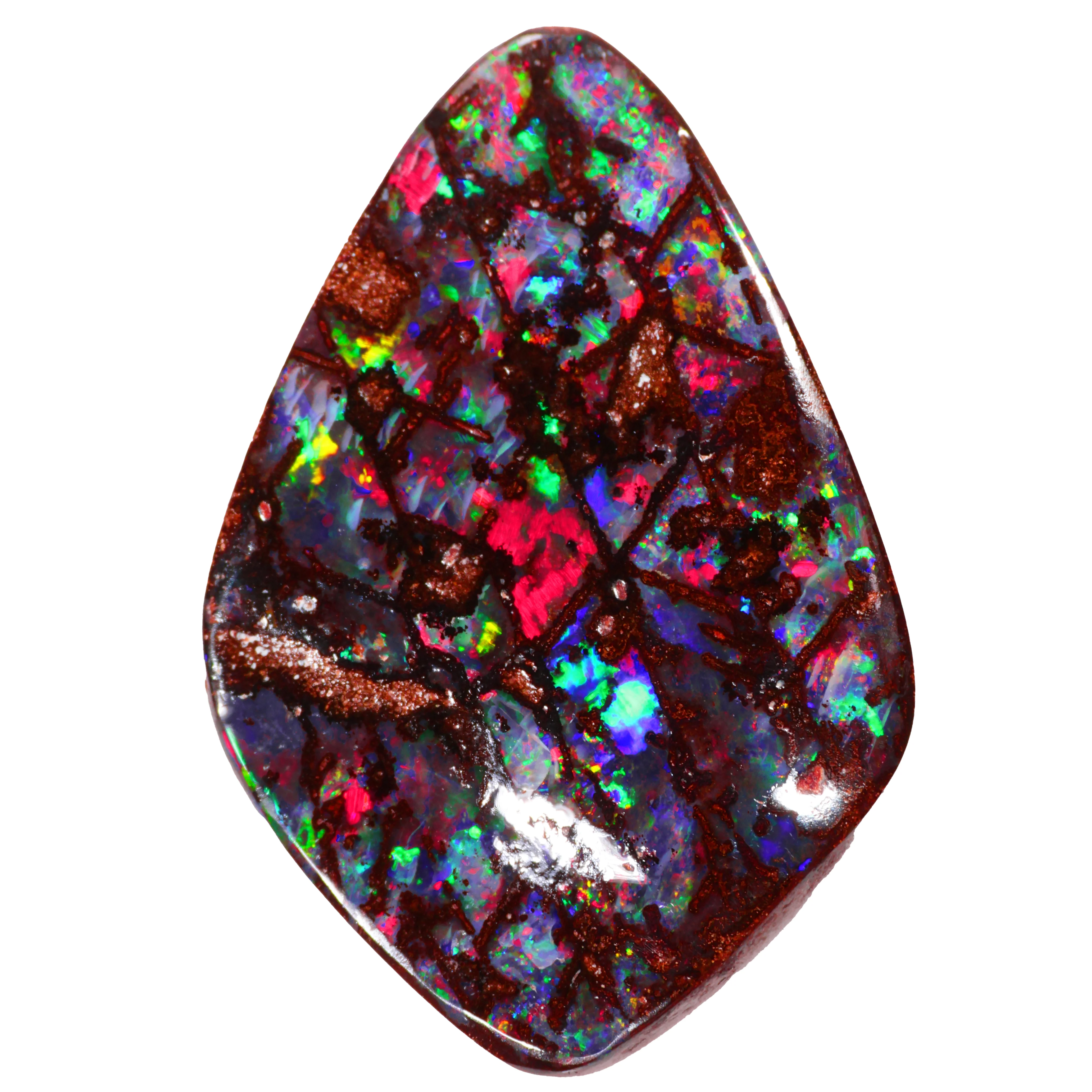
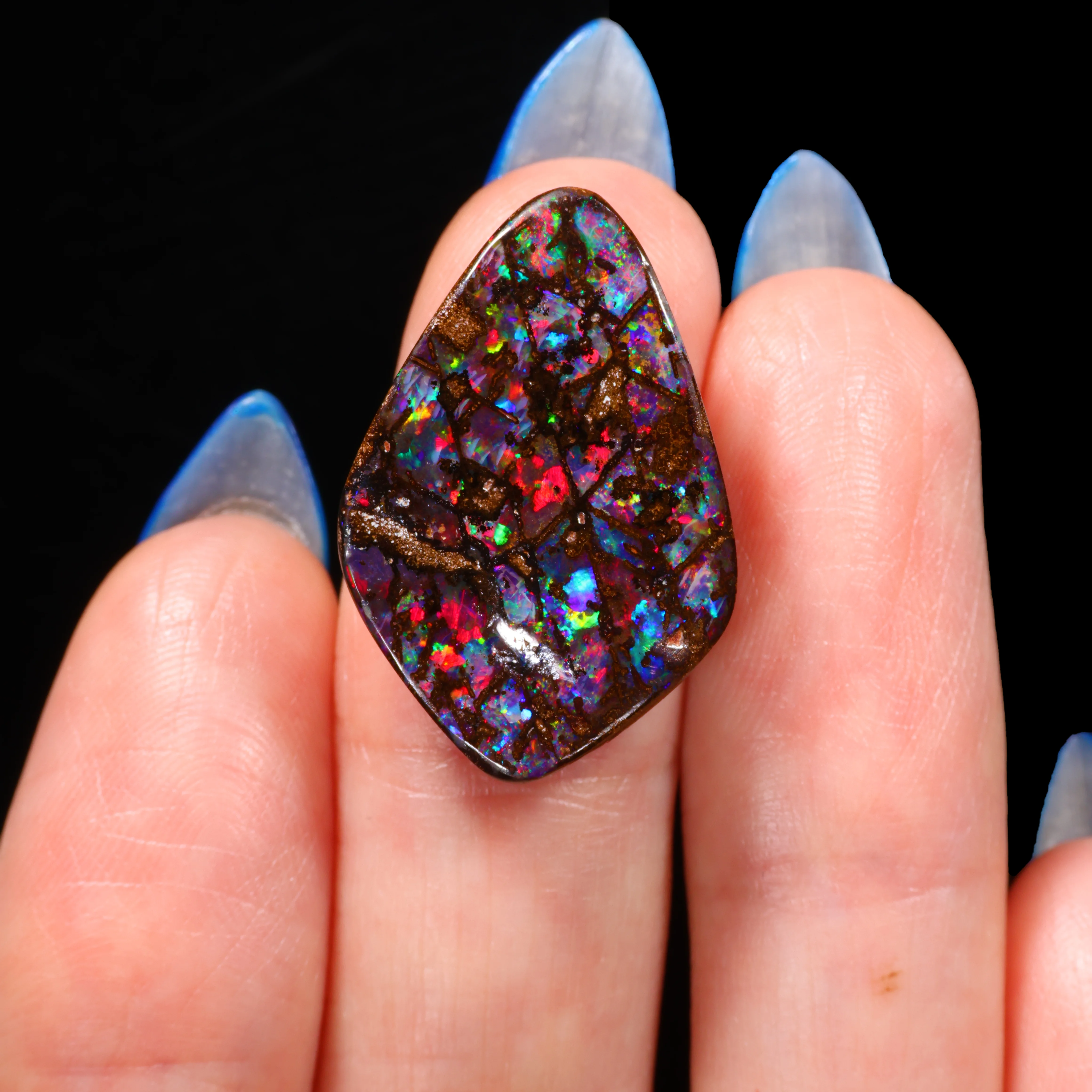
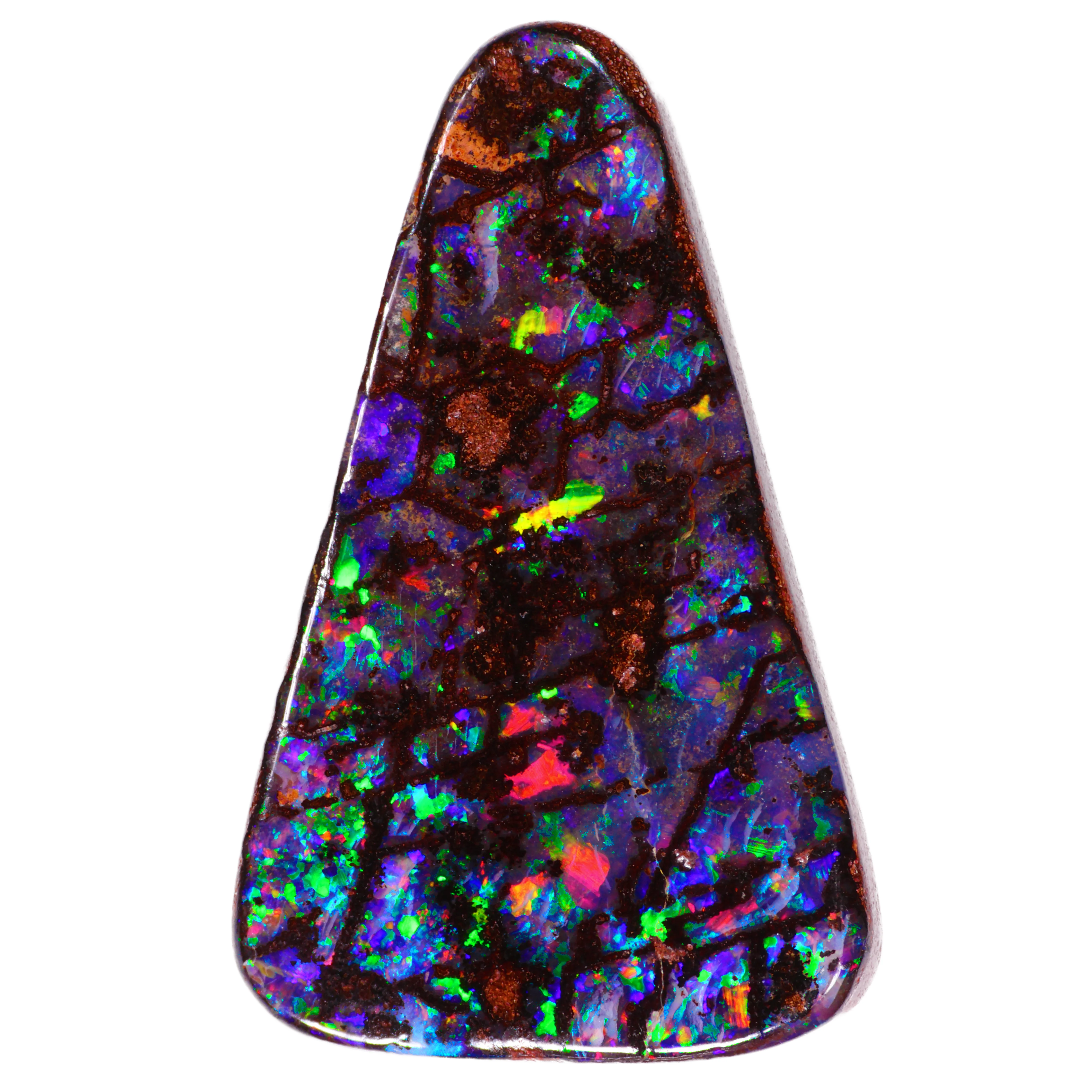
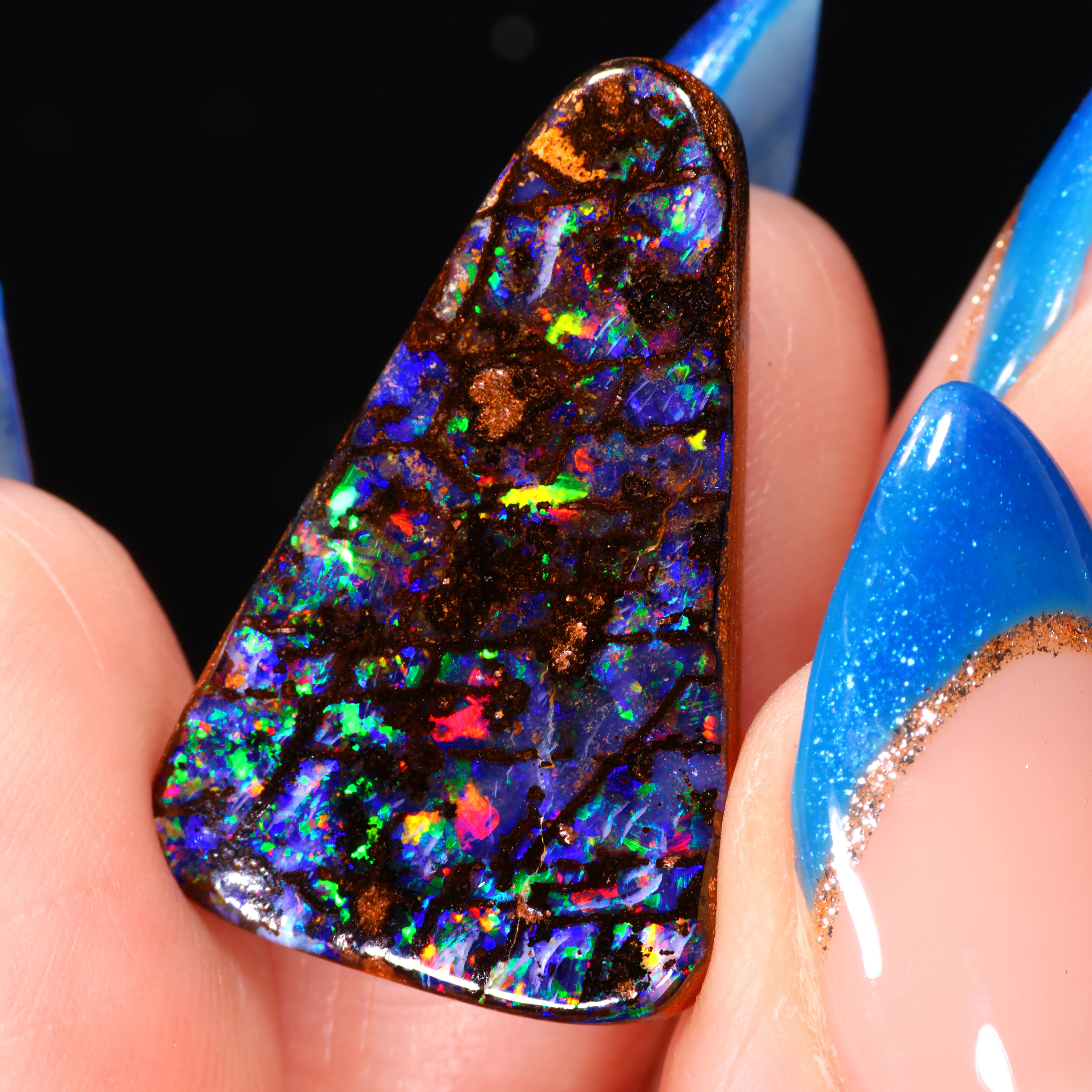
A stunning example of Wood Fossil Boulder Opal
How Wood Fossil Opal Forms
Understanding how fossil opal forms helps appreciate why these stones are so special. The process begins millions of years ago when trees and vegetation fell in areas that would eventually become opal fields. Rather than simply decaying, these organic materials became buried in sediment rich environments.
According to geological research, as groundwater carrying dissolved silica percolated through the buried wood, a remarkable transformation occurred. The silica rich solution gradually replaced the wood’s organic molecules, preserving the internal structure while converting the material into opal. This process, called permineralization, can take millions of years to complete.
The key requirement for opalized wood formation is rapid burial that protects the wood from complete decay while allowing silica infiltration. Volcanic ash deposits (in places like Indonesia), river floodplains, and lake beds provide ideal conditions. The silica binds to cellulose in cell walls via hydrogen bonding, creating a template that preserves microscopic details even as the original organic material transforms into precious opal.
What makes Australian wood fossil opal particularly remarkable is that the formation occurred during the Cretaceous period, roughly 100 million years ago. The trees preserved in these stones grew when dinosaurs walked the Earth. Owning fossilized wood opal means possessing something older than most mountains, genuinely prehistoric material captured in rainbow color.

Where Wood Fossil Opal is Found
While wood opal occurs in several locations worldwide, Australian boulder opal fields produce the most spectacular examples. Queensland mining regions including Winton, Koroit, Yowah, Quilpie, and Eromanga have all yielded significant deposits of wood fossil boulder opal.
Winton: The Wood Fossil Capital
Winton stands as the most famous source for wood fossil opal discoveries. This region’s unique geological history created perfect conditions for both opal formation and fossil preservation. Ancient creek beds and catchment areas accumulated vegetation, which then became entombed in ironstone boulders where silica seepage transformed the organic material into precious opal.
The same geological forces that preserved dinosaur fossils in Winton also created conditions for exceptional wood fossil opal. Some specimens even contain multiple types of preserved plant material, offering glimpses into prehistoric ecosystems.
Koroit and Yowah
Koroit produces distinctive wood fossil specimens recognizable by their characteristic vein patterns threading through dark ironstone. The dense ironstone acts as a canvas where opalized wood creates natural artwork. Some Koroit pieces preserve entire cross sections of tree trunks, complete with visible growth rings and bark textures.
Yowah, while famous primarily for its nuts, also yields wood fossil material. These specimens often appear in matrix form, with small fragments of fossilized wood distributed throughout the ironstone, creating sparkle effects that collectors appreciate.

Lightning Ridge and Coober Pedy
Wood fossil opal from Lightning Ridge is extremely rare. In over a decade of sourcing opals, Opal Galaxy has only ever offered two wood fossil opals from Lightning Ridge, both of which sold immediately. The sedimentary opal formation in Lightning Ridge rarely preserves organic material, making any specimens exceptional collector pieces.
Similarly, Coober Pedy occasionally produces wood fossil material, though far less frequently than Queensland fields. The seam opal formation typical of Coober Pedy does not provide the same opportunities for wood preservation that boulder opal environments offer.
The Forest Floor Formation
One particularly fascinating type of wood fossil opal occurs in what miners call Forest Floor deposits. This rare formation happens when a catchment area, such as a tree trunk cavity or corner pocket in an ancient creek, accumulated vegetation including sticks, leaves, and plant debris over time.
As opal formation occurred in these vegetation rich pockets, the silica solution permeated and preserved the accumulated organic material. The result shows layers of different plant materials, each transformed into opal while maintaining its original structure. The black lines visible inside these opals represent fossilized vegetation, possibly grass or broken apart wood and tree roots.
Discovering a Forest Floor pocket requires both instances of vegetation catchment and opal formation happening in the same location, an exceptionally rare occurrence. When miners find these deposits, they yield multiple specimens showing remarkable preservation of ancient plant communities.

An example of ‘Forest Floor’ Wood Fossil Boulder Opal as shown in the mining image above. The black lines you can see inside the opal is fossilised vegetation (may be some grass or broken apart wood/tree roots)
Types and Colors of Wood Fossil Opal
Wood fossil opal exhibits tremendous variety in both appearance and color. Like any boulder opal, these stones can display the full spectrum of opal colors, from subtle earth tones to brilliant rainbow fire.
Common Color Presentations
Blue and purple frequently appear in wood fossil specimens, as these represent the most common and earliest color formations in opals. The combination of preserved wood structure with blue violet fire creates stunning visual effects, particularly when ironstone backing provides contrast.
High brightness opals with wood or vegetation formations showcase the full potential of these stones. Rainbow opal formed around wood ranks among the most sought after specimens, combining vibrant multi color fire with fascinating fossil structure.
The Role of Ironstone
Most wood fossil boulder opal retains some presence of ironstone, the host rock where the opal formed. This ironstone backing provides several benefits. It adds durability, making the stones suitable for everyday jewelry wear. The dark ironstone also intensifies the appearance of opal colors, particularly in specimens where the wood structure shows through translucent opal layers.
The contrast between earthy brown ironstone, dark fossilized wood lines, and bright opal fire creates unique aesthetic appeal. No two pieces look alike because the wood grain, opal color distribution, and ironstone pattern vary infinitely.
Wood Fossil Opal in Jewelry
The unique characteristics of wood fossil opal make these stones ideal for distinctive jewelry designs. The natural organic appearance appeals to customers seeking pieces that tell stories and connect to ancient history.
Pendant Designs
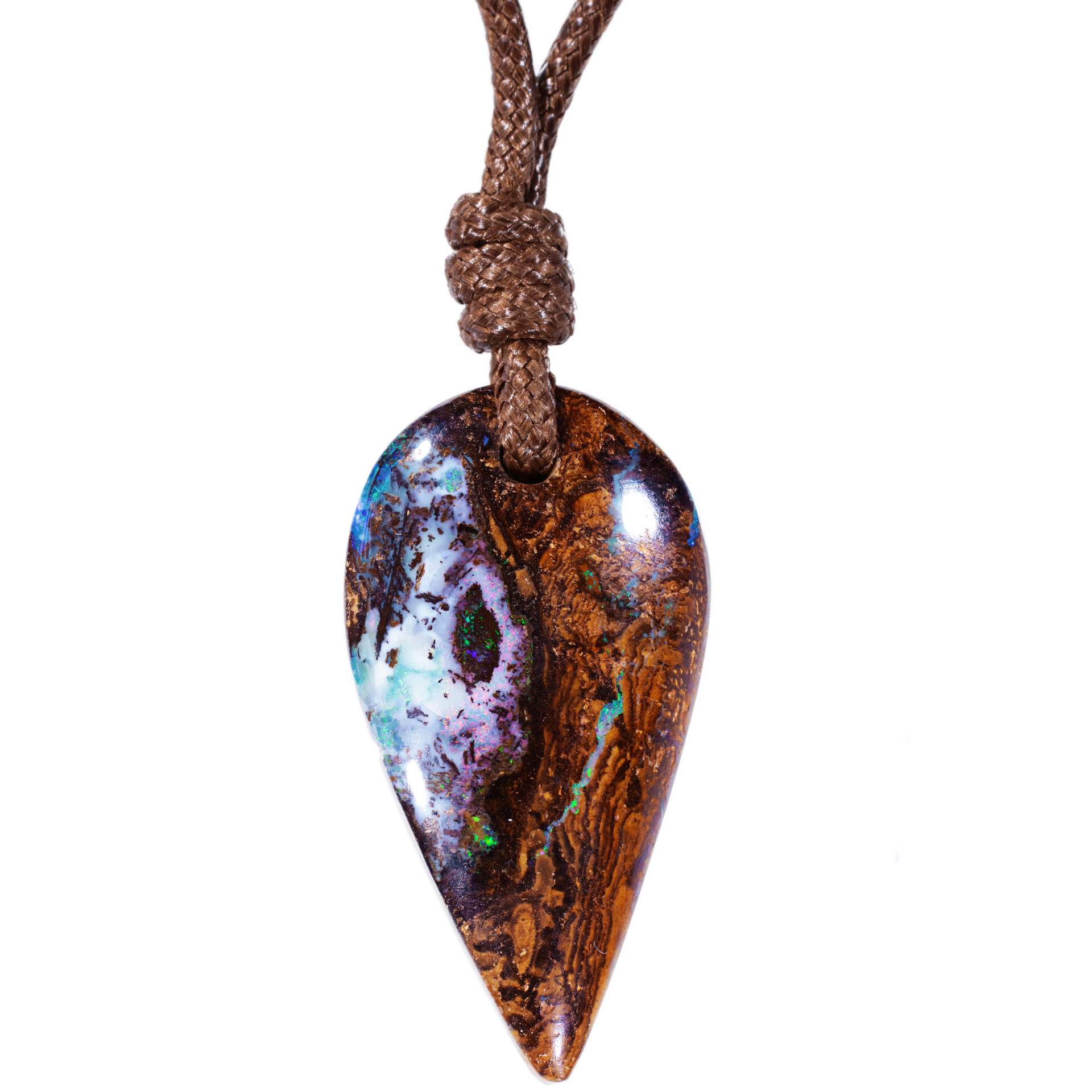
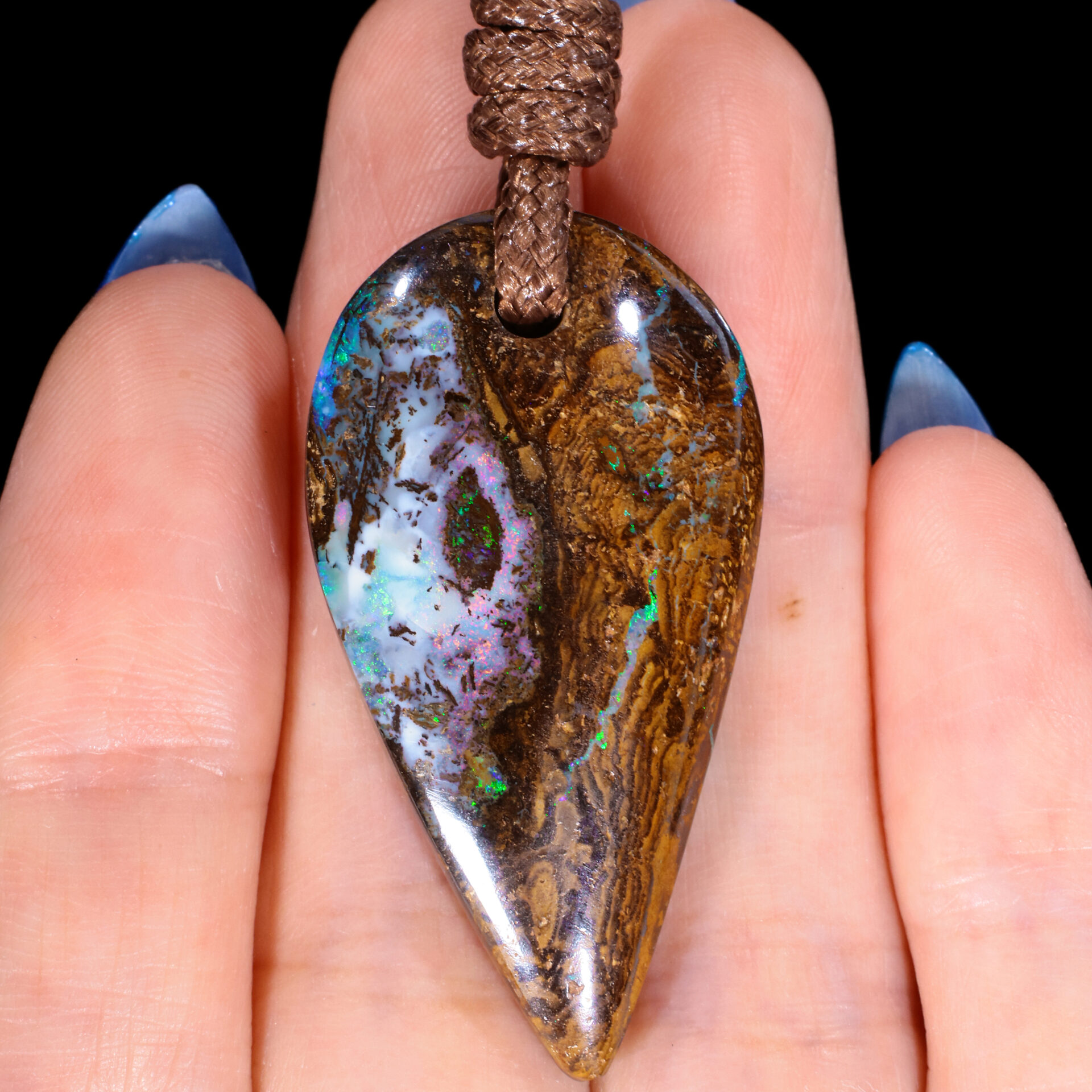
Wood fossil boulder opal pendants represent the most popular jewelry application for these stones. The irregular, organic shapes that characterize wood fossil pieces work beautifully in pendant settings where designers can showcase the entire stone.
High end jewelry settings use precious metals including gold, silver, and platinum to complement the earthy elegance of wood fossil opal. The contrast between refined metalwork and raw prehistoric beauty creates sophisticated pieces suitable for formal occasions.
Alternative pendant designs embrace the stones’ natural character using simple adjustable rope or leather necklaces. This approach appeals to customers who appreciate bohemian aesthetics and want the opal itself to remain the focal point.
Available Wood Fossil Boulder Opal Pendants




Other Jewelry Applications
While pendants dominate, skilled designers also incorporate wood fossil opal into rings, particularly statement pieces where the stone’s uniqueness justifies bold sizing. The ironstone backing provides durability that makes these opals more suitable for ring wear than delicate seam opals.
Earrings featuring smaller wood fossil specimens create conversation pieces. Cufflinks and brooches allow men’s jewelry to incorporate these fascinating stones. Custom designs can showcase particularly interesting fossil structures, perhaps highlighting visible growth rings or preserved bark textures.
Collecting Wood Fossil Opal
For collectors, wood fossil opal offers appeal beyond typical opal characteristics. These pieces function as both gemstones and fossils, attracting interest from paleontology enthusiasts as well as opal collectors.
Rarity and Value
Wood fossil opal represents a small fraction of total boulder opal production. While certain mining areas like Winton have produced significant quantities of wood fossil material, finding pieces where the wood structure shows clearly, preservation quality is excellent, and the opal displays good color remains uncommon.
Most rough boulder material contains no fossils at all. The combination requiring both excellent fossil preservation and quality opal formation makes wood fossil pieces highly collectible and sought after. Value depends on several factors including clarity of wood structure, opal color intensity, size, and overall aesthetic appeal.
Specimens showing complete cross sections with visible growth rings command premium prices. Pieces displaying rainbow fire across fossilized wood rank among the most valuable. Large specimens suitable for display rather than jewelry wear attract museum and serious collector interest.
Investment Potential
The finite nature of wood fossil opal deposits suggests long term value appreciation. As Queensland opal fields become increasingly worked over, exceptional specimens grow rarer. Wood fossil pieces from legendary Winton deposits that no longer produce may increase significantly in value over time.
Unlike fashion trends that affect typical gemstone demand, the scientific and historical significance of fossilized wood opal provides lasting appeal. These stones will always fascinate people who appreciate natural history, regardless of changing jewelry tastes.
Identifying Authentic Wood Fossil Opal
When purchasing wood fossil opal, certain characteristics indicate authentic specimens versus artificially created or enhanced stones.
Natural Indicators
Authentic wood fossil opal shows irregular wood grain patterns that appear random and organic. The fossilized material follows the original growth patterns of ancient trees, creating asymmetrical distributions that cannot be replicated artificially.
The transition between wood fossil material and surrounding opal should appear gradual and natural. Sharp, artificial looking boundaries may indicate assembled stones or treated materials.
The ironstone backing should show natural weathering and color variation typical of Queensland boulder opal. Uniform, artificially smooth backing suggests possible treatments or assembled construction.
At Opal Galaxy
Every wood fossil opal offered by Opal Galaxy is 100 percent natural and untreated. We source directly from Queensland miners and cutters who understand these unique stones. Our detailed descriptions note the origin, dimensions, and specific characteristics of each piece.
High resolution photographs and videos show the actual stone from multiple angles, allowing customers to appreciate both the opal fire and the fossil structure. We never sell doublets, triplets, or treated materials, only solid natural Australian opals.
Caring for Wood Fossil Opal
Proper care ensures your wood fossil opal maintains its beauty for generations. While the ironstone backing provides good durability, these remain precious gemstones requiring thoughtful handling.
Cleaning and Maintenance
Clean wood fossil opal gently using lukewarm water and mild soap. Use a soft cloth to remove dirt and oils, then dry thoroughly. Avoid harsh chemicals including bleach, ammonia, and commercial jewelry cleaners not specifically designed for opals.
The ironstone component makes wood fossil boulder opal more durable than seam opals, but protection from hard impacts remains important. Remove jewelry before activities involving potential strikes or exposure to chemicals.
Storage Recommendations
Store wood fossil opal separately from harder gemstones that might scratch the surface. Soft pouches or padded jewelry boxes provide ideal protection. Avoid extreme temperature changes and prolonged exposure to direct sunlight.
The natural stability of Australian boulder opal means these stones do not require special moisture maintenance. Unlike some Ethiopian opals that can absorb water and change appearance, wood fossil opal from Queensland maintains consistent characteristics through normal wear and storage.
The Scientific Significance
Beyond aesthetic appeal, wood fossil opal provides valuable scientific information. These stones preserve ancient plant species, offering paleobotanists opportunities to study vegetation from the Cretaceous period.
The exceptional preservation quality allows researchers to examine cellular structures and identify specific tree species. Some specimens preserve pollen grains or seed structures, providing insights into ancient ecosystems and plant evolution.
The geographical distribution of different wood types within opal fields helps scientists understand ancient climate patterns and environmental conditions. The presence of certain species indicates tropical or temperate conditions, contributing to broader understanding of prehistoric Australia.
Why Choose Opal Galaxy
At Opal Galaxy, our direct relationships with Queensland miners provide access to exceptional wood fossil opal specimens. We personally select stones that showcase both excellent fossil preservation and quality opal characteristics.
Our expertise allows us to guide customers toward pieces that meet specific needs, whether for jewelry creation, collection building, or investment. We understand what makes certain specimens more valuable and can explain the geological and historical significance of each stone.
Every wood fossil boulder opal in our collection includes detailed provenance information. We specify the mining region, explain unique characteristics, and provide honest assessments of quality and value.
For jewelers and designers, we offer stones suitable for various applications, from small accent pieces to large statement specimens. Our inventory includes both polished stones ready for setting and rough material for custom cutting.
Start Your Wood Fossil Opal Collection
Whether you seek a unique pendant showcasing prehistoric beauty, a collector specimen documenting ancient plant life, or an investment grade gemstone with lasting appeal, wood fossil opal offers something truly special. These stones connect us to Earth’s distant past while displaying the natural artistry of opal formation.
Explore our wood fossil opal collection today and discover gemstones that took 100 million years to create. Each piece represents a moment frozen in time, when ancient trees grew in landscapes now transformed beyond recognition, their essence preserved forever in rainbow colored stone.
From the famous Winton deposits to the distinctive Koroit specimens, Australian wood fossil opal stands unmatched worldwide. Let Opal Galaxy guide you to the perfect piece that combines geological wonder, natural beauty, and prehistoric history in one remarkable gemstone.