Opal Galaxy Blog | Australian Opal Guides, Buying Tips & Collector Stories
Opalite vs Opal: How to Identify Real Opal from Fake Opalite
Opalite is a manmade glass or resin imitation of opal and is not a real gemstone, while natural opal is a hydrated silica formed in the earth over millions of years. Opalite is mass produced from opalescent glass or plastic, has a uniform milky blue glow with no play of color, and sells for a few dollars per piece, whereas solid Australian opal shows true diffracted color across reds, greens, and blues and can sell for thousands per carat. The two are often confused online because some sellers list opalite as opal, but they share no geological, chemical, or value relationship. Below is a full breakdown of opalite vs opal, covering composition, appearance, value, and how to tell them apart at a glance.
Opalite is a man made glass, while real opal is a natural gemstone formed over millions of years.
If you’ve recently heard Taylor Swift’s mesmerizing new song “Opalite” and found yourself curious about this shimmering gemstone, you’re not alone. Searches for opalite have surged, with many people wondering: what exactly is opalite, and how does it compare to natural opal?
The truth might surprise you. While opalite catches the eye with its milky, iridescent glow, it’s actually a manufactured glass creation, not a genuine gemstone at all. In this comprehensive guide, we’ll explore everything you need to know about opalite, why natural opal is the superior choice, and how to make an informed decision for your next jewelry purchase.
What Is Opalite?
Opalite is a synthetic, manufactured material designed to mimic the ethereal beauty of natural opal. Despite its gemstone sounding name, opalite isn’t mined from the earth or formed through natural processes. Instead, it’s manufactured in factories using a combination of glass, dolomite, quartz, and metal compounds.
The opalite manufacturing process involves melting these materials together to create a translucent, bluish white glass with an opalescent sheen. Manufacturers often enhance opalite with metal coatings or dyes to intensify its color shifting appearance. The result is a consistent, affordable material that bears a superficial resemblance to genuine opal.

Common Names for Opalite
You might encounter opalite under various names in jewelry stores and online marketplaces:
- Sea Opal
- Opalized Glass
- Opalescent Glass
- Moonstone Opal
- Argenon
Be cautious of these terms. They’re often marketing strategies to make opalite sound more valuable than it truly is.
What Is Natural Opal?
Unlike opalite, natural opal is a genuine mineraloid that forms over millions of years through remarkable geological processes. Composed of hydrated silica, opal develops when silica rich water seeps into rock crevices and slowly deposits microscopic silica spheres in orderly arrays.
This intricate internal structure is what gives opal its legendary play of color. The rainbow like flashes of red, blue, green, orange, and violet dance across the stone’s surface as you move it in the light. Each natural opal is completely unique, with its own distinctive pattern of colors that can never be exactly replicated.
Types of Natural Opal
Natural opals come in several breathtaking varieties:
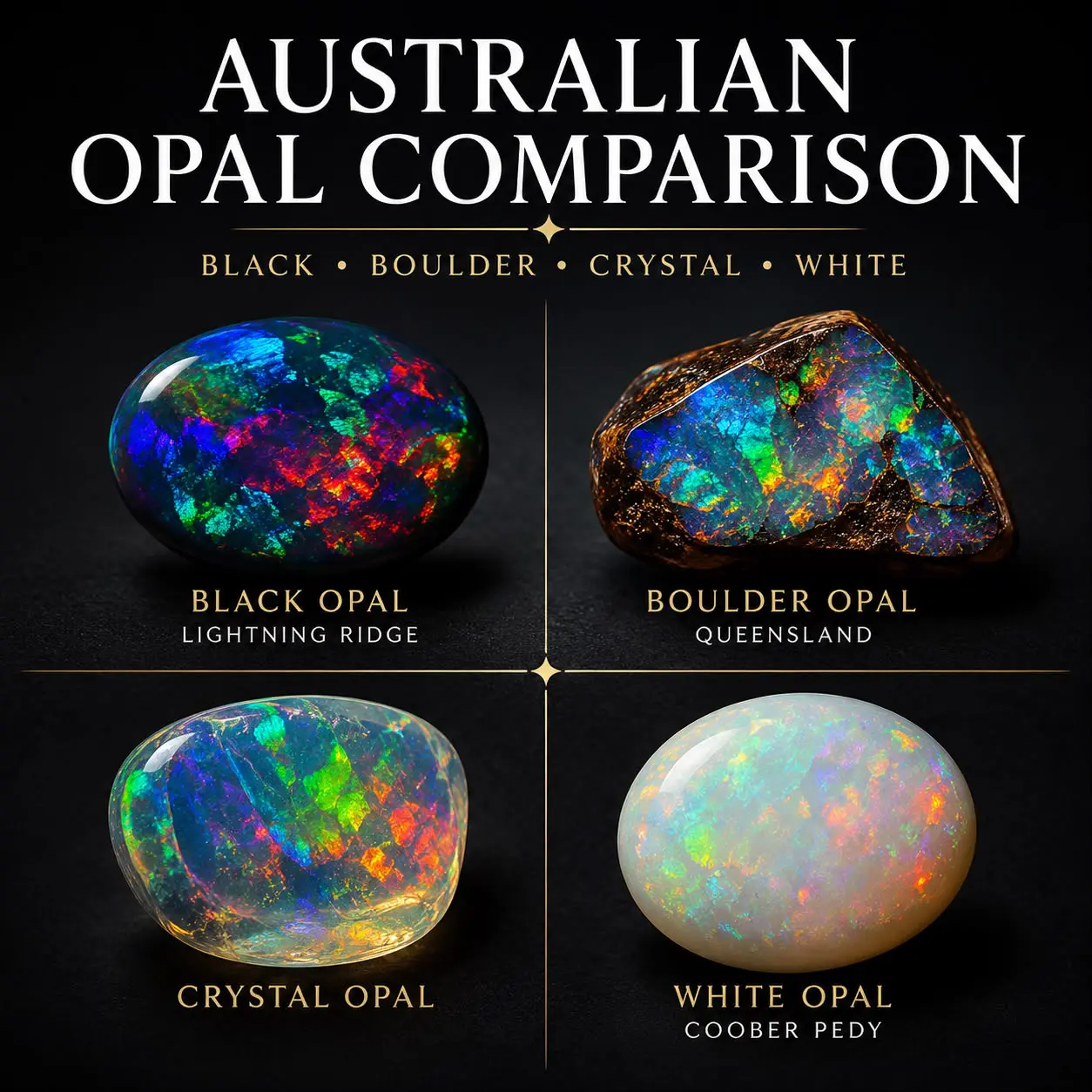
Precious Opal displays the stunning play of color phenomenon and includes:
- Black Opal: The rarest and most valuable, featuring vibrant colors against a dark background
- White Opal: Displays fire against a pale or white background
- Boulder Opal: Forms within ironstone rock, creating dramatic natural patterns
- Crystal Opal: Transparent to semi transparent with exceptional color play
- Fire Opal: Features warm orange, red, and yellow hues, primarily from Mexico
Common Opal lacks the play of color but offers beautiful solid colors and translucency.

Opalite vs Opal: The Key Differences
Understanding the fundamental differences between opalite and opal will help you make a wise investment in jewelry that lasts.
Origin and Formation
Opal: Natural opal takes millions of years to form through geological processes involving water, silica, and specific environmental conditions. Learn more about how opals are mined in Australia. Each stone is shaped by nature’s hand, making every opal a unique treasure with its own geological story.
Opalite: Created in factories within hours or days, opalite is mass produced glass. There’s no geological formation, no ancient history, and no natural rarity, just industrial manufacturing.
Composition and Durability
Opal: Composed of hydrated silica with a unique microscopic structure, natural opal is a genuine gemstone. Though delicate, opals can last generations with proper care.
Opalite: Being glass based, opalite is even softer and more fragile than opal. It’s highly susceptible to scratching, chipping, and damage, making it unsuitable for everyday wear in rings or bracelets.
Appearance and Beauty
Opal: Natural opal’s play of color is a spectacular natural phenomenon. The way light diffracts through the ordered silica spheres creates flashes of rainbow colors that shift and change with movement. The patterns are infinitely variable. No two opals are ever identical.
Opalite: While opalite has a pleasant milky blue or golden glow when held to light, it lacks the dynamic play of color of natural opal. The appearance is uniform and static, with a simple opalescent sheen rather than the living fire of genuine opal. Under close inspection, opalite often shows bubbles or swirl marks characteristic of glass.
Value and Investment
Opal: High quality natural opals, especially Australian black opals and rare varieties, can be significant investments. Prices range from affordable common opals to precious specimens worth thousands per carat. Natural opal retains and often increases in value over time.
Opalite: As a synthetic glass product, opalite has minimal monetary value. It’s inexpensive to produce and purchase, typically costing just a few dollars. Opalite holds no investment value and won’t appreciate over time.
Why Natural Opal Is the Superior Choice
If you’re deciding between opalite and opal for jewelry, here are compelling reasons why natural opal is worth the investment:
Authenticity and Heritage
When you wear natural opal, you’re wearing a piece of Earth’s history, a gemstone millions of years in the making. Opals have been treasured throughout human history, from ancient Roman times to the present day. They carry cultural significance, geological wonder, and authentic beauty that opalite simply cannot match.
Unique Beauty
Every natural opal is one of a kind. The specific arrangement of silica spheres, the color combinations, and the pattern of fire in your opal exist nowhere else in the universe. This exclusivity makes your opal jewelry truly personal and irreplaceable.
Opalite, by contrast, is mass produced with identical copies made by the thousands. There’s no individuality, no uniqueness, just factory uniformity.
Lasting Quality
While both materials require care, natural opal is a genuine gemstone that can become a family heirloom. With appropriate setting and care, opal jewelry can last for generations, carrying stories and memories through your family.
Opalite’s glass composition makes it far more likely to chip, scratch, or break with regular wear. It’s essentially disposable jewelry with a limited lifespan.
Emotional and Spiritual Value
Many people feel a genuine connection to natural gemstones formed by the earth. Natural opal has been associated with inspiration, creativity, and emotional healing throughout history. Whether or not you believe in crystal properties, there’s something undeniably special about wearing a stone shaped by millions of years of natural processes.
Opalite, being synthetic glass, lacks this connection to nature and earth energy that many jewelry lovers seek.
Investment Potential
Quality natural opals can appreciate in value, especially rare varieties from depleted mines. Australian black opal, for instance, has shown steady value increases as sources become scarcer. Your opal jewelry could become more valuable over time.
Opalite will never increase in value. It’s inexpensive glass that can be reproduced infinitely.

How to Identify Opalite vs Natural Opal
Concerned about being sold opalite when you want genuine opal? Here are telltale signs:
Signs of Opalite:
- Uniform, consistent color throughout
- Blue or golden glow when backlit
- Perfectly smooth, flawless appearance
- Very low price
- Glass like bubbles or swirl marks under magnification
- No play of color, just opalescence
Signs of Natural Opal:
- Dynamic play of color that shifts with viewing angle
- Natural inclusions or imperfections
- Irregular or organic patterns
- Matrix or host rock visible in boulder opal
- Higher price reflecting genuine value
- Certifications from gemological laboratories
Always purchase from reputable dealers who can provide certification for natural opals. If a deal seems too good to be true, it probably is.

A Comparison of Opalite vs Natural Opal – image – The Psychic Tree
When Might Opalite Be Appropriate?
While we advocate strongly for natural opal, there are limited situations where opalite might be suitable:
- Costume jewelry for theatrical productions or cosplay
- Children’s jewelry where loss or damage is likely
- Craft projects requiring an inexpensive opalescent material
- Temporary fashion pieces not meant to last
However, even for these purposes, consider that common natural opal or more durable alternatives might serve you better in the long run.
Caring for Your Natural Opal
If you choose natural opal, proper care will keep it beautiful for a lifetime:
- Avoid extreme temperature changes
- Remove opal jewelry before swimming, cleaning, or exercising
- Store separately from harder gemstones to prevent scratching
- Clean gently with lukewarm water and soft cloth
- Have prongs and settings checked annually by a jeweler
- Consider jewelry insurance for valuable pieces
Making Your Choice: Opalite or Opal?
The decision ultimately comes down to what you value in jewelry. If you want something temporary, inexpensive, and disposable, opalite might suffice. But if you’re seeking:
- Authentic natural beauty
- A unique, one of a kind gemstone
- Jewelry that lasts and potentially appreciates in value
- A meaningful connection to Earth’s geological wonders
- A piece you can treasure and pass down to future generations
Then natural opal is unquestionably the superior choice.
Yes, natural opal requires a larger initial investment than opalite’s few dollars. But consider what you’re really paying for: millions of years of natural formation, genuine rarity, unique beauty that cannot be replicated, and a gemstone with true lasting value.
Choose Natural, Choose Quality
While Taylor Swift‘s “Opalite” may have brought attention to this shimmering material, now you know the truth: opalite is synthetic glass masquerading as a gemstone. When you’re ready to invest in jewelry that matters, jewelry with authenticity, beauty, and value, natural opal is the clear winner.
Don’t settle for imitation when you can own the real thing. Natural opal offers everything opalite attempts to mimic, plus the irreplaceable qualities of genuine geological formation, unique beauty, and lasting value.
Ready to discover your perfect natural opal? Visit Opal Galaxy today and experience the breathtaking difference that only authentic gemstones can provide.