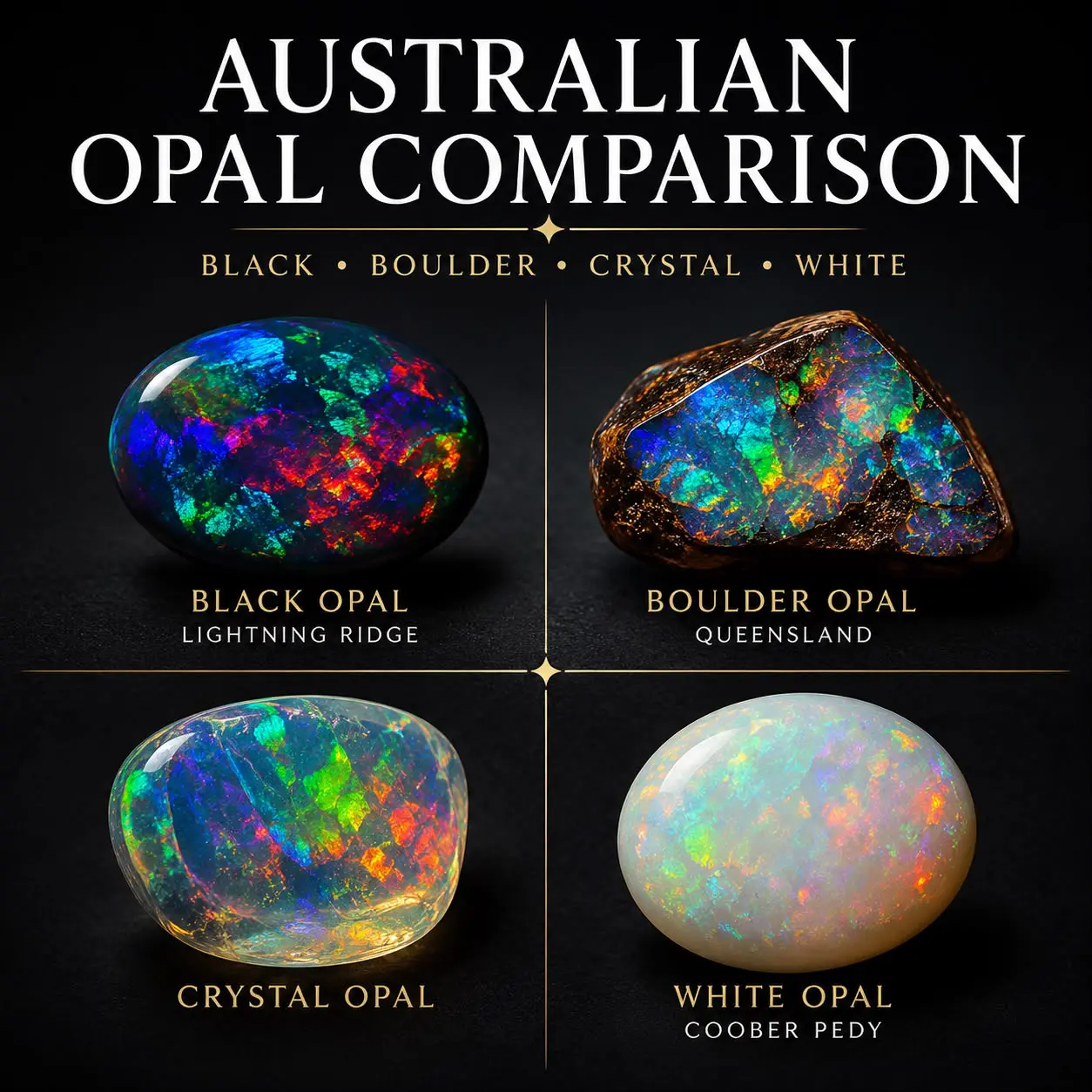
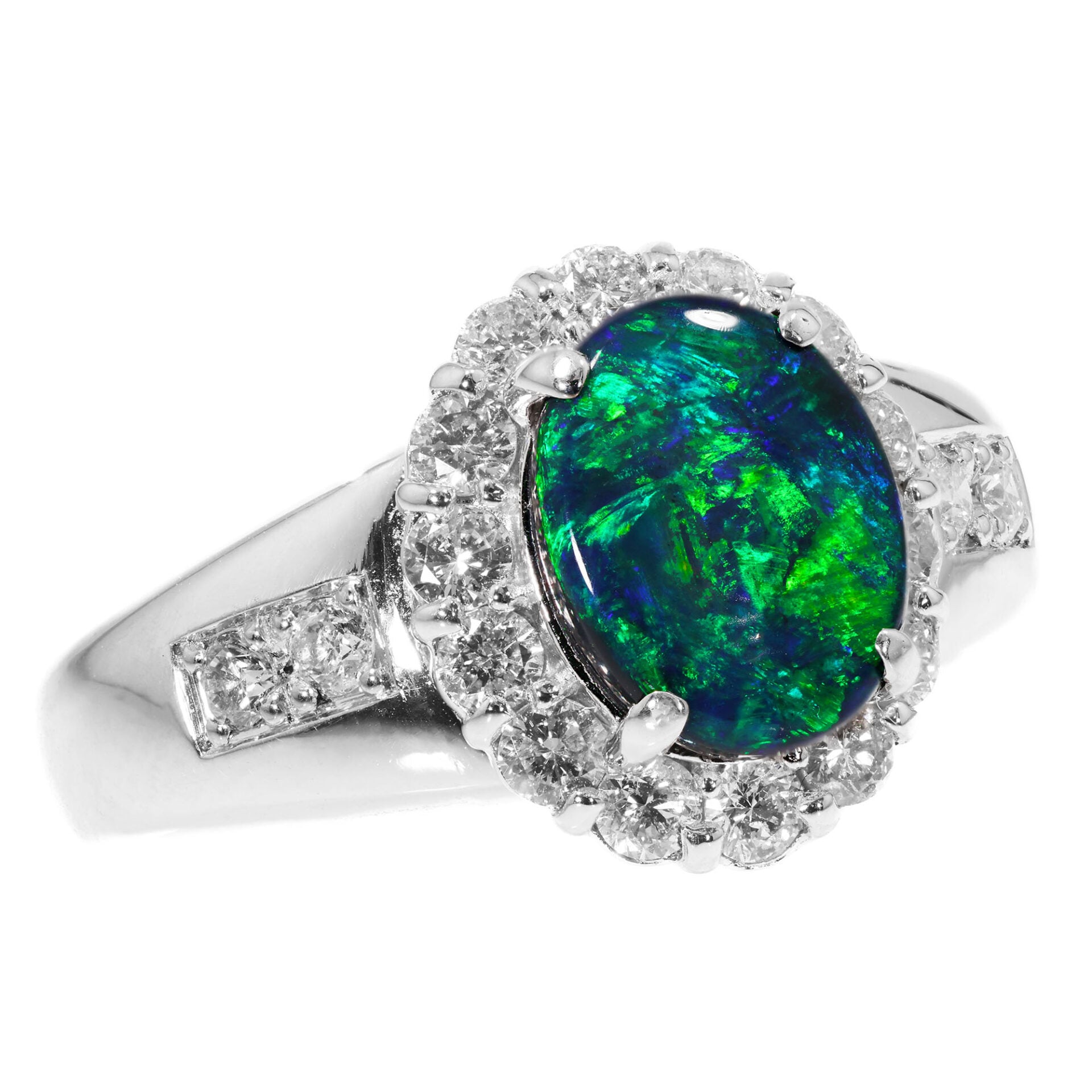
Opal care means keeping the stone away from heat, harsh chemicals, ultrasonic cleaners, steam cleaners, and sudden temperature changes, all of which can crack, craze, or damage the stone permanently. Solid Australian opal can be cleaned with warm water, mild soap, and a soft cloth, while doublets and triplets should never be soaked because water can seep into the glue layer and cause the stone to lift or cloud.
Opal sits at 5.5 to 6.5 on the Mohs scale, so it should be stored separately from harder gemstones like diamond and sapphire to avoid scratches, and rings should be removed before gardening, cleaning, sports, or heavy lifting. Below is a full guide to opal care, covering cleaning, storage, daily wear, and how to protect your stone for life.
Opals are some of the most mesmerizing gemstones in the world, admired for their play of color and natural beauty. Whether you own a solid Australian opal, an opal ring, or a loose Ethiopian opal, knowing how to care for opals properly ensures their brilliance lasts a lifetime. This FAQ style guide answers all the most common questions about opal care, water exposure, and protecting your opals from damage.
FAQ: Caring for Opals
Can opals get wet?
Solid Australian opals: Yes. They are durable and will not lose color, pattern, or brightness from water, humidity, or climate changes.
Opal doublets and triplets: Avoid water, as moisture can seep into the glue, causing separation or cloudiness.
Ethiopian opals: These hydrophane stones absorb water, which may temporarily change their color or pattern. Sometimes they regain their original appearance after drying, but repeated exposure can lead to long-term instability.
Australian Opals can be wet without worry of changing their color or appearance
Can you wear opals in the shower?
Solid Australian opals: Safe to wear with mild soaps and shampoos. Avoid harsh chemicals such as bleach or ammonia.
Doublets, triplets, and Ethiopian opals: Not recommended. Water and soaps can damage the stone or its setting.
Jewelry settings and ropes of pendants: refer to jewelers advice incase of damage to setting (if for instance they have used glue). Pendant ropes like wax rope and leather may also fray or stretch with exposure to water depending on the material.
Can I wash my hands with an opal ring on?
Solid Australian opals: Yes, you can wash your hands safely.
Doublets, triplets, and Ethiopian opals: Remove before washing to prevent damage or color changes.
If you wear and Australian Opal Ring, you can wash your hands with soapy water without worry
How to care for opal rings
Avoid knocks: Opals can crack if struck. Remove rings before sports, heavy lifting, or manual work.
Regular polishing: Minor scratches can occur with daily wear. A jeweler or lapidary club can polish your opal to restore its shine.
Check the setting: For doublets and triplets, inspect the glue layer regularly to ensure it remains intact.
If you need to clean your Australian opal jewelry, simply use warm water and some gentle liquid soap solution with a soft brush or cleaning cloth.
Caring for loose opals
Handling: Loose opals are more vulnerable than jewelry. Handle gently and place on soft surfaces.
Storage: Keep them separate from other gemstones in a soft pouch or cotton gem box.
Water exposure: Solid Australian loose opals are safe with exposure to water
Ethiopian loose opals: Very sensitive to moisture. Allow drying time if they absorb water and avoid cleaning with chemicals or ultrasonic devices.
Ethiopian opal care
Ethiopian opals can lose color temporarily due to moisture.
If your Ethiopian opal lost its color, allow it to dry slowly in a stable environment; sunlight or shade can help restore its original appearance.
Avoid exposing Ethiopian opals to water, heat, or chemicals, whether loose or set in jewelry.
An Ethiopian Opal that has lost its color
General opal care tips
Store carefully: Separate opals from harder stones to prevent scratches.
Avoid chemicals: Perfumes, cleaning agents, and chlorine can damage both the stone and its setting.
Protect from impacts: Remove opals during physical activity.
Professional maintenance: Have your opals checked and polished by a jeweler every few years.
Can opals be worn daily?
Yes, solid Australian opals are durable enough for daily wear, including rings, earrings, and pendants. Always consider the type of opal: doublets, triplets, and Ethiopian opals require more careful handling. Questions like “can you get opals wet?”, “can you shower with opal jewelry?”, or “can I wash my hands with an opal ring on?” are all answered by knowing your opal type and following these guidelines.
Opals are natural treasures, each unique in color and pattern. By following proper opal care guidelines, both for loose stones and jewelry, you can enjoy their beauty for years to come. Solid Australian opals are resilient, doublets and triplets need careful handling, and Ethiopian opals require extra attention due to their sensitivity.
Whether you are concerned about opal water damage, caring for an opal ring, or maintaining loose opals, the key is understanding your stone and treating it with the care it deserves.