The Wonders of Koroit Boulder Opals
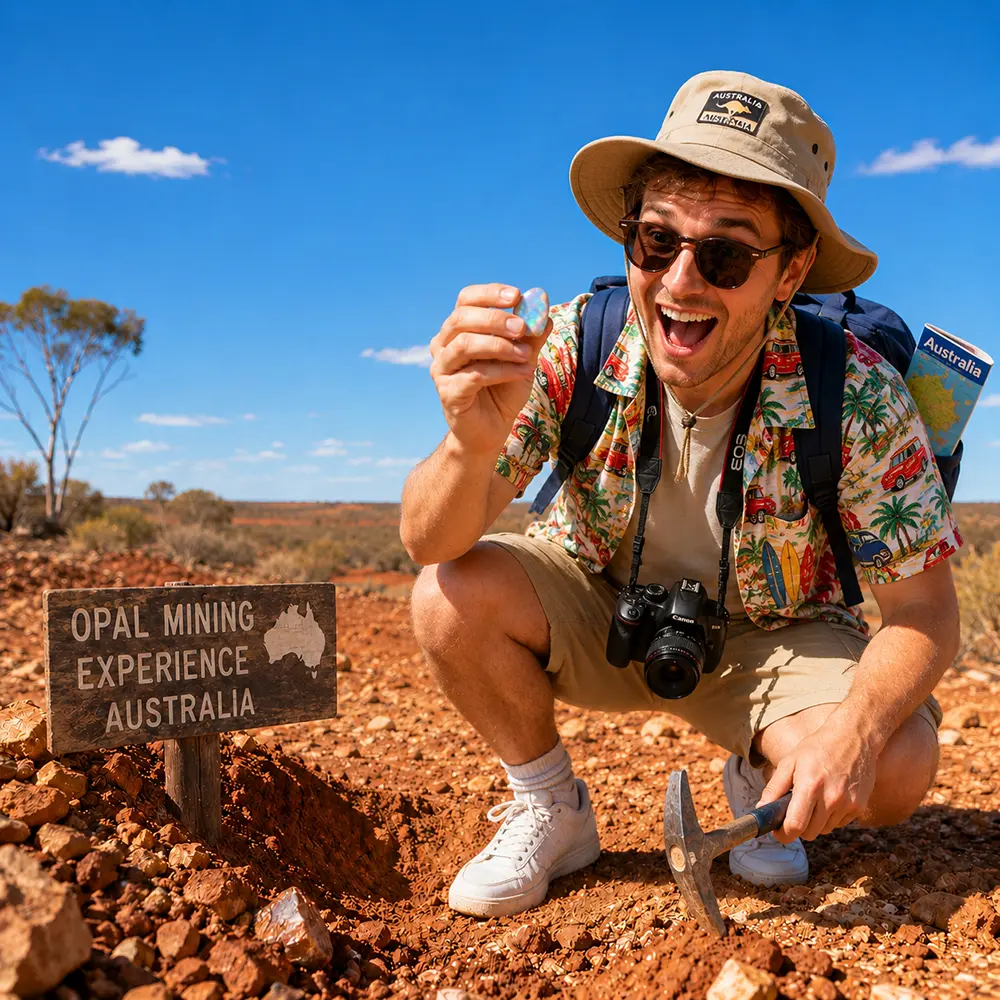
Koroit boulder opals come from the rugged outback of southwest Queensland, where the small mining settlement of Koroit sits amid red earth, scrub, and an unforgiving climate. At first glance, this remote town looks like countless others in Australia’s interior, yet beneath its dusty surface lies one of the world’s most extraordinary gemstone fields.
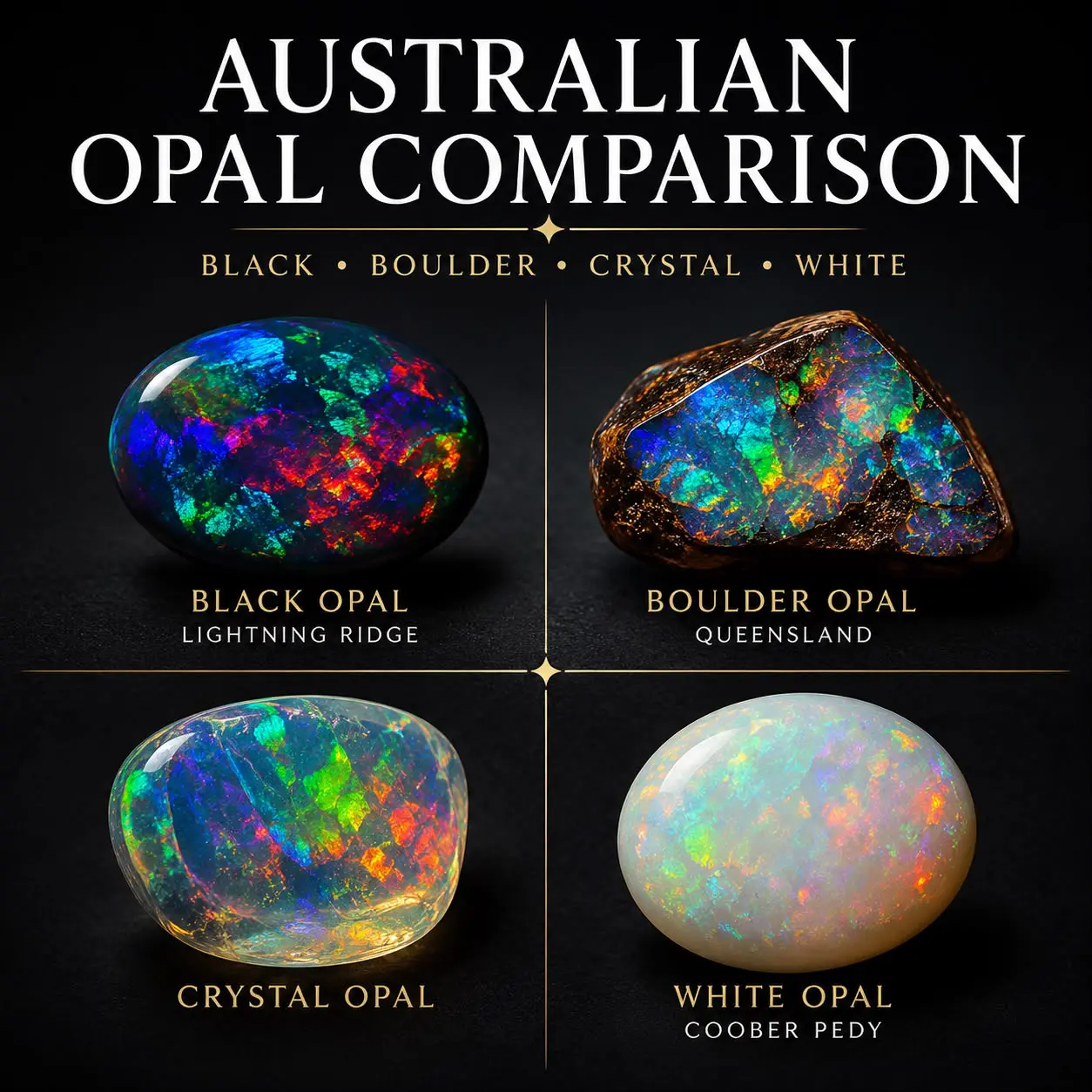
Part of Queensland’s renowned opal belt, Koroit is synonymous with some of the most visually dramatic and geologically diverse boulder opals ever discovered. From bold patterned stones and intricate matrix opals to unique fossils and tubular pipes, the variety found here is unmatched anywhere else on earth. Though often compared to its neighboring field in Yowah, Koroit has carved out its own reputation among collectors, jewelers, and investors who prize its bold character and remarkable individuality.
Types of Opals Found in Koroit
What sets Koroit apart is the sheer diversity of opal formations that emerge from its ironstone host rock. Some of the most celebrated include:
- Koroit Nuts: Similar to the famous Yowah nuts, these are ironstone nodules containing precious opal within. Koroit nuts are bolder, and often reveal broader flashes of fire once cut open. Their dramatic contrast between earthy host rock and brilliant color makes them highly collectible.
- Koroit Wood Fossils: Among the most fascinating finds in Koroit are fossilized remnants of ancient trees, encased or replaced with precious opal over millions of years. These specimens often display preserved bark textures, wood grain, or branch structures, transformed into vibrant, glowing gems. They are not only gemstones but also relics of Australia’s prehistoric environment.
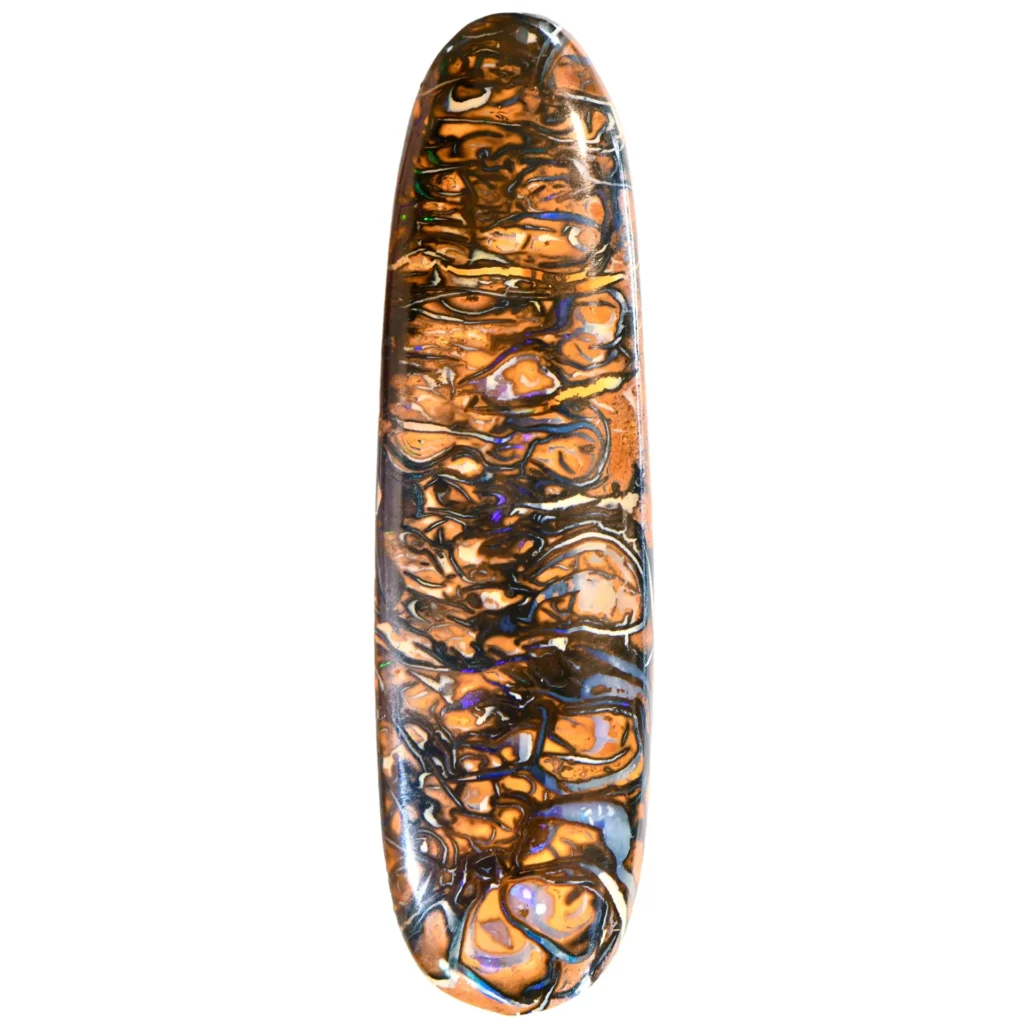
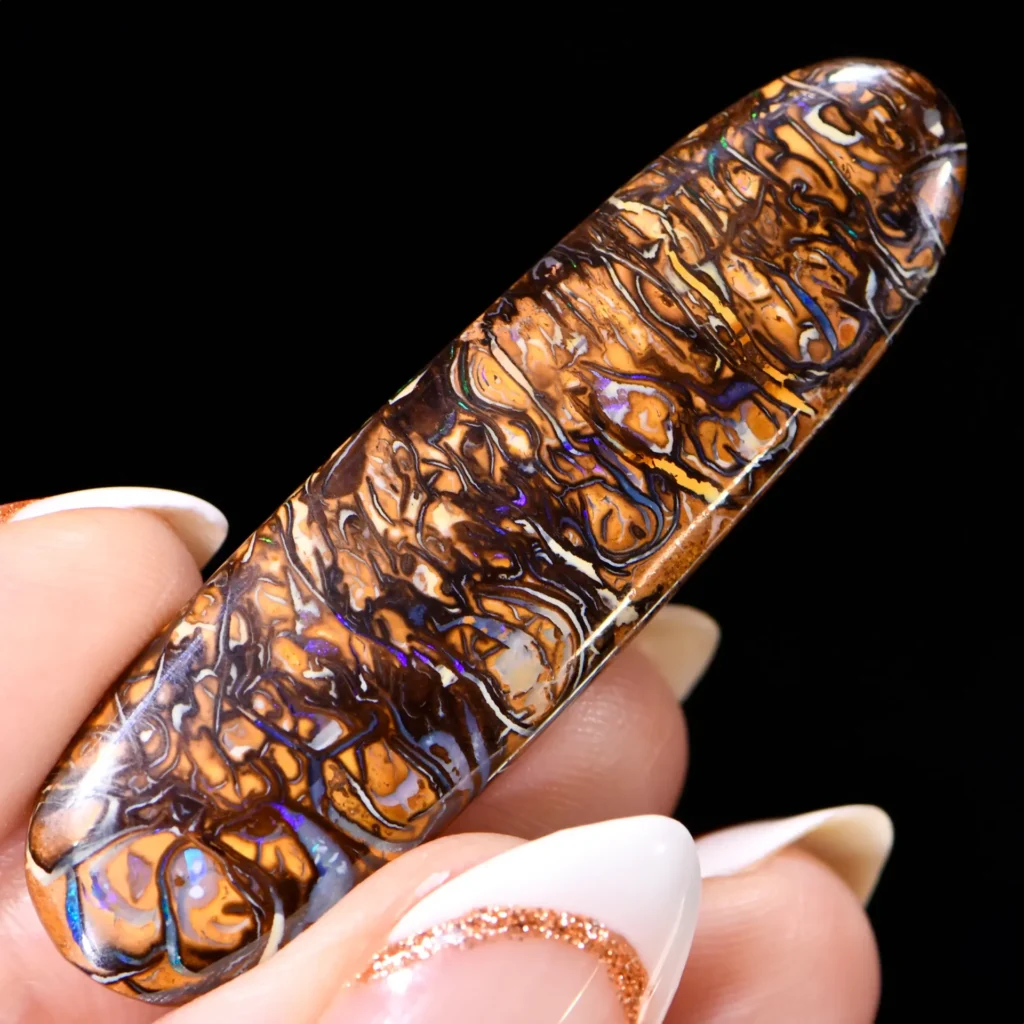
- Koroit Pipe Opals: These form in hollow tubular cavities within the ironstone, filling with precious opal to create long, cylindrical formations. When cut and polished, pipe opals often display rolling flashes of color along their length, making them visually striking and highly desirable.
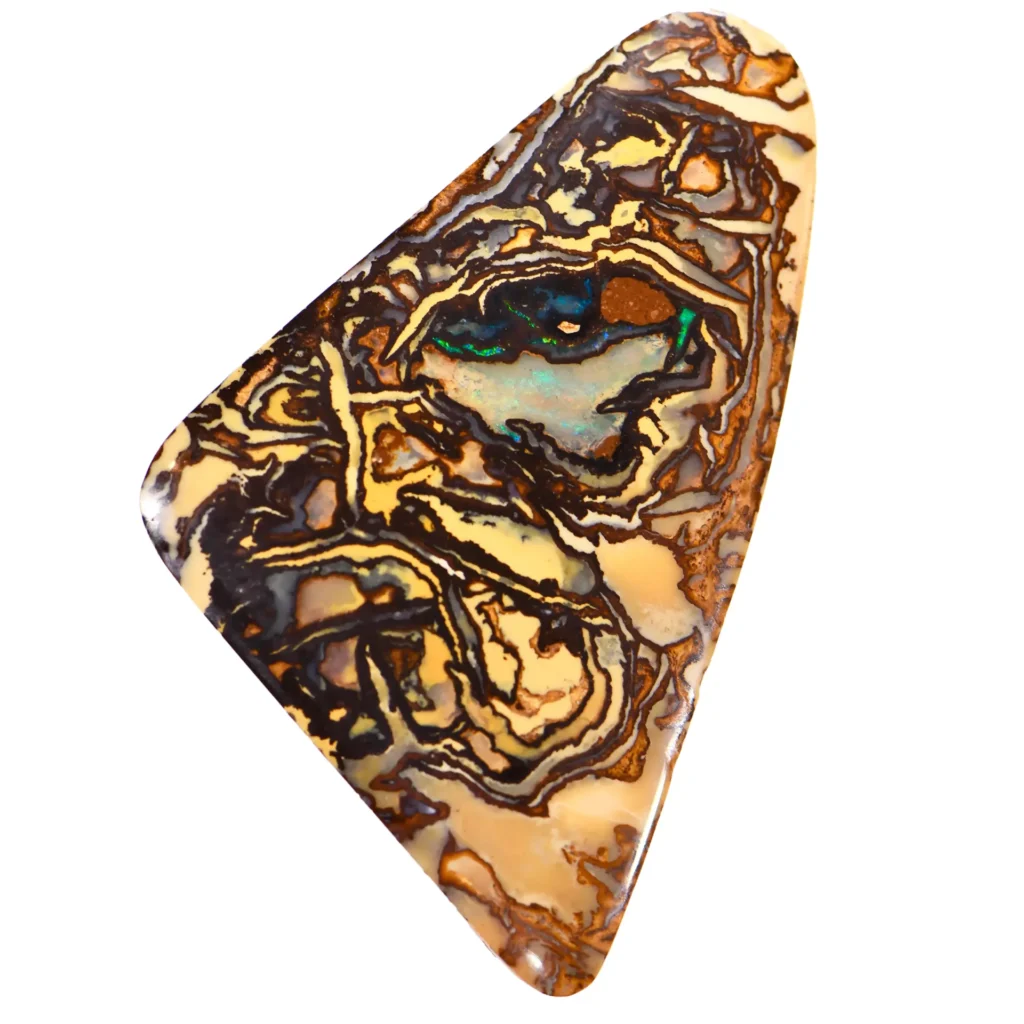
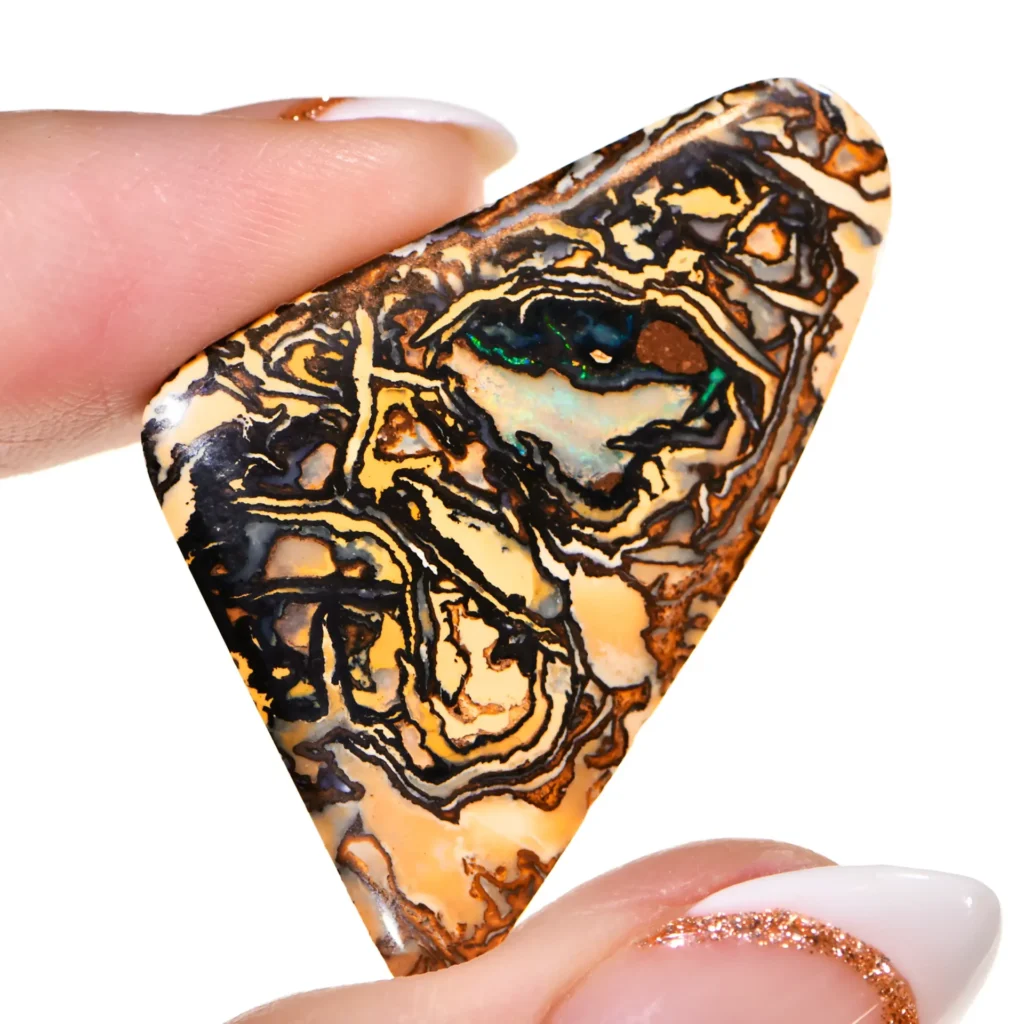
- Vein Pattern Boulder Opals: Closely associated with Matrix opals, these boulder opals have distinct vein patterns formed within the ironstone host rock, often displaying beautiful colors including blues, greens, reds and sometimes rainbow.
- Matrix Opals: Precious opals finely distributed throughout the host rock, producing intricate patterns.
- Picture Stones: Unique stones where natural opal patterns resemble landscapes, cosmic imagery, or abstract works of art. Collectors view these as masterpieces created entirely by geological chance.
- Full Face Seam Opals: Large, uninterrupted layers of precious opal covering wide sections of boulder, producing show stopping color fields.
- Conglomerate Boulder Opal: Small nodule formations spread throughout the ironstone host rock make up what is known as conglomerate boulder opal.
This unparalleled diversity ensures that Koroit continues to surprise miners and collectors alike. No two stones are ever the same, which is precisely what makes this field so captivating.
Koroit vs. Yowah: A Tale of Two Fields
Though Koroit lies only about 80 kilometers from Yowah, the opals from these two fields are far from identical.
- Ironstone Matrix: Koroit’s ironstone is typically darker, denser, and more consistent than Yowah’s lighter, more porous host rock. This enhances the vibrancy of Koroit’s play of color.
- Nuts: Yowah is world famous for its small, intricate nuts, while Koroit produces larger, bolder nodules that often feature sweeping patterns and stronger contrasts.
- Unique Fossils and Pipes: Koroit is far more associated with wood fossils and pipe opals, giving its material a distinct identity that Yowah rarely replicates.
- Patterns: Koroit tends to produce bold, dramatic opal faces, while Yowah excels in intricate, web like detail.
Collectors often compare the two, but seasoned gem enthusiasts recognize that Koroit’s unique fossils, pipes, and larger nodules place it in a category of its own.
Geological Formation
Koroit opals were formed over millions of years when silica rich fluids seeped into cracks, cavities, and organic material within ironstone boulders. Over time, this silica solidified into opal, filling voids left by wood, hollow pipes, or spaces within ironstone nodules.
This explains the remarkable variety found in Koroit: nuts from compact nodules, pipes from tubular cavities, and fossils from preserved organic matter. The dense ironstone acts as a natural backing, making the stones highly durable and intensifying their play of color against a deep, earthy canvas.
The History of Koroit Opal Mining
The Koroit field was first recognized for its opal potential in the late 19th century, during Queensland’s opal rush. Unlike the black opals of Lightning Ridge, which created a feverish global sensation, Koroit’s reputation grew gradually as miners uncovered an astonishing variety of unique specimens.
For decades, mining was largely artisanal, with families and individuals working small claims using hand tools and basic machinery. The field never became heavily industrialized, preserving its aura of discovery. Even today, Koroit remains an area where persistence, patience, and luck often determine success.
Famous Finds: Nuts, Fossils, and Pipes of Legend
Koroit has yielded many extraordinary opals that have achieved near legendary status.
- Giant Koroit Nuts: Some nodules revealed striking full-face seams of electric color, their polished surfaces resembling abstract paintings.
- Opalized Wood Fossils: Collectors prize fossilized branches or trunks with intact bark patterns preserved in shimmering blues and greens, a breathtaking fusion of natural history and gemstone beauty.
- Spectacular Pipe Opals: Long cylindrical pipes with continuous flashes of color are highly collectible, often cut into one-of-a-kind cabochons that command strong prices at auction.
Each famous find reinforces Koroit’s reputation as one of the most diverse and artistically expressive opal fields in the world.
Koroit Opals in Fine Jewelry
In jewelry, Koroit boulder opals make powerful statements. Their large face patterns, dramatic contrasts, and durability make them ideal for rings, pendants, and bespoke pieces. Designers often leave sections of the ironstone exposed, emphasizing the organic beauty of the stone and celebrating its origin in the Australian outback.
Fossil opals and pipes, in particular, appeal to collectors seeking jewelry that tells a story, pieces that are not just decorative but also deeply symbolic of time, transformation, and endurance.
Investment Value
Koroit boulder opals are increasingly recognized as investment grade gemstones. Their value is underpinned by three key factors:
- Rarity: Each stone is unique, especially nuts, pipes, and wood fossils.
- Durability: The natural ironstone backing enhances strength, making Koroit more resilient than many other opals.
- Global Demand: Collectors in Japan, Europe, and North America actively seek Koroit opals, pushing values higher each year.
As mining remains limited and supply dwindles, fine examples, particularly fossils and vein pattern opals are expected to appreciate significantly in value.
The Metaphysical Dimension
While Koroit opals are primarily appreciated for their beauty and rarity, many also regard them as stones of deep significance. The ironstone matrix is said to ground energy, while the vibrant opal fire inspires creativity, passion, and transformation. Fossil opals, in particular, are often seen as symbols of endurance and continuity; life transformed into light.
What to Look For in Koroit Opals
For discerning collectors and jewelers, the following qualities define the finest Koroit boulder opals:
- Brightness and Play of Color: The more vivid and intense the flashes, the higher the value.
- Pattern: Distinct, bold and vein patterns; especially those resembling images or landscapes are highly prized.
- Nuts, Fossils, and Pipes: Specimens showcasing unique geological formations are especially collectible.
- Size and Presentation: Larger face opals with strong color contrast are excellent for high end jewelry.
- Balance of Matrix and Fire: Stones that beautifully harmonize earthy ironstone with vivid opal are considered most desirable.
As always, authenticity matters. Buy only from trusted dealers to ensure genuine, untreated Koroit material.
Koroit, Nature’s Masterpiece
Koroit boulder opals embody the perfect marriage of geology and artistry. From bold patterned stones to fossilized wood glowing with rainbow fire, from cylindrical pipes to majestic nuts, the variety found here is unmatched.
Though often compared to Yowah, Koroit has its own distinct identity: denser ironstone, larger nodules, rare fossils, and pipes that make it a treasure trove of natural wonder. For collectors, jewelers, and investors alike, Koroit boulder opals represent not just gemstones, but enduring legacies of Australia’s prehistoric landscape, timeless masterpieces shaped by millions of years beneath the earth.