Opal Galaxy Blog | Australian Opal Guides, Buying Tips & Collector Stories
Rare Opal Pattern Collection
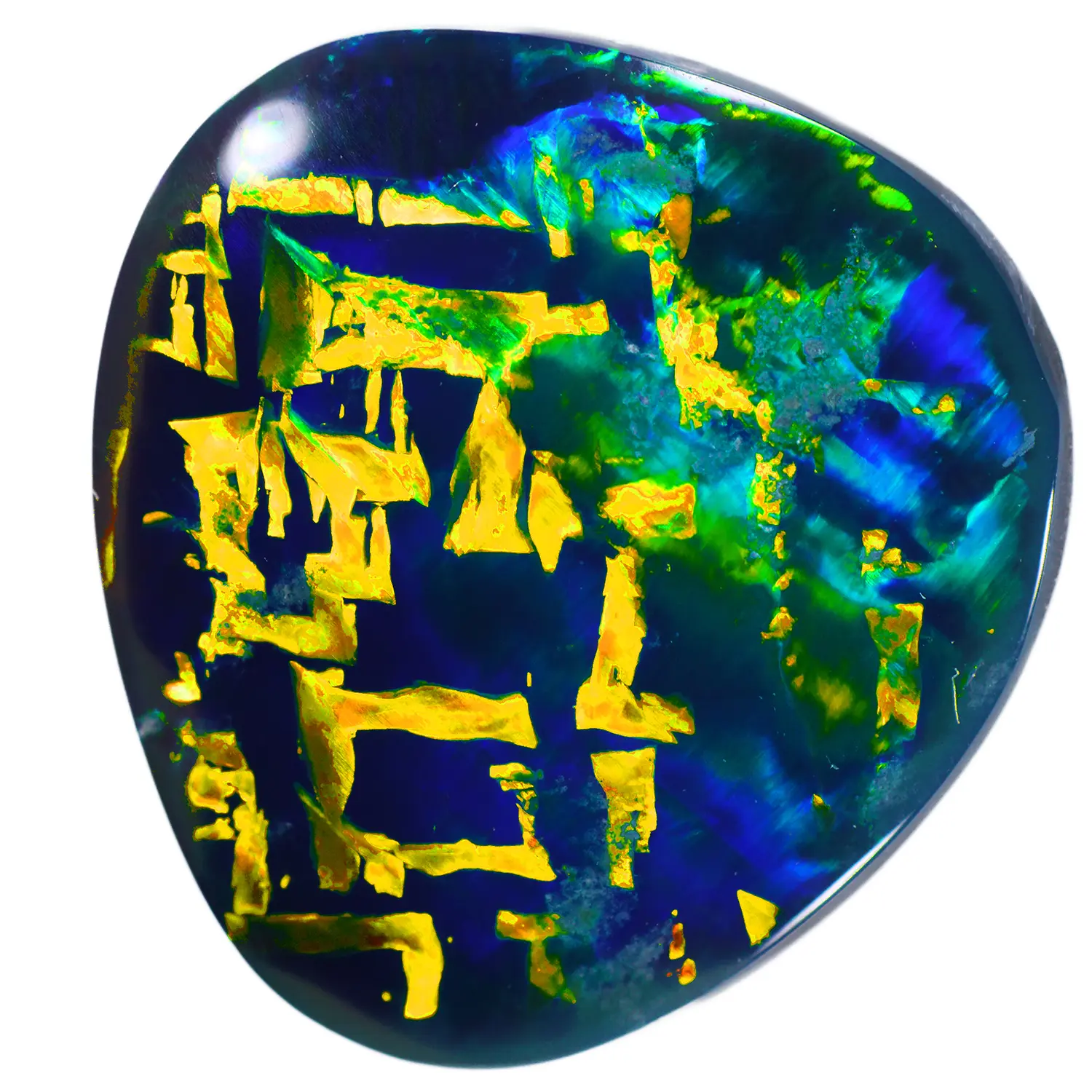
The most sought after opal patterns are harlequin, Chinese writing, ribbon, flagstone, broad flash, pinfire, and rolling flash, with harlequin sitting at the top as the most valuable pattern in the entire opal market. Harlequin opal shows distinct angular blocks of color in a repeating mosaic across the stone and is so seldom found in nature that collectors will pay tens of thousands of dollars per carat for a true harlequin black opal from Lightning Ridge. Chinese writing pattern, ribbon, and flagstone patterns also command strong premiums when paired with a dark body tone and strong red fire. Below is a full guide to the most sought after opal patterns, covering how each one forms, what makes it valued, and which patterns hold the strongest investment potential.
Discover the Rarest and Most Valuable Opal Patterns
Picture this. You’re holding an opal and as you tilt it, colors dance across the surface in patterns so rare that even experienced dealers gasp. That’s the magic of rare opal patterns, where extraordinary arrangements of color create once in a lifetime treasures. While common opals might show simple color flashes, rare opal patterns display nature’s most spectacular and valuable light shows that collectors spend decades searching for.
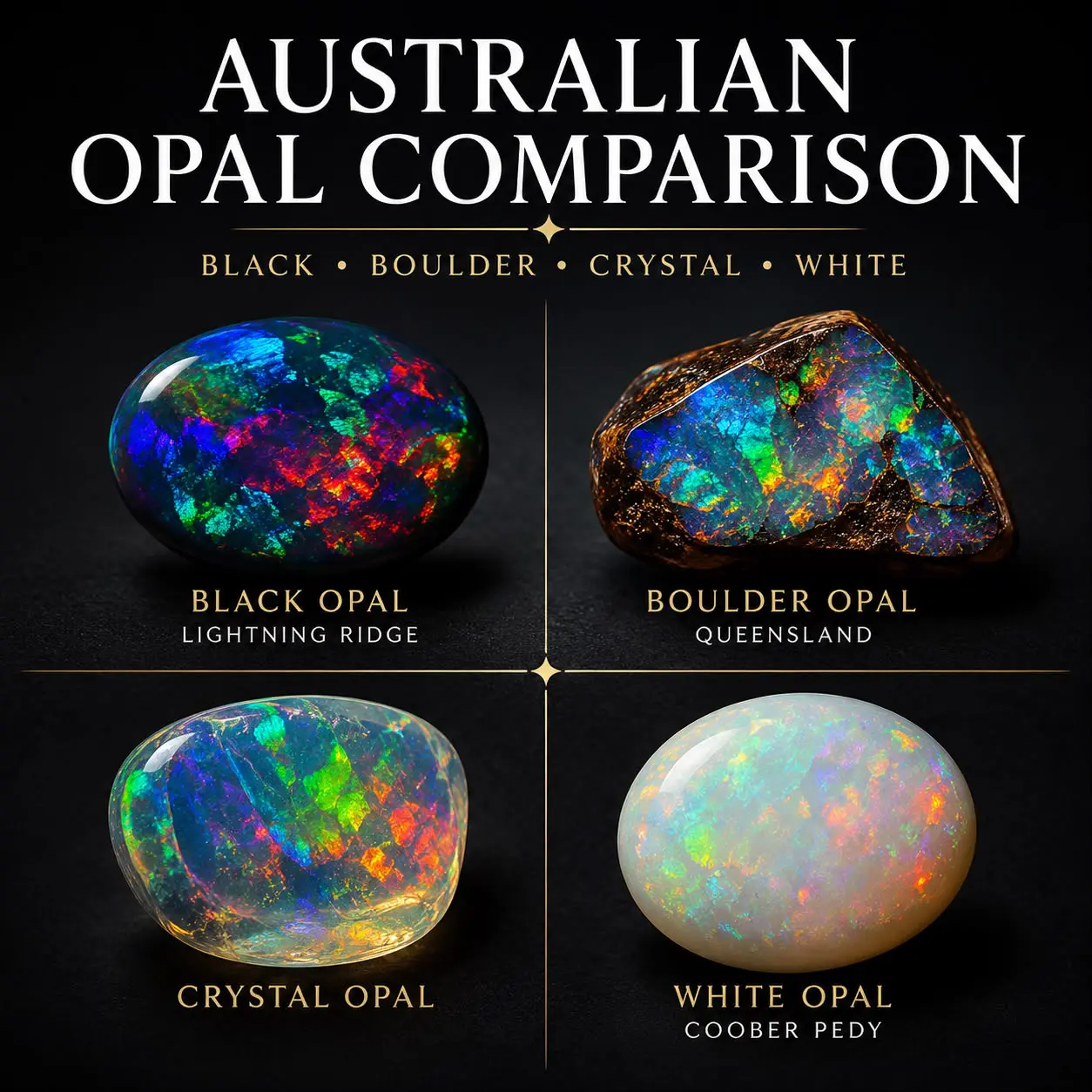
From the legendary harlequin pattern that appears in maybe one opal out of hundreds of thousands to mesmerizing picture stones that show recognizable images, rare opal patterns represent the pinnacle of what nature can create. Whether you’re hunting for black opals from Lightning Ridge, crystal opals from Coober Pedy, or boulder opals from Queensland, understanding what makes patterns rare helps you recognize truly exceptional stones worth their premium prices.
What Makes an Opal Pattern Rare?
Not all opal patterns are created equal. A rare opal pattern requires extraordinary geological conditions that happen only under the most perfect circumstances. The microscopic silica spheres inside the opal must align in incredibly precise arrangements that occur maybe once in thousands or even hundreds of thousands of stones.
The Australian Opal Centre explains that rare opal patterns need perfect uniformity in silica sphere size combined with near flawless organization. When everything aligns just right, you get patterns so spectacular they become legendary. Most opals show random color arrangements, but rare opal patterns display geometric precision or unusual formations that make experienced collectors’ hearts race.
Different people are drawn to different opal colours and visual effects, so you can also read our guide, Choose Your Opal Colour Based on Your Star Sign. Rarity also depends on how the pattern presents across the entire stone. A rare opal pattern must show consistent, well defined characteristics across a significant portion of the gem’s surface, not just tiny areas or weak formations.
The Jigsaw Pattern is a very rare to find in Australian Opals
The Rarest Opal Patterns
Harlequin: The Ultimate Rare Opal Pattern
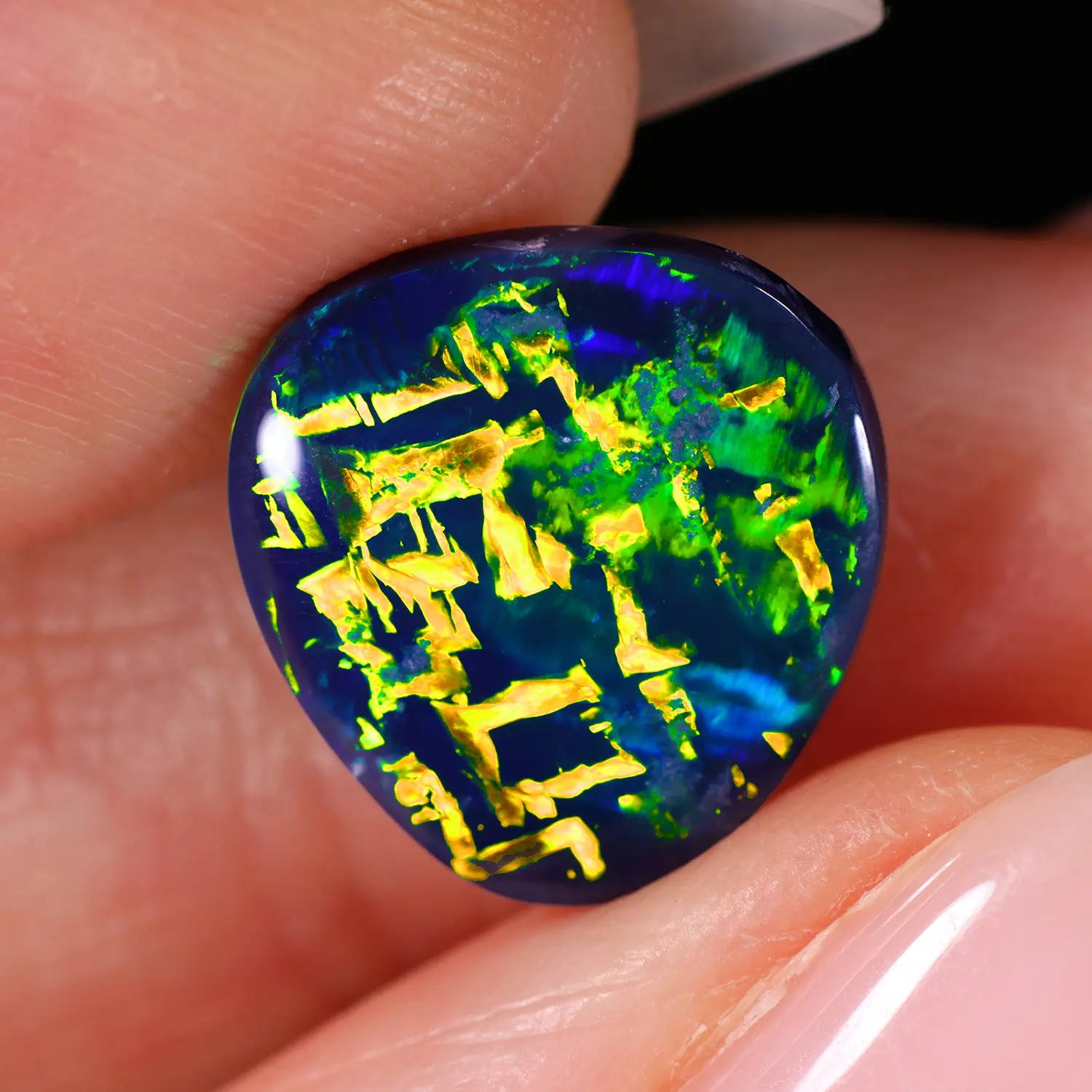
True harlequin reigns as the rarest opal pattern on Earth. Imagine a perfect checkerboard or mosaic of distinct, angular color patches arranged in repeating diamonds or squares with razor sharp edges. Each color block maintains crisp boundaries creating a geometric masterpiece that defies belief. This rare opal pattern is so exceptional that many professional dealers have never seen genuine harlequin in their entire careers.
What makes harlequin the rarest opal pattern? The silica spheres must achieve perfect uniformity in size and arrange themselves in near perfect crystalline order throughout the entire stone. This geological miracle happens maybe once in hundreds of thousands of opals. When genuine harlequin surfaces at auction, it can command five to ten times the price of excellent opals with common patterns.
Most stones marketed as “harlequin” are actually flagstone or mosaic patterns. True harlequin shows repeating geometric units with consistent spacing and sharp definition across the whole stone, not just scattered patches. Flagstone and Mosaic: Geometric Beauty
Flagstone patterns display large, irregular color patches that fit together like paving stones or a mosaic. While not as perfectly geometric as true harlequin, flagstone creates striking presentations with distinct color areas separated by neutral zones. These patterns offer excellent visual impact at more accessible prices than genuine harlequin.
Picture Stone: Nature’s Artwork
Picture stones represent another incredibly rare opal pattern where colors arrange themselves to create recognizable images. Imagine finding an opal that naturally displays a sunset, landscape, galaxy, or other identifiable scene. These rare opal patterns occur when color distribution coincidentally creates formations our brains recognize as familiar objects.
Black opals from Lightning Ridge occasionally produce spectacular picture stones where vivid colors against dark backgrounds create dramatic scenery. Collectors pay premium prices for clear, well defined picture presentations, especially when the image tells a compelling visual story.
Rolling Flash with Full Spectrum: Animated Rarity
While rolling flash patterns appear somewhat regularly, achieving rolling flash with complete spectrum colors represents a rare opal pattern worthy of serious attention. As you rotate the stone, waves of every rainbow color from red through violet roll across the surface in sequence. The effect resembles aurora borealis frozen in stone, constantly shifting and changing.
This rare opal pattern requires perfect silica sphere gradations that diffract the full color spectrum while maintaining the wave effect that creates rolling movement. Finding genuine full spectrum rolling flash in premium quality opals with excellent color intensity makes this pattern highly sought after.
Ribbon with Multiple Colors: Flowing Rarity
Standard ribbon patterns appear fairly regularly, but ribbon formations displaying multiple distinct colors flowing parallel across the opal represent a genuinely rare opal pattern. Imagine silk ribbons in red, blue, green, and orange laid side by side, all flowing in perfect harmony across the stone’s surface.
Boulder opals from Queensland occasionally produce this rare opal pattern where color veins run through natural ironstone matrix in spectacular multicolor ribbon formations. The combination of organized ribbon structure with diverse vibrant colors creates museum quality presentations.
Chinese Writing with Spectacular Colors: Calligraphic Rarity
While Chinese writing patterns appear occasionally, achieving this formation with intense, multiple colors across significant coverage represents a rare opal pattern. The delicate, curved lines resembling calligraphy must appear in vivid reds, greens, blues, or multiple colors simultaneously, creating elegant complexity.
This rare opal pattern appears most dramatically in premium black opals where dark backgrounds make the fine calligraphic lines pop with extraordinary contrast. Collectors seek Chinese writing patterns covering 50% or more of the stone’s face with brilliant color intensity. Pinfire: Delicate Sparkle Pattern
Pinfire patterns display thousands of tiny color dots scattered across the opal’s surface, creating a delicate, twinkling effect like stars in a night sky. Each microscopic point of color sparkles as you move the stone, producing an almost magical shimmer that captivates viewers with its subtle beauty.
While pinfire appears more commonly than patterns like harlequin, exceptional pinfire stones with dense, bright, evenly distributed color dots remain highly desirable among collectors. The pattern works beautifully in crystal opals where transparency adds dimensional depth, and in black opals where dark backgrounds make each tiny color point pop with intensity.
Premium pinfire opals feature color dots so densely packed and brilliantly colored that the entire surface seems to glow with inner light. These superior examples, particularly in larger sizes with excellent coverage, create elegant presentations perfect for classic jewelry designs where refined beauty matters more than bold geometric drama.
Ribbon Pattern: Flowing Color Bands
Ribbon patterns feature parallel bands or stripes of color flowing across the opal like silk ribbons laid side by side. These can run straight across or curve gracefully through the stone. When multiple bright colors appear in ribbon formation, the effect is both dramatic and elegant.
Boulder opals from Queensland frequently display spectacular ribbon patterns where color veins run through the natural ironstone matrix, creating organic, artistic presentations that look like nature’s own abstract paintings.
Straw and Chaff: Textured Sparkle
Straw patterns look like tiny pieces of straw crisscrossing the stone’s surface, creating interesting texture and movement. Chaff patterns are similar but more randomly distributed, like wheat chaff scattered across a field. These patterns add character and complexity, especially when combined with broader flash areas.
These patterns appear frequently in opals from various Australian fields and work particularly well in pieces where you want interesting visual texture without overwhelming boldness.
Why Rare Opal Patterns Command Premium Prices
Rare opal patterns dramatically impact value, often more than size or even color quality. Here’s why collectors pay premiums:
Scarcity drives demand: When dealers see maybe one genuine harlequin every few years among thousands of opals, that rarity creates intense competition among collectors who know they might never see another.
Visual impact: Rare opal patterns stop people mid conversation. The geometric precision of harlequin, the natural artistry of picture stones, or the dynamic movement of full spectrum rolling flash creates unforgettable impressions.
Investment potential: Rare opal patterns appreciate faster than common patterns because supply remains extremely limited while demand from serious collectors continues growing. A exceptional harlequin purchased decades ago might be worth ten times its original price today.
Bragging rights: Owning a genuine harlequin or spectacular picture stone puts you in an elite group of collectors worldwide. These rare opal patterns become conversation pieces and collection centerpieces.
Spotting Genuine Rare Opal Patterns
Many opals get marketed with rare pattern names that don’t accurately describe what you’re seeing. Here’s how to verify authenticity:
True harlequin: Must show repeating geometric color patches with sharp edges arranged in consistent rows across the entire stone, not just isolated sections. The pattern should look almost too perfect to be natural.
Picture stones: The recognizable image should be clear and obvious, not something requiring imagination to see. Multiple people should independently identify the same image.
Full spectrum rolling flash: Must display red through violet as you rotate the stone, not just three or four colors. The rolling movement should be smooth and dramatic.
Professional gemological examination from laboratories like GIA or GAA provides definitive verification for significant purchases. Documentation protects your investment and proves authenticity for insurance or eventual resale.
A Rainbow Broad Flash Pattern Gem Black Opal
Rare Opal Patterns in Different Opal Types
Black opals showcase rare opal patterns with maximum drama because dark backgrounds create intense contrast. Harlequin on black represents the ultimate achievement in opal patterns.
Crystal opals add dimensional magic to rare opal patterns through transparency that lets viewers see pattern depth within the stone, creating layered effects impossible in opaque material.
Boulder opals integrate rare opal patterns with natural ironstone formations, occasionally creating picture stones where color and rock combine into recognizable scenes or abstract artworks.
Investment Considerations for Rare Opal Patterns
Rare opal patterns represent serious investment opportunities for collectors who understand what they’re buying:
Authenticate thoroughly: Only purchase rare opal patterns from reputable dealers who provide proper documentation. The difference between genuine harlequin and flagstone marketed as harlequin can mean tens of thousands of dollars.
Condition matters: Rare opal patterns lose value significantly if cracks, chips, or flaws interrupt the pattern presentation. Structural integrity remains essential.
Documentation protects value: Comprehensive certificates, professional photography, and detailed descriptions establish provenance and protect investment value for insurance, estate planning, or eventual sale.
Market knowledge: Understanding current prices for genuine rare opal patterns helps you recognize fair deals versus inflated pricing. Consult multiple experts before significant purchases.
FAQs About Rare Opal Patterns
What is the rarest opal pattern? True harlequin is the rarest opal pattern, appearing in perhaps one out of hundreds of thousands of opals. It features perfectly repeating geometric color patches with sharp edges arranged in organized formations. Many experienced dealers never see genuine harlequin in their careers. Learn more about quality opal characteristics.
How much more valuable are rare opal patterns? Rare opal patterns like genuine harlequin can command five to ten times the price of excellent opals with common patterns. A premium black opal with standard broad flash might sell for $5,000 per carat, while similar quality harlequin could fetch $25,000 to $50,000 per carat or more.
Can rare opal patterns be faked? Natural rare opal patterns cannot be artificially created, but common patterns are sometimes misrepresented as rare ones. Flagstone gets marketed as harlequin, simple picture suggestions get exaggerated, or minor pattern features get overstated. Always verify through independent gemological examination.
Do rare opal patterns appear in all opal types? Rare opal patterns can theoretically appear in any opal type, but some patterns show up more frequently in specific materials. Harlequin appears most dramatically in black opals. Picture stones occur across all types. Certain boulder opals naturally create picture formations where color and ironstone combine.
Are rare opal patterns more fragile? No, rare opal patterns don’t affect physical durability. All solid opals have similar hardness regardless of pattern rarity. The pattern itself is an optical effect from internal structure, not a separate feature that could break or damage more easily.
Should I insure rare opal patterns differently? Yes, rare opal patterns require higher insurance coverage reflecting their premium value. Obtain professional appraisals from qualified gemologists familiar with pattern rarity, keep detailed documentation including photographs, and update valuations every few years as rare pattern prices appreciate.
Why Choose Opal Galaxy for Rare Opal Patterns
At Opal Galaxy, we specialize in identifying and sourcing genuine rare opal patterns from premier Australian sources. Our decades of experience evaluating opals from Lightning Ridge, Coober Pedy, and Queensland means we can spot authentic rare patterns and distinguish them from common formations marketed with premium names.
We provide complete transparency about pattern rarity, honest assessment of characteristics, comprehensive documentation including professional photography showing patterns from multiple angles, and authenticity guarantees protecting your investment. When we identify an opal as displaying a rare pattern, you can trust that assessment comes from genuine expertise and integrity.
Whether you seek the holy grail harlequin, spectacular picture stones, full spectrum rolling flash, or other exceptional pattern presentations, we help you find stones that justify their premium positioning. Every rare opal pattern in our collection includes detailed documentation, gemological verification when appropriate, and expert guidance about rarity and value.
Explore our curated collection and discover rare opal patterns that represent once in a lifetime opportunities to own nature’s most extraordinary achievements.